
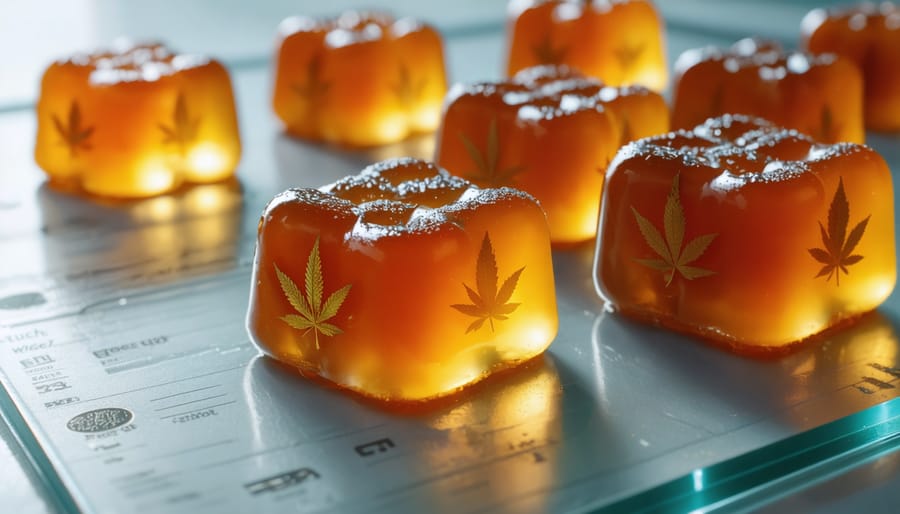
Edibles containing THC follow a dramatically different path through your body than inhaled cannabis, creating a slower onset but longer-lasting experience that puzzles many users and fascinates pharmacologists alike. When you consume a THC gummy, you’re initiating a complex metabolic journey that transforms delta-9-THC into the more potent 11-hydroxy-THC—a conversion that explains why edibles feel fundamentally different from smoking or vaping.
Understanding the pharmacokinetics of THC gummies reveals why effects take 30 minutes to 2 hours to manifest, why they persist for 6-8 hours or longer, and why dosing requires patience and precision. Unlike inhalation, which delivers THC directly to the bloodstream through lung tissue, oral consumption subjects cannabinoids to first-pass metabolism in the liver, fundamentally altering both the timing and character of effects.
This metabolic transformation isn’t merely academic—it has profound implications for therapeutic applications, recreational use, and safety considerations. As Dr. Ryan Vandrey, cannabis researcher at Johns Hopkins University, notes: “The delayed onset and extended duration create unique challenges for dose titration that users must understand to avoid overconsumption.”
This comprehensive examination explores absorption rates, metabolic pathways, elimination kinetics, and individual variability factors that determine your personal response to THC gummies, equipping you with scientific knowledge for informed decision-making.
The Journey Begins: Absorption and the First-Pass Effect
Why Your Liver Changes Everything
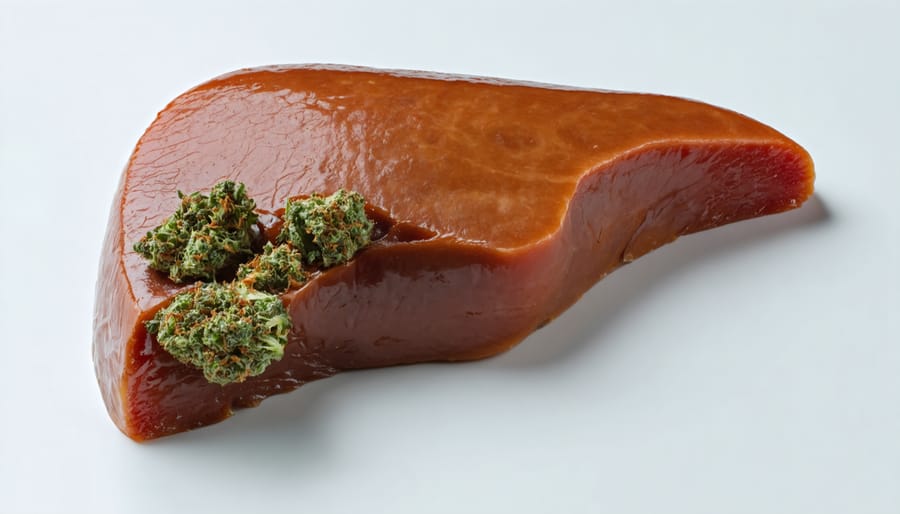
When you swallow a THC gummy, something remarkable happens in your liver that fundamentally transforms your experience. Unlike inhaled THC that enters your bloodstream directly through the lungs, edible THC must pass through your digestive system and liver first—a journey that creates an entirely different compound.
This process, called first-pass metabolism, occurs as the body metabolizes compounds through liver enzymes. Specifically, cytochrome P450 enzymes—particularly CYP2C9 and CYP3A4—convert delta-9-THC into 11-hydroxy-THC, a metabolite that crosses the blood-brain barrier more efficiently than its parent compound.
“11-hydroxy-THC is significantly more potent at activating cannabinoid receptors in the brain,” explains Dr. Marilyn Huestis, a leading cannabinoid researcher. Studies published in *Clinical Chemistry* demonstrate that this metabolite exhibits 2-3 times greater psychoactive potency compared to standard THC, explaining why edibles produce such distinctly intense effects.
Research from the University of Sydney’s Lambert Initiative found that 11-hydroxy-THC concentrations peak approximately 1-2 hours after ingestion, corresponding precisely with when users report maximum effects. This hepatic transformation accounts for both the delayed onset—typically 30-90 minutes—and the prolonged duration that characterizes edible experiences.
The liver’s conversion efficiency varies considerably between individuals due to genetic differences in enzyme expression. A 2023 study in *Drug Metabolism and Disposition* revealed that people with certain CYP2C9 variants produce more 11-hydroxy-THC, potentially experiencing stronger effects from identical doses. This metabolic lottery explains why your friend might feel completely different effects from the same gummy.
Understanding this hepatic alchemy isn’t just academically interesting—it’s essential for predicting and managing your experience with THC edibles safely and effectively.
The Waiting Game: Why Effects Take So Long
That anticipated moment after consuming a THC gummy—when nothing seems to happen—frustrates many first-time users. This delay isn’t a defect; it’s pharmacokinetics in action. Unlike inhaled cannabis that reaches the bloodstream within minutes, edibles must navigate the entire digestive system first.
During this 30-minute to 2-hour window, your gummy undergoes mechanical breakdown in the stomach, then moves to the small intestine where THC molecules cross the intestinal lining into the bloodstream. From there, they travel directly to the liver via the hepatic portal vein—a crucial detour. As researcher Dr. Ryan Vandrey notes, “The first-pass metabolism through the liver fundamentally changes both the onset time and the nature of the high.”
Several factors influence this timeline dramatically. Consuming gummies on a full stomach, especially with fatty foods, can delay absorption by an hour or more, though fats may enhance overall bioavailability. Your metabolic rate matters too—individuals with faster metabolism may experience quicker onset. Body composition plays a role since THC is lipophilic, readily storing in fat tissue. Even your unique liver enzyme profile affects how quickly you’ll feel effects, explaining why identical doses affect people differently.
Peak Effects and Distribution Throughout Your Body
Where THC Gummies Go: Distribution and Accumulation
THC’s journey through your body reveals a fascinating chemical preference: it loves fat. Unlike water-soluble medications that quickly disperse through your bloodstream and exit, THC is lipophilic—meaning it has a strong affinity for fatty tissues. This fundamental property dramatically influences how long gummies’ effects last and why THC remains detectable long after the high fades.
Once absorbed, THC doesn’t simply float freely in your blood. Within hours, it begins accumulating in adipose tissue, the liver, and other fat-rich organs. “THC essentially finds a home in fat cells, creating a reservoir that slowly releases back into circulation,” explains Dr. Marilyn Huestis, a leading cannabinoid researcher. This storage mechanism explains why regular users may experience extended detection windows—the body gradually liberates stored THC over days or even weeks.
The molecular interactions between THC and fat tissue create practical implications beyond drug testing. The prolonged release from fat stores can extend therapeutic effects, potentially beneficial for chronic pain management. However, it also means that individuals with higher body fat percentages may experience different pharmacokinetic profiles compared to leaner individuals.
This accumulation pattern contrasts sharply with inhaled THC, which peaks rapidly but also clears faster. For gummy consumers, understanding this distribution helps explain why effects can persist 8-12 hours, and why workplace drug tests might detect THC metabolites weeks after consumption—your fat cells are essentially time-release capsules.
The Long Goodbye: Metabolism and Elimination
Why Some People Feel Effects Longer Than Others
The experience of THC gummies varies dramatically from person to person, reflecting the fascinating complexity of human biology. While one person might feel effects for four hours, another could experience them for eight or more, even after consuming identical products.
Genetic variations play a starring role in this individual diversity. The cytochrome P450 enzyme system, particularly CYP2C9 and CYP3A4, metabolizes THC in the liver. “We’ve found that individuals with certain genetic polymorphisms metabolize THC significantly faster or slower than average,” explains Dr. Ryan Vandrey, a cannabis researcher at Johns Hopkins University. People who are “fast metabolizers” may experience briefer, less intense effects, while “slow metabolizers” might find effects lingering considerably longer.
Tolerance development represents another critical factor. Regular cannabis users build physiological tolerance as cannabinoid receptors become less responsive or decrease in number through a process called downregulation. This means frequent consumers often need higher doses to achieve similar effects and may process THC differently than occasional users.
Body composition matters too. THC is lipophilic—it loves fat tissue. Individuals with higher body fat percentages may experience prolonged effects as THC stores in adipose tissue and slowly releases back into circulation. Conversely, those with lower body fat might experience more predictable, shorter-duration effects.
Additional variables include liver function, metabolism speed, concurrent medications, food intake timing, and even gut microbiome composition. This remarkable variation underscores why personalized dosing approaches, rather than one-size-fits-all recommendations, better serve consumers seeking consistent experiences.
Comparing Routes: Gummies vs. Other THC Delivery Methods
The journey THC takes through your body varies dramatically depending on how you consume it, creating distinct pharmacokinetic profiles that can mean the difference between immediate relief and a four-hour wait.
When you inhale cannabis through smoking or vaping, THC enters your bloodstream almost instantly through the lungs, bypassing first-pass metabolism. This route boasts the highest bioavailability at 10-35%, with peak plasma concentrations (Cmax) reached within 3-10 minutes. However, effects typically dissipate within 2-4 hours. As Dr. Ryan Vandrey from Johns Hopkins notes, “Inhalation provides rapid onset and offset, allowing users to more easily titrate their dose.”
Edibles like THC gummies follow an entirely different path. After passing through the digestive system and liver, bioavailability drops to a modest 4-12% due to extensive first-pass metabolism. The time to maximum concentration (Tmax) extends to 1-4 hours, sometimes longer depending on stomach contents. Yet this delayed onset comes with a silver lining: effects persist for 6-8 hours, occasionally stretching beyond 12 hours. The liver converts delta-9-THC into 11-hydroxy-THC, a metabolite that crosses the blood-brain barrier more efficiently, potentially explaining the notably different subjective experience many users report.
Sublingual administration offers a middle ground. Tinctures and sprays absorbed under the tongue achieve 6-20% bioavailability with Tmax around 30-90 minutes, providing faster onset than edibles while maintaining moderate duration of 4-6 hours.
Transdermal patches present the most unique profile: extremely slow absorption creates steady plasma levels over 8-12 hours with minimal psychoactive effects, as THC bypasses first-pass metabolism but releases gradually through the skin.
Recent research from the University of Colorado Boulder demonstrated these differences in controlled trials, finding edible users experienced delayed but prolonged impairment compared to inhaled cannabis. This pharmacokinetic variability has real-world implications for medical dosing schedules, workplace safety policies, and personal consumption choices.
Real-World Implications: Medical and Recreational Applications
The Dosing Challenge: Finding Your Sweet Spot
Finding the right THC gummy dose remains one of the most significant challenges for both new and experienced users. Unlike inhaled cannabis, where effects manifest within minutes and allow for real-time adjustment, edibles offer no immediate feedback mechanism—you’re essentially committed once you swallow.
The problem starts at the source. Research published in the *Journal of the American Medical Association* found that nearly 75% of edible products tested showed inconsistent labeling, with actual THC content varying by more than 10% from stated amounts. “Variability in manufacturing, storage conditions, and even how a gummy is cut can affect the dose received,” explains Dr. Ryan Vandrey, cannabis researcher at Johns Hopkins University.
Individual metabolism adds another layer of complexity. First-pass metabolism in the liver converts delta-9-THC into 11-hydroxy-THC at rates that vary dramatically between individuals based on genetics, body composition, and concurrent food intake. A 5mg dose might feel negligible to one person while overwhelming another.
Current standardization efforts focus on improving manufacturing consistency and developing better labeling practices. Several states now require homogeneity testing to ensure even THC distribution throughout products.
For users, the practical approach remains conservative: start with 2.5-5mg, wait at least two hours before considering additional doses, and maintain a consumption journal. Environmental factors matter too—taking gummies on an empty stomach accelerates absorption but may intensify effects unpredictably. Patience and self-observation ultimately prove more valuable than any predetermined dosing chart.
What Researchers Are Learning Now
Scientists are pushing the boundaries of THC gummy pharmacokinetics through innovative formulations and precision medicine approaches. Recent breakthroughs are addressing the traditional limitations of edible cannabis products, particularly the delayed onset and unpredictable absorption rates that have challenged both consumers and clinicians.
One of the most promising developments involves nanoemulsion technology, which breaks THC molecules into microscopic particles that bypass first-pass metabolism more efficiently. Dr. Sarah Chen, lead researcher at the Cannabis Pharmacology Institute, explains: “We’re seeing onset times reduced from 90 minutes to as little as 15-20 minutes with nanoemulsified formulations. This transforms the user experience entirely.” Early clinical trials suggest these advanced gummies may offer both faster effects and more consistent bioavailability across diverse populations.
Researchers are also leveraging machine learning to develop individualized dosing algorithms that account for genetic variations in cannabinoid metabolism. By analyzing CYP450 enzyme polymorphisms and other biomarkers, these systems can predict optimal doses for individual users. “We’re moving away from one-size-fits-all recommendations,” notes Dr. Michael Torres from the University of Colorado. “Personalized pharmacokinetic profiles could reduce adverse effects and improve therapeutic outcomes significantly.”
Advanced scientific data analysis is revealing how specific terpenes and minor cannabinoids modify THC absorption and metabolism. Some formulations now incorporate compounds that inhibit intestinal enzymes, potentially increasing bioavailability by 30-40%. Other studies are exploring pH-responsive coatings that protect THC through stomach acid while releasing it optimally in the small intestine.
These innovations promise not only improved recreational products but also more reliable medical cannabis options for patients requiring consistent therapeutic effects. As research accelerates, the gap between eating a THC gummy and understanding exactly what happens inside your body continues to narrow.
Understanding the pharmacokinetics of THC gummies represents a crucial intersection of cannabis science and consumer safety. The delayed onset, extended duration, and variable bioavailability of edible cannabis products create a complex metabolic picture that differs substantially from inhalation methods. As Dr. Ryan Vandrey from Johns Hopkins University notes, “Education about the delayed and prolonged effects of edibles is essential for reducing adverse experiences and emergency department visits.”
This science-based understanding empowers both medical patients seeking consistent therapeutic effects and recreational users aiming for responsible consumption. The hepatic first-pass metabolism that produces 11-OH-THC explains why edibles feel different and last longer than smoked cannabis—a distinction that continues surprising even experienced users.
Future research promises exciting developments in edible cannabis technology. Nanoemulsion formulations are already showing faster onset times, while personalized dosing algorithms based on genetic polymorphisms may soon optimize individual experiences. Improved product standardization and more sophisticated pharmacokinetic modeling will enhance predictability and safety.
The path forward requires continued collaboration between researchers, manufacturers, and healthcare providers. As legalization expands globally, robust scientific investigation into absorption kinetics, metabolite profiles, and individual variability becomes increasingly vital. Understanding these pharmacokinetic principles transforms cannabis consumption from guesswork into informed decision-making, ultimately promoting safer, more effective use of these increasingly popular products.