
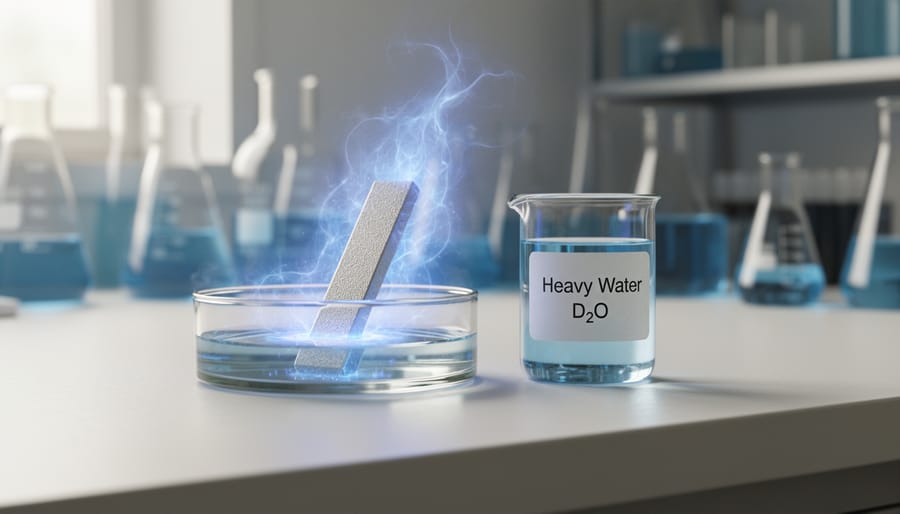
Cold fusion energy refers to a theoretical form of nuclear reaction that would occur at or near room temperature, rather than the millions of degrees required for conventional nuclear fusion. If proven viable, it would represent one of the most transformative energy breakthroughs in human history, offering a clean, virtually limitless power source. Yet more than three decades after its dramatic introduction to the world, the phenomenon remains one of science’s most contentious debates.
On March 23, 1989, electrochemists Martin Fleischmann and Stanley Pons held a press conference at the University of Utah that sent shockwaves through the scientific community. They claimed their tabletop apparatus, using nothing more sophisticated than heavy water and a palladium electrode, had produced anomalous heat through nuclear reactions at room temperature. The announcement promised to solve the world’s energy crisis overnight. Fleischmann and Pons reported not only excess heat output that couldn’t be explained by chemical reactions alone, but also small amounts of nuclear reaction byproducts including neutrons and tritium.
The scientific community rushed to replicate their results. Laboratories worldwide attempted to recreate the experiment with the limited details available, but the findings were not readily replicated. What followed was a swift and brutal dismissal by mainstream physics, relegating cold fusion to the category of pseudoscience. Yet the story didn’t end there. Research has continued in the shadows for decades, occasionally surfacing in peer-reviewed journals. Between 2015 and 2019, a Google-funded investigation produced three preprints and 10 peer-reviewed publications, culminating in a comprehensive Nature review paper published on May 29, 2019, that examined the state of evidence.
The persistence of cold fusion research raises a compelling question: why are scientists still investigating a claim that was supposedly debunked in 1989?
What Cold Fusion Means: The Promise of Nuclear Energy at Room Temperature
Cold fusion describes a hypothetical nuclear reaction that would occur at or near room temperature, typically in a benchtop laboratory setup. Unlike the extreme conditions needed for conventional nuclear fusion, millions of degrees and immense pressure, cold fusion would supposedly enable atomic nuclei to overcome their natural repulsion and fuse together under mundane circumstances, releasing substantial energy in the process.
- Cold Fusion
- A theoretical nuclear process where atomic nuclei fuse at room temperature or low energy, releasing heat without requiring the extreme conditions of conventional fusion reactors.
- Hot Fusion
- The established method of nuclear fusion requiring temperatures exceeding 100 million degrees Celsius to force atomic nuclei together, mimicking conditions inside stars.
- Heavy Water
- Water molecules (D₂O) where hydrogen atoms are replaced by deuterium, a heavier hydrogen isotope with an extra neutron that serves as potential fusion fuel.
- Palladium Electrode
- A metal component used in the Fleischmann-Pons experiment where deuterium was believed to concentrate and potentially fuse within the crystal lattice structure.
- Excess Heat
- The anomalous thermal energy reported by Fleischmann and Pons that exceeded what their electrical input could produce through known chemical reactions.
- Nuclear Reaction Byproducts
- Particles such as neutrons and tritium that would indicate fusion has occurred, which the 1989 experimenters claimed to detect in small amounts.
The revolutionary promise centers on energy density and accessibility. Conventional hot fusion requires massive facilities like tokamak reactors to contain superheated plasma with powerful magnetic fields. Cold fusion, if viable, would produce clean nuclear energy from a device small enough to fit on a laboratory bench, using abundant fuel sources without radioactive waste or dangerous byproducts.
This distinction matters because hot fusion, despite decades of research and billions in funding, remains an elusive goal for practical energy generation. The prospect of achieving similar or greater energy output without the engineering challenges of plasma confinement would fundamentally transform energy production. It would eliminate the need for uranium mining, bypass concerns about reactor meltdowns, and provide power generation at scales ranging from individual homes to entire cities.
The theoretical basis rests on whether deuterium nuclei could somehow tunnel through their electromagnetic repulsion barrier within a metal lattice structure, a quantum mechanical phenomenon that conventional physics suggests would occur too rarely to produce measurable heat. This tension between the reported experimental results and established nuclear theory explains why the 1989 claim generated both excitement and profound skepticism from the scientific community.
The 1989 Claim That Started It All
On March 23, 1989, electrochemists Martin Fleischmann and Stanley Pons stood before reporters at the University of Utah and made an announcement that would ignite one of the most controversial scientific debates of the century. They claimed to have achieved nuclear fusion at room temperature using a simple tabletop apparatus, a finding that contradicted established physics and promised to revolutionize energy production.
The experiment itself was remarkably modest in scale. Fleischmann and Pons had set up an electrolysis cell containing heavy water, a form of water where standard hydrogen atoms are replaced with deuterium, a hydrogen isotope with an extra neutron. They immersed a palladium electrode in this heavy water and passed an electric current through the solution. Palladium, a silvery-white metal, was chosen for its unusual ability to absorb hydrogen atoms into its crystal lattice structure.
What made their claim extraordinary was the anomalous heat they reported measuring during the electrolysis process. The apparatus supposedly produced more energy than could be explained by conventional chemical reactions alone. This excess heat, they argued, could only come from nuclear fusion occurring within the palladium electrode as deuterium atoms fused together at room temperature.
Beyond the heat measurements, Fleischmann and Pons reported detecting small amounts of nuclear reaction byproducts. They claimed to measure neutrons and tritium, both telltale signatures of fusion reactions. In conventional fusion research, these byproducts require temperatures exceeding millions of degrees and massive equipment. Finding them in a benchtop experiment would mean fusion was happening without extreme conditions, fundamentally challenging what scientists understood about nuclear processes. The press conference set off a frenzy of replication attempts worldwide as researchers rushed to verify or debunk the remarkable claim.
How the Cold Fusion Apparatus Works
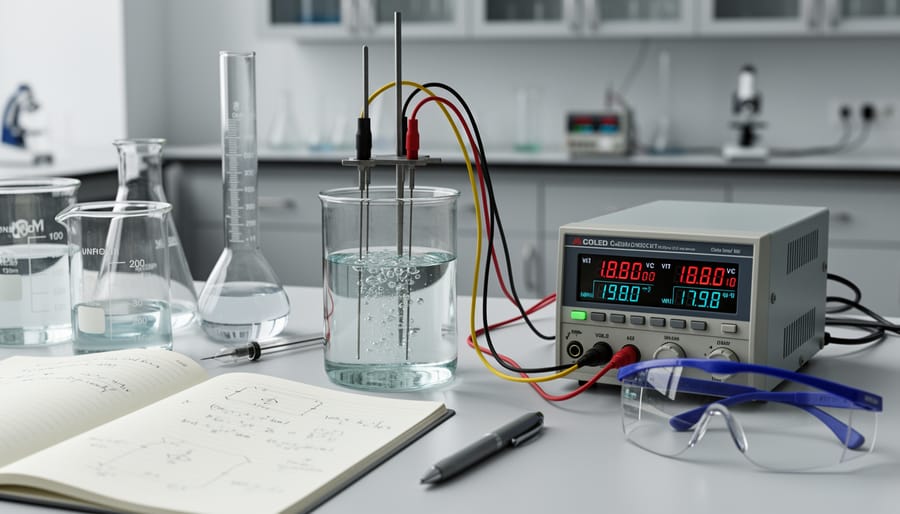
The Fleischmann-Pons apparatus wasn’t complex by nuclear physics standards. It relied on a simple electrochemical cell that fit on a laboratory bench, making the claim all the more extraordinary.
At the heart of the setup sat a jar of heavy water, which is ordinary water where hydrogen atoms are replaced with deuterium, a heavier isotope containing an extra neutron. Submerged in this heavy water was a palladium electrode, a rod of metal known for its ability to absorb hydrogen. When the researchers passed electrical current through the cell, the process of electrolysis began: deuterium ions from the heavy water migrated toward the palladium cathode and were absorbed into its crystalline lattice structure.
The essential components of the apparatus included:
- Heavy water cell containing deuterium oxide
- Palladium electrode serving as the cathode
- Electrical current source to drive electrolysis
- Calorimetry equipment to measure heat output
- Neutron detectors to identify potential fusion byproducts
The proposed mechanism hinged on what happened inside the palladium. As deuterium atoms packed densely into the metal’s structure, Fleischmann and Pons theorized that the nuclei might be forced close enough together to overcome their natural electrical repulsion and fuse, just as they do in the sun’s core or in hydrogen bombs. The crucial difference: this fusion would happen at room temperature rather than the millions of degrees required in conventional fusion reactors.
The excess heat they measured supposedly came from this fusion process releasing energy. They also claimed to detect neutrons and tritium, telltale signatures of deuterium fusion reactions. Conventional nuclear physics says deuterium nuclei at room temperature move far too slowly to penetrate each other’s electromagnetic barriers. The palladium lattice would need to create extraordinary conditions, squeezing deuterium nuclei to within femtometers of each other and somehow enabling quantum tunneling on a scale never before observed in a solid material. That theoretical gap between what the apparatus appeared to do and what physics predicts remains the central puzzle of the cold fusion debate.
Why Replication Failed: The Scientific Community’s Response
The scientific method relies on independent verification. When researchers announce a breakthrough, other teams worldwide must be able to reproduce the results by following the published methodology, using the same materials and procedures. This replication standard exists precisely because extraordinary claims demand extraordinary evidence, and a single team’s findings can be influenced by undetected errors, misinterpretation of data, or equipment anomalies.
Following the March 23, 1989, announcement by Fleischmann and Pons, laboratories around the world scrambled to duplicate their electrolysis experiment. The problem was immediate: many scientists tried to replicate the experiment with the few details available. The press conference had preceded a detailed scientific paper, leaving researchers to work from news reports and fragmentary descriptions. Without precise specifications for the palladium electrodes, current densities, electrolyte concentrations, and measurement protocols, teams were essentially guessing at critical parameters that might determine success or failure.
Within months, the scientific community’s consensus turned skeptical. Some groups reported small amounts of excess heat, while others detected nothing unusual. The lack of consistent results across different laboratories raised fundamental questions about whether the original observations represented genuine nuclear fusion, experimental error, or chemical reactions being misinterpreted as nuclear processes. Modern research approaches now incorporate AI in research methodologies to analyze complex datasets, though this technology was unavailable during the initial replication attempts.
The absence of reproducible results meant cold fusion could not meet the threshold required for scientific validation. This failure to replicate became the defining characteristic of the controversy, overshadowing any theoretical promise the phenomenon might have held.
Modern Research Efforts: From Google’s Investigation to Recent Studies
Since 2015, cold fusion research has entered a new phase of rigorous scientific investigation. A team funded by Google began systematically exploring low-energy nuclear reactions using modern materials science and precise measurement techniques unavailable in 1989. Their approach differed fundamentally from earlier attempts: instead of simply trying to replicate the Fleischmann-Pons experiment, they applied controlled methodologies to test specific hypotheses about how excess heat might occur in metal-hydrogen systems.
On May 29, 2019, the Google-funded effort published its first major findings in Nature, presenting a comprehensive review of their work alongside multiple peer-reviewed studies. The research represented a substantial body of investigation:
- 2015: Google project launches with focus on systematic testing of low-energy nuclear reaction claims
- 2019: Nature review paper synthesizes findings from years of controlled experiments
- Total output: three preprints and 10 peer-reviewed publications examining various aspects of the phenomenon
- Current status: ongoing investigation using advanced measurement tools and materials characterization
What did this modern research find? The Google team did not validate the original cold fusion claims, but they advanced understanding of the materials and conditions involved. Their work improved measurement precision, identified potential sources of error in earlier experiments, and established better baseline data for future investigations. The researchers also explored alternative explanations for anomalous heat effects, including chemical reactions and measurement artifacts that might have been mistaken for nuclear processes.
Modern approaches have evolved to emphasize reproducibility and transparency. Where the 1989 announcement provided few experimental details, contemporary research documents protocols meticulously, shares data openly, and subjects findings to peer review before publication. This shift reflects lessons learned from the cold fusion controversy itself: extraordinary claims require extraordinary evidence, presented through rigorous scientific channels rather than press conferences.
Different Types of Low-Energy Nuclear Reaction Research
Since the original 1989 tabletop electrolysis setup, researchers have explored numerous variations in pursuit of anomalous heat effects. These attempts reflect different theoretical frameworks and experimental approaches that have emerged over three decades of investigation.
Material variations have been central to this research. While Fleischmann and Pons used palladium electrodes with heavy water, subsequent experiments have tested alternative metals including nickel, titanium, and various alloys. The choice of electrode material matters because different metals absorb hydrogen isotopes at different rates and densities, potentially affecting any nuclear processes that might occur.
Experimental methods have also diversified beyond electrolysis. Some researchers have pursued gas-loading techniques, where palladium or other metals are exposed to deuterium gas under pressure rather than through electrolytic cells. Others have investigated plasma-based approaches or mechanical stress methods, each attempting to create conditions where deuterium nuclei might overcome their natural repulsion.
Theoretical frameworks explaining the supposed mechanism have proliferated as well. Some researchers propose lattice-assisted nuclear reactions, where the metal’s crystal structure somehow enables fusion at low energies. Others suggest electron screening effects or quantum tunneling phenomena that conventional nuclear physics does not predict at room temperature.
These varied approaches share a common goal: achieving results that would support low-carbon energy production and advance climate mitigation efforts. Yet the diversity of methods also reflects the field’s fundamental challenge, no standardized, reproducible protocol has emerged that consistently demonstrates the extraordinary claims made in 1989.
Potential Applications: Why Scientists Keep Looking
The promise of cold fusion, if realized, would reshape global energy systems. A working cold fusion reactor would provide clean, abundant power without the radioactive waste of conventional fission plants or the extreme temperatures required for hot fusion. The fuel source, deuterium from water, exists in virtually limitless quantities in Earth’s oceans. Such a breakthrough would address climate change by offering a carbon-free alternative to fossil fuels while occupying far less space than solar or wind installations.
These theoretical benefits explain why cutting-edge research continues despite decades of controversy:
- Unlimited clean energy generation from abundant deuterium
- No high-level radioactive waste or meltdown risks
- Compact reactors suitable for distributed power systems
- Room-temperature operation without containment challenges
- Fuel source extractable from ordinary seawater
Yet the gap between promise and proof remains vast. The Google-funded project that concluded in 2019, having produced 10 peer-reviewed publications since 2015, found no definitive evidence supporting the original claims. Scientists continue investigating not because validation seems imminent, but because the potential payoff justifies scrutiny of even unlikely possibilities. The extraordinary nature of the claim demands extraordinary evidence, and that evidence has not materialized through reproducible experiments. Still, the theoretical rewards keep some researchers exploring variations of low-energy nuclear reactions, hoping that a different approach might unlock what Fleischmann and Pons could not demonstrate convincingly in 1989.
Frequently Asked Questions About Cold Fusion
How did the 1989 cold fusion claim begin?
On March 23, 1989, electrochemists Martin Fleischmann and Stanley Pons held a press conference at the University of Utah announcing they had achieved nuclear fusion at room temperature. Their tabletop experiment involved electrolysis of heavy water on a palladium electrode, and they reported measuring anomalous heat along with small amounts of nuclear reaction byproducts including neutrons and tritium.
Why was the cold fusion experiment not readily repeatable?
Many scientists attempted to replicate the Fleischmann-Pons experiment using the few details that were publicly available, but the findings were not readily replicated. The lack of detailed methodology, the difficulty of measuring small amounts of excess heat precisely, and questions about the experimental controls all contributed to the replication challenges that followed the initial announcement.
What equipment did researchers use to study cold fusion?
The original setup was surprisingly simple: a small tabletop apparatus containing heavy water, a palladium electrode, and electrolysis equipment to pass current through the system. Modern research efforts have explored variations on this design, testing different materials, electrode configurations, and measurement instruments to detect heat anomalies and potential nuclear signatures.
Why does cold fusion remain elusive after decades of research?
Despite ongoing investigation, no one has produced consistent, independently verified evidence of fusion reactions occurring at room temperature. The Google-funded project that ran from 2015 onward produced 10 peer-reviewed publications and a Nature review paper in 2019, yet failed to demonstrate reproducible cold fusion, illustrating how the phenomenon continues to resist scientific validation even with modern tools and rigorous methodology.
The persistence of cold fusion research, despite the lack of validated results, reflects both the extraordinary promise of room-temperature nuclear energy and the scientific principle that negative results still advance knowledge. Each failed replication attempt helps researchers understand what doesn’t work and refines the boundaries of what might be possible. The questions themselves reveal how the 1989 announcement captured public imagination with its revolutionary potential, even as the scientific community remained skeptical about claims that seemed to defy established physics.
The cold fusion debate endures because the original claim was extraordinary enough to warrant continued scrutiny, even as reproducible evidence remains elusive. Since Martin Fleischmann and Stanley Pons announced their tabletop experiment in 1989, researchers have pursued variations of low-energy nuclear reactions, driven by the promise of clean, abundant energy. Google’s multi-year investigation, which produced 10 peer-reviewed publications through 2019, demonstrates that serious scientific inquiry persists despite decades of failed replications. The field sits at an unusual intersection: the theoretical payoff would be revolutionary, yet the experimental results don’t meet the rigorous standards required to overturn established physics. This tension keeps a small but dedicated research community engaged, applying modern instruments and materials to questions that couldn’t be fully explored in 1989. What remains clear is that extraordinary claims demand extraordinary evidence, and cold fusion hasn’t crossed that threshold. The ongoing work serves as a reminder that scientific progress requires both openness to unexpected phenomena and unwavering commitment to reproducibility. Whether cold fusion will ever transition from contested anomaly to validated breakthrough depends entirely on whether future experiments can produce consistent, independently verified results that withstand the scrutiny the original claim could not.