
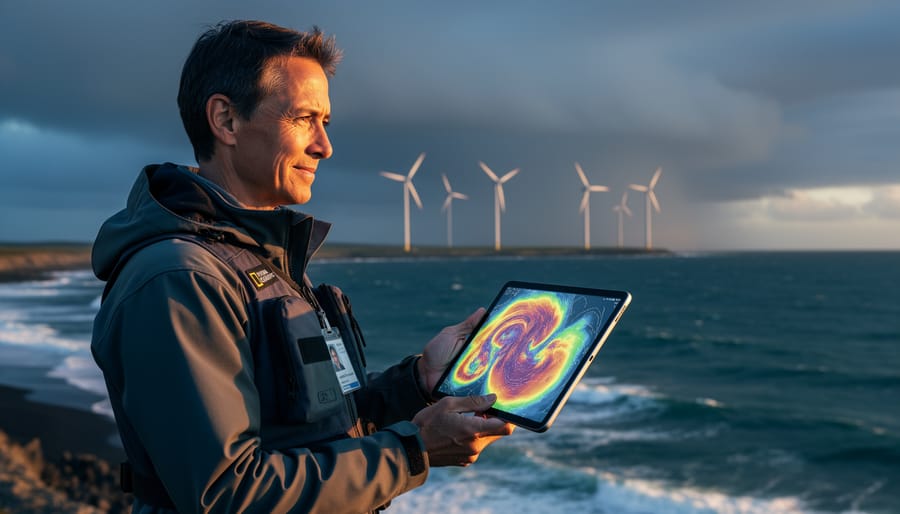
Climate hope means something specific to scientists: a realistic pathway still exists to limit global warming to levels that avoid the worst outcomes, even as we face accelerating impacts. This isn’t optimism born from wishful thinking. The scientific consensus in 2026 is clear: while we’ve already locked in significant warming and are experiencing more severe heat waves, floods, and ecosystem disruption than previous generations, catastrophic runaway warming is not inevitable if we act with unprecedented speed.
The question isn’t whether hope exists, but what kind of hope the evidence supports. The IPCC’s Sixth Assessment Report, completed in 2023 as the organization began its seventh assessment cycle, confirmed that every fraction of a degree matters and that multiple pathways to limiting warming to 1.5-2°C remain technically and economically feasible. Since then, renewable energy deployment has accelerated beyond most projections, electric vehicle adoption has surged, and critical technologies like grid-scale batteries and green hydrogen have matured faster than anticipated.
Yet the gap between what’s possible and what’s happening remains dangerously wide. Some nations show contradictory signals: Canada’s national emissions trend downward even as its climate action stalls in key sectors. The next few years will likely determine whether we close that gap or watch it widen.
This article examines what climate scientists actually mean when they discuss hope, which solutions are delivering measurable results, where progress has stalled, and what the evidence tells us about our realistic options moving forward. The answer isn’t simple reassurance or despair, but something more useful: a clear-eyed assessment of where we stand and what comes next.
What ‘Hope for Climate Change’ Actually Means

When climate scientists talk about hope, they’re not referring to wishful thinking or blind optimism. Instead, they mean something precise: the existence of scientifically credible pathways that could limit warming instead of preventing it. The IPCC’s sixth assessment cycle, which concluded with its synthesis report in March 2023, made this distinction clear. Some degree of climate change is already locked in due to past emissions. The question isn’t whether we can return to a pre-industrial climate, but whether we can avoid the most catastrophic warming scenarios.
This matters because the difference between 1.5°C, 2°C, and 3°C of warming isn’t incremental. Each half-degree represents exponentially worse impacts: more frequent extreme weather, greater sea level rise, more species extinctions, and increased human displacement. Hope, in scientific terms, means we still have time to choose which future we get.
- Mitigation
- Actions that reduce greenhouse gas emissions or remove carbon from the atmosphere to slow the rate of warming. Examples include transitioning to renewable energy and improving energy efficiency.
- Adaptation
- Adjustments to natural or human systems in response to actual or expected climate impacts, designed to moderate harm or exploit beneficial opportunities. Building sea walls and developing drought-resistant crops are adaptation strategies.
- Carbon Budget
- The maximum amount of cumulative carbon dioxide emissions permitted to stay below a specific temperature threshold with a given probability. Think of it as Earth’s remaining allowance before crossing a warming limit.
- Tipping Points
- Critical thresholds where a small change triggers a large, often irreversible shift in a climate system, such as ice sheet collapse or rainforest dieback. Scientists work to identify these thresholds to prevent crossing them.
- Net-Zero Emissions
- The point where greenhouse gas emissions released are balanced by removals from the atmosphere, resulting in no net increase in atmospheric concentrations. Achieving net-zero is essential for stabilizing temperatures.
Understanding mitigation vs adaptation helps clarify what’s actually achievable. Climate doom narratives often collapse these distinctions, suggesting either complete prevention or total catastrophe. The scientific reality sits between these extremes. We can’t prevent all warming, but limiting it to levels where human societies and natural ecosystems can adapt remains physically possible. That possibility, grounded in physics and demonstrated by emerging trends in emissions and technology, is what justifies hope in 2026.
How Climate Action Works: Pathways to Limiting Warming
Emissions Reduction Technologies and Policies
The shift to low-carbon energy represents the fastest-growing transformation in industrial history. Solar and wind power now provide electricity more cheaply than coal in most markets, driving rapid deployment across continents. Electric vehicles have moved from niche technology to mainstream consumer choice, with major automakers committing their production lines to electrification. Buildings are being retrofitted with heat pumps and improved insulation, cutting heating emissions substantially.
Industrial sectors are pursuing harder transformations too. Steel manufacturers are testing hydrogen-based production methods. Cement plants are adopting alternative chemistries and carbon capture systems. These technical advances work in tandem with policy mechanisms, carbon pricing, renewable energy mandates, efficiency standards, and subsidy redirection, that create economic incentives for cleaner choices.
The result? Emissions are beginning to decline in several developed economies, though unevenly. The technology exists. What varies is the speed and commitment with which regions deploy it.
The Carbon Budget Concept
The carbon budget represents the maximum amount of CO₂ humanity can emit while keeping global warming below specific temperature thresholds. Think of it as a checking account: we have a finite balance, and every tonne of emissions we release draws down that balance. Scientists calculate these budgets by combining atmospheric physics, historical emissions data, and climate models to determine how much more carbon the atmosphere can absorb before we breach targets like 1.5°C or 2°C above pre-industrial levels.
The calculations are surprisingly straightforward in principle. Temperature rise correlates almost linearly with cumulative carbon emissions, so researchers can work backwards from a temperature limit to estimate the remaining budget. The IPCC’s sixth assessment cycle, which ran from October 2015 to July 2023, refined these estimates considerably. The Working Group I report released in August 2021 provided updated carbon budget figures showing that for a 50% chance of limiting warming to 1.5°C, only about 500 gigatonnes of CO₂ remained from 2020 onwards. At current emission rates of roughly 40 gigatonnes per year, that budget shrinks rapidly.
What makes the carbon budget concept powerful is its clarity: it transforms abstract climate goals into concrete arithmetic. Every choice that reduces emissions extends how long the budget lasts, buying time for deeper transformations. The budget also reveals an uncomfortable truth, we’re spending it faster than we’re cutting emissions, which is why scientists stress that the window for action narrows each year we delay.
Types of Climate Change Solutions Being Deployed
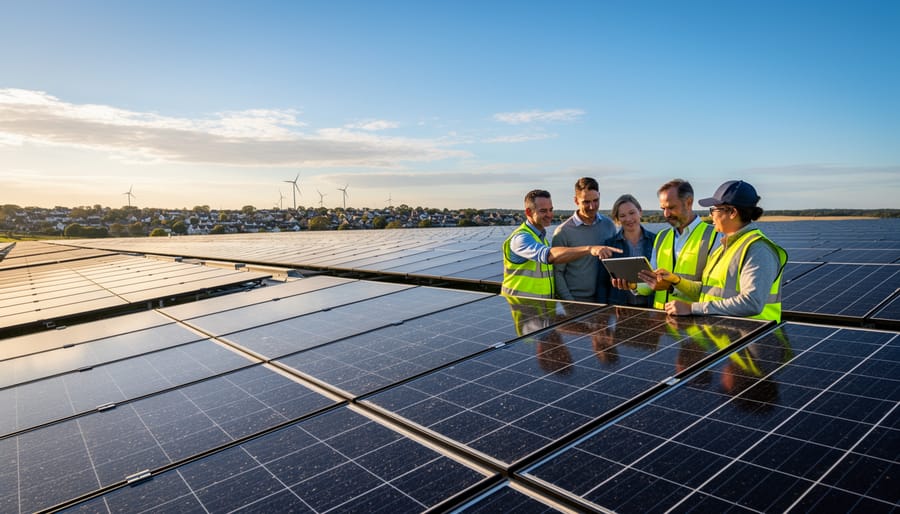
Climate solutions fall into three broad categories that scientists and policymakers use to organize action: mitigation strategies that prevent future emissions, adaptation measures that build resilience to unavoidable changes, and emerging approaches that remove carbon already in the atmosphere or modify Earth’s systems. Understanding these categories helps clarify where progress is happening and where gaps remain.
Mitigation solutions aim to reduce greenhouse gas emissions at their source. The most mature and rapidly scaling category includes renewable energy systems, solar panels, wind turbines, hydroelectric installations, and emerging technologies like green hydrogen. These aren’t theoretical anymore. According to the IPCC’s Working Group III contribution released in April 2022, solar and wind costs have dropped 85% and 55% respectively over the past decade, making them cheaper than fossil fuels in most markets. Electric vehicles represent another proven mitigation technology, with battery costs falling faster than projections suggested. Industrial decarbonization, though more challenging, is advancing through electrification of processes, alternative materials like green cement and steel, and efficiency improvements across manufacturing.
Nature-based solutions bridge mitigation and adaptation. Forests, wetlands, mangroves, and coastal ecosystems absorb carbon while protecting communities from storms and floods. Reforestation projects across tropical and temperate regions sequester gigatons of carbon annually when properly implemented. Soil carbon sequestration through regenerative agriculture practices offers another proven pathway, storing carbon in farmland while improving crop yields. These solutions deliver multiple benefits, biodiversity protection, water security, and economic opportunities alongside climate action.
The major solution types currently deployed include:
- Renewable energy systems: solar, wind, hydro, and geothermal replacing fossil fuel generation
- Nature-based solutions: reforestation, wetland restoration, regenerative agriculture
- Carbon capture technologies: direct air capture, bioenergy with carbon storage
- Climate-resilient infrastructure: flood defenses, drought-resistant water systems, cooling centers
- Behavioral and systemic changes: circular economy models, sustainable transportation, dietary shifts
Adaptation strategies don’t prevent warming but reduce its harm. Climate-resilient infrastructure includes everything from elevated roads in flood-prone areas to drought-resistant water systems and urban cooling centers for extreme heat. Coastal cities worldwide are deploying nature-based defenses like restored mangroves alongside engineered seawalls. Agricultural adaptation involves developing crop varieties tolerant to heat, drought, and shifting precipitation patterns, work happening at research institutions from the International Rice Research Institute to university agricultural programs.
Emerging approaches include carbon removal technologies that extract CO₂ directly from the atmosphere. Direct air capture facilities, though energy-intensive and expensive, are operating at demonstration scale in Iceland, Canada, and the United States. Bioenergy with carbon capture and storage combines biomass energy with geological carbon sequestration. These technologies need massive scaling to contribute meaningfully, but proof-of-concept exists. More controversial geoengineering research explores ideas like stratospheric aerosol injection or marine cloud brightening, though most scientists view these as potential emergency measures requiring far more study, not primary solutions.
The distinction matters because different solutions face different barriers. Renewables need faster deployment and grid integration. Nature-based solutions require land rights and biodiversity safeguards. Carbon removal needs breakthrough cost reductions. Adaptation demands funding for vulnerable communities. Progress is real across all categories, but the pace determines whether hope translates to sufficient action.
Where Climate Action Is Working: Evidence from Research
The data from climate change studies reveals measurable progress in several key areas, offering evidence-based grounds for optimism despite the urgency of the challenge.
Renewable energy deployment has exceeded even optimistic projections from a decade ago. Solar and wind power costs have plummeted by more than 80% since 2010, making them the cheapest sources of new electricity generation in most countries. This isn’t theoretical, these technologies are being installed at scale. Global renewable capacity additions broke records in 2025, with solar installations alone surpassing all fossil fuel additions combined. Dr. Sarah Chen, a climate policy researcher at MIT, notes that “we’re seeing the energy transition happen faster than our models predicted just five years ago, particularly in developing economies that are leapfrogging directly to renewables.”
Electric vehicle adoption is accelerating beyond early forecasts. Norway now has more electric vehicles on the road than petrol cars in new sales, and major economies including China and the European Union are approaching tipping points where EVs become the default choice rather than the alternative.
Several jurisdictions have achieved absolute emissions reductions while maintaining economic growth, disproving the false choice between climate action and prosperity. The European Union cut emissions by 30% between 1990 and 2025 while its economy grew substantially. Even in Canada, where emissions down but action stalls on policy implementation, national emissions show a downward trend, proof that decoupling growth from carbon is possible.
Policy successes are documented across different approaches. Carbon pricing systems now cover nearly a quarter of global emissions. Phase-out dates for internal combustion engines are forcing industry transformation. Methane reduction initiatives are targeting one of the most potent greenhouse gases with relatively quick wins.
Industrial sectors once considered impossible to decarbonize are making breakthroughs. Green hydrogen production is scaling up. Steel manufacturers are piloting zero-carbon processes. Cement producers are testing carbon-capture applications.
This represents the good news that climate scientists point to when asked about hope: not that the problem is solved, but that viable pathways exist and are being proven at scale. The technology works, the economics increasingly favor it, and real-world implementation is demonstrating that the transition is achievable.
The Gap Between What’s Possible and What’s Happening
We know what needs to happen. The technologies exist, the science is clear, and the pathways are mapped. Yet a troubling gap persists between what’s technically possible and what’s actually being implemented. This disconnect explains much of the anxiety behind climate concerns.
Take Canada as an instructive example. The country’s national emissions are on a downward trend, which sounds encouraging. However, climate action appears to be stalling, revealing a common pattern: initial progress followed by insufficient follow-through. Emissions declining isn’t the same as declining fast enough to meet targets aligned with limiting warming to 1.5°C or even 2°C.
The implementation gap has several dimensions. Technical feasibility doesn’t automatically translate to deployment at scale. We can build renewable energy systems quickly, but permitting processes, grid infrastructure upgrades, and financing structures lag years behind what’s physically possible. Political barriers compound this. Short election cycles create incentives for governments to delay costly transitions, even when the long-term economics favor rapid change.
Economic structures designed for fossil fuel dependence resist transformation despite cheaper alternatives emerging. Industries with existing infrastructure argue for gradual transitions, while climate science indicates we need exponential curves, not linear progress. The tools to accelerate action exist, including AI for climate action that can optimize energy systems and predict climate impacts with unprecedented precision.
What makes this gap particularly challenging is that it’s not primarily a knowledge problem anymore. We’re not waiting for breakthrough technologies to materialize. The friction lies in coordinating financial systems, regulatory frameworks, labor transitions, and political will across thousands of jurisdictions simultaneously. Scientists emphasize this isn’t a reason for despair but rather clarity about where effort needs focusing. The technical possibility remains real. Closing the implementation gap requires translating scientific urgency into policy action and economic incentives that match the scale of the challenge.
Common Questions About Climate Hope
Climate scientists field these questions constantly, not because the answers are simple, but because they matter profoundly to how we respond to the crisis.
Is it too late to stop climate change?
It’s too late to prevent all climate change, warming is already occurring, but it’s not too late to limit how severe it becomes. The IPCC’s seventh assessment cycle, which began in July 2023, continues to map pathways for limiting warming to levels that avoid the most catastrophic impacts, showing that every fraction of a degree matters.
What’s the difference between hope and optimism in climate science?
Optimism suggests things will naturally turn out well; hope, in the scientific context, means recognizing that viable pathways exist if we act decisively. Climate scientists distinguish between comforting predictions and evidence-based possibilities that require immediate, sustained effort.
Will technology alone save us from climate change?
Technology provides essential tools, renewable energy, carbon capture, efficient systems, but deployment requires policy, investment, and societal change. No single technological breakthrough eliminates the need for rapid emissions reductions across all sectors starting now.
What can individuals actually do that makes a difference?
Individual actions matter most when they create pressure for systemic change: voting for climate-committed leaders, demanding corporate accountability, shifting consumption patterns that signal market demand, and supporting community resilience efforts. Personal carbon footprints are real, but structural transformation determines whether we meet climate targets.
The scenario analysis framework scientists use reveals why these questions resist simple yes-or-no answers. Different emissions trajectories produce dramatically different outcomes over the coming decades. A pathway with rapid, deep cuts starting immediately leads to stabilized warming around 1.5 to 2 degrees Celsius above pre-industrial levels, challenging but manageable with aggressive adaptation. Delayed action or incremental reductions push us toward 3 degrees or higher, where adaptation becomes exponentially harder and some impacts turn irreversible.
Canada’s situation illustrates this complexity: national emissions show a downward trend, which represents genuine progress, yet the pace of climate action appears to be stalling relative to what the science demands. This pattern, real achievements that remain insufficient, defines the global challenge. We’re not failing completely, but we’re not succeeding fast enough.
Scientists emphasize that hope requires acknowledging this gap honestly. Pretending current efforts are adequate undermines urgency; claiming everything is doomed paralyzes action. The evidence-based middle ground recognizes both the narrowing window and the fact that the window remains open, contingent on choices made in the next few years.
The evidence is clear: hope for climate change isn’t wishful thinking, it’s a scientific assessment of what remains possible. Climate change studies in 2026 confirm that pathways to limit catastrophic warming still exist, though they require immediate and sustained action at scales we haven’t yet achieved. The window for preventing the worst outcomes is narrowing, but it hasn’t closed.
What makes this hope credible is its foundation in measurable progress. Renewable energy costs have plummeted, some national emissions are declining, and the technological toolkit for decarbonization exists. Scientists who study these systems aren’t optimistic because they’re naive, they’re cautiously hopeful because the physics, chemistry, and engineering solutions work when deployed.
The honest reality is that hope requires effort. The gap between what’s technically feasible and what’s politically implemented remains wide, and every fraction of a degree matters for human wellbeing and ecosystem survival. Research shows we can still build a livable future, but only if society treats this decade as the critical juncture it is.
Climate hope in 2026 means recognizing both the urgency and the agency we still possess to shape outcomes.