

The Paris Agreement creates more than international climate commitments. It drives billions of dollars in research funding and coordinates global scientific collaboration on an unprecedented scale. For researchers in climate science, this treaty translates directly into competitive grants, multinational partnerships, and access to shared data infrastructure that wouldn’t exist without the framework it established.
Since countries ratified the Agreement in 2016, funding mechanisms tied to its goals have grown substantially. The International Initiative for Research on Climate Change Adaptation and Mitigation, launched in 2023, exemplifies this shift. Canada’s Research Coordinating Committee committed $60 million through the New Frontiers in Research Fund, while international partners from Brazil, Germany, Norway, South Africa, Switzerland, the United Kingdom, and the United States contributed an additional $30 million, bringing the competition budget beyond $90 million.
These funds aren’t distributed as general climate research support. They target specific priorities outlined in the UN Intergovernmental Panel on Climate Change’s Sixth Assessment Report, requiring projects to address at least two of the eight representative key risks identified by the global scientific community. This structure ensures research dollars flow toward the most pressing knowledge gaps identified through rigorous international assessment.
The Agreement’s influence extends beyond funding announcements. It has reshaped how climate scientists work, creating incentive structures for international teams, standardizing data protocols across borders, and establishing career pathways for researchers who might otherwise struggle to secure support for high-risk, interdisciplinary work. Understanding how to access these opportunities requires knowledge of eligibility criteria, application processes, and the specific obligations that come with Paris-aligned research funding.
How the Paris Agreement Transformed Climate Research Funding
The Paris Agreement fundamentally restructured climate research funding by embedding science investment directly into international treaty obligations. Article 9.1 of the Agreement requires developed nations to provide financial resources to assist developing countries with both mitigation and adaptation and this commitment triggered a cascade of coordinated research funding initiatives that transcended traditional bilateral science agreements. Rather than leaving climate research to individual national budgets, the Paris Agreement strengthens knowledge systems through explicit language demanding transparency, coordination, and evidence-based policymaking across borders.
This transformation became concrete with the International Initiative for Research on Climate Change Adaptation and Mitigation, launched in January 2023 with over C$90 million in coordinated funding. The Canada Research Coordinating Committee committed C$60 million through the Social Sciences and Humanities Research Council’s New Frontiers in Research Fund, while research funders from Brazil, Germany, Norway, South Africa, Switzerland, the United Kingdom, and the United States contributed an additional C$30 million. Critically, this wasn’t simply pooled money but a unified framework requiring projects to tackle at least two of the eight representative key risks identified in the IPCC Sixth Assessment Report, from cascading water supply disruptions to biodiversity loss in terrestrial ecosystems.
The Agreement’s emphasis on adaptation frameworks proved particularly catalytic. Signatories committed to establishing national adaptation plans grounded in science, creating immediate demand for regionally specific research on climate impacts and response strategies. This policy architecture incentivized countries to fund not isolated studies but collaborative projects spanning multiple geographies and disciplines, recognizing that climate risks ignore borders and require coordinated evidence for effective responses.
The International Initiative: Structure and Partners
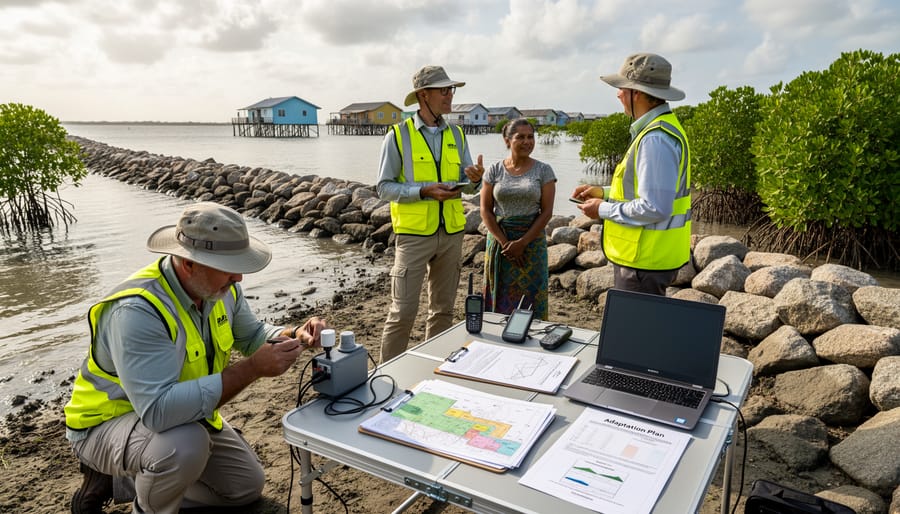
The International Initiative for Research on Climate Change Adaptation and Mitigation operates as a multilateral consortium structured around shared funding commitments and coordinated research priorities. Canada anchors the initiative through the Canada Research Coordinating Committee, which committed C$60 million administered by the Social Sciences and Humanities Research Council of Canada (SSHRC) via the New Frontiers in Research Fund (NFRF). This core investment provides the administrative infrastructure for what became a genuinely global endeavour.
International partners from Brazil, Germany, Norway, South Africa, Switzerland, the United Kingdom, and the United States joined the consortium, collectively contributing over C$30 million in additional funding. Each nation brings its own climate research agencies and priorities to the table, creating a funding pool that exceeded C$90 million at launch in January 2023. The structure allows researchers from any participating country to lead proposals, provided they meet the international collaboration requirements.
| Country/Region | Administering Body | Funding Commitment |
|---|---|---|
| Canada | SSHRC (New Frontiers in Research Fund) | C$60 million |
| Brazil, Germany, Norway, South Africa, Switzerland, UK, US | National research funding agencies | Over C$30 million combined |
| Total Initiative | Coordinated through CRCC | C$90+ million |
The partnership model reflects how the Paris Agreement’s emphasis on international cooperation translates into practical research infrastructure. Rather than siloed national programs, the initiative requires funded projects to address at least two of the eight representative key risks identified in the IPCC’s Sixth Assessment Report, ensuring that research priorities align with the most pressing global challenges. This structure deliberately breaks down geographical and disciplinary barriers, connecting climate scientists with social scientists, adaptation specialists with mitigation researchers, and institutions across continents into cohesive teams tackling shared problems.
Eligibility Requirements for Research Teams
Funding under the International Initiative for Research on Climate Change Adaptation and Mitigation is open to research teams that meet specific structural and scientific criteria designed to advance international collaboration on climate challenges. The eligibility framework balances institutional capacity with the flexibility needed for diverse interdisciplinary partnerships.
Institutional eligibility centers on affiliation with recognized research organizations in participating countries. Researchers must be based at universities, government research facilities, or accredited non-governmental research institutions in Canada, Brazil, Germany, Norway, South Africa, Switzerland, the United Kingdom, the United States, or other partner nations. The initiative does not restrict participation to principal investigators at major research universities, smaller institutions can join consortia as long as they contribute genuine research capacity and expertise relevant to the project’s climate adaptation or mitigation focus.
- Applicants must hold positions at accredited research institutions in one of the participating countries
- Each project requires an international partnership with collaborators from at least two different participating nations
- Teams must address at least two of the eight representative key risks identified in the IPCC Sixth Assessment Report
- Projects must demonstrate clear relevance to climate change adaptation or mitigation research
- Disciplinary scope is intentionally broad, welcoming natural sciences, social sciences, engineering, and humanities approaches
The international partnership requirement is non-negotiable. Each funded project must include active researchers from at least two participating countries, with defined roles and contributions from each national team. This structure ensures the initiative advances cross-border knowledge exchange rather than simply funding parallel national projects. Teams submit a single joint proposal that identifies lead investigators from each country, details the division of research responsibilities, and explains how collaboration will produce outcomes neither team could achieve independently.
The mandate to address at least two IPCC key risks, ranging from coastal and low-lying systems to food security, requires teams to demonstrate how their research tackles interconnected climate challenges. A project examining agricultural adaptation in drought-prone regions, for instance, might address both the food security risk and the risk to rural livelihoods. The vetting process evaluates not just scientific quality but the credibility of proposed international partnerships and the project’s potential to generate actionable knowledge across multiple climate risk domains.
How to Apply for Paris Agreement-Linked Research Funding
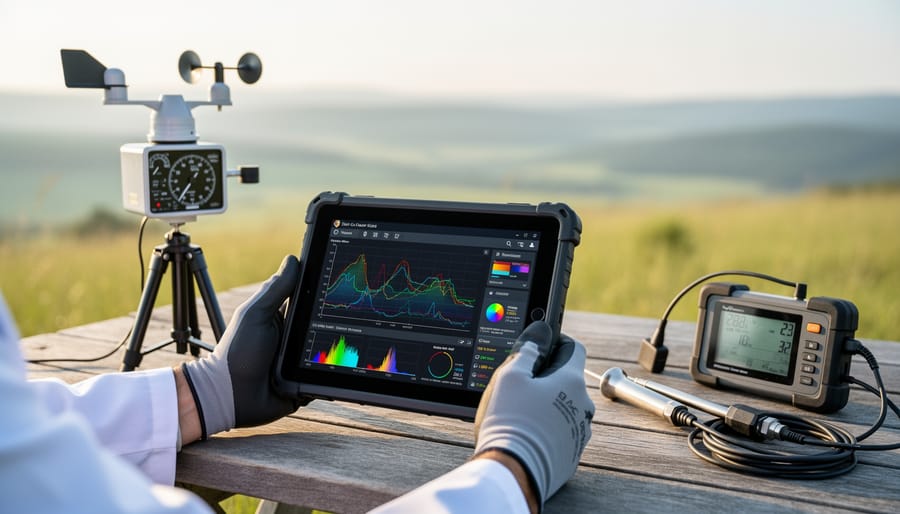
Accessing Paris Agreement-linked climate research funding requires strategic planning and careful attention to international partnership requirements. The application process centres on the New Frontiers in Research Fund (NFRF), administered by the Social Sciences and Humanities Research Council of Canada, which opened for submissions following the January 2023 launch of the International Initiative.
Start by identifying potential international partners in participating countries. Your research team must include collaborators from at least two nations involved in the consortium, which includes funders from Brazil, Germany, Norway, South Africa, Switzerland, the United Kingdom, the United States, and other partners. Each partner country has designated funding agencies that will evaluate their portion of the collaborative proposal, so early contact with these agencies helps clarify specific national requirements.
The core application submits through the NFRF portal, where you’ll need detailed documentation. Your proposal must explicitly address at least two of the eight representative key risks identified in the IPCC Sixth Assessment Report. These risks span heat-related mortality, ecosystem collapse, food insecurity, water scarcity, coastal flooding, and other critical climate impacts. The evaluation committee looks for clear connections between your research methodology and these risk frameworks.
Budget proposals require coordination across funding agencies. The C$60 million from the Canada Research Coordinating Committee gets allocated alongside the C$30+ million from international partners, creating a total competition budget exceeding C$90 million. You’ll prepare separate budget justifications for each participating country’s funding body, following their distinct formats and eligible expense categories.
Timeline management is crucial. Competition schedules typically allow three to six months from call opening to submission deadline, with staged review processes that can extend another six months. International coordination adds complexity, as partner agencies in different countries may operate on varying fiscal calendars and approval timelines.
Evaluation criteria emphasize scientific excellence, international collaboration quality, capacity to address IPCC key risks, and potential for real-world climate adaptation or mitigation impact. Reviewers from multiple countries assess proposals, looking for genuine integration rather than parallel national projects loosely connected. Strong applications demonstrate how the international partnership creates research capabilities that no single country could achieve independently.
Institutional endorsement from your host university or research organization is mandatory before submission, and many institutions require internal pre-review processes that can take several weeks.
Researcher Rights, Obligations, and Deliverables
Securing funding through Paris Agreement-linked initiatives brings substantial responsibilities alongside the research opportunity. Teams awarded grants must demonstrate concrete progress toward addressing climate adaptation and mitigation challenges while maintaining rigorous collaborative standards across national boundaries.
The core deliverable centers on producing actionable research that directly tackles IPCC-identified key risks, which include everything from infrastructure vulnerability to food security under climate stress. Researchers cannot simply acknowledge these risks in passing, they must design methodologies that generate practical insights for policymakers and communities facing these threats. This often means collaborating across disciplines, integrating AI for climate data analysis with traditional field observations or combining social science approaches with technical solutions like carbon capture tech assessment.
International collaboration requirements extend beyond nominal partnerships. Teams must coordinate regular knowledge exchange with researchers in partner countries, contributing findings to shared databases accessible to all consortium members. Publication expectations typically include open-access dissemination of results, ensuring that research funded through public international cooperation reaches global audiences without paywalls.
Reporting obligations multiply in multi-country projects. Researchers submit progress updates not only to SSHRC but also to corresponding agencies in partner nations, each with distinct reporting formats and timelines. Intellectual property arrangements get negotiated upfront, establishing how discoveries, datasets, and methodologies will be shared among institutions across different legal jurisdictions. Most agreements default to joint ownership with provisions for equitable use in further research.
Timeline commitments usually span three to five years, with defined milestones for data collection, analysis phases, and dissemination activities. Missing deadlines or failing to maintain international coordination can jeopardize continued funding and damage institutional credibility within the consortium.
Where to Get Official Information and Support
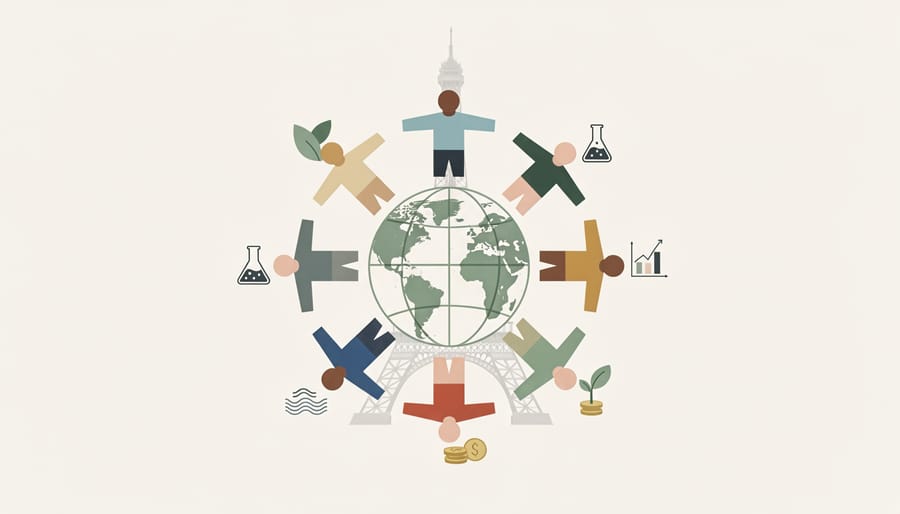
Researchers pursuing Paris Agreement-linked climate funding can access comprehensive support through a network of national and international agencies coordinating this initiative. The Social Sciences and Humanities Research Council of Canada (SSHRC) serves as the primary administrator for the $60 million Canadian contribution through its New Frontiers in Research Fund portal, where applicants find detailed program guidelines, eligibility criteria, and submission platforms. The Canada Research Coordinating Committee provides strategic oversight and coordinates among the three federal research funding agencies.
For international collaboration requirements, researchers should contact partner funding agencies in participating countries:
- Brazil: National Council for Scientific and Technological Development (CNPq) and São Paulo Research Foundation (FAPESP)
- Germany: German Research Foundation (DFG) and Federal Ministry of Education and Research
- Norway: Research Council of Norway
- South Africa: National Research Foundation
- Switzerland: Swiss National Science Foundation
- United Kingdom: UK Research and Innovation, particularly through its Global Challenges Research Fund
- United States: National Science Foundation and relevant mission agencies
The UN Intergovernmental Panel on Climate Change website provides essential context on the eight representative key risks from its Sixth Assessment Report, which all proposals must address. Each partner agency maintains dedicated pages for this initiative with country-specific application procedures, budget allocations, and timelines that align with the January 2023 launch. Institutional research offices can also navigate multi-country proposal coordination and identify suitable international partners for consortium building.
Frequently Asked Questions
What does Article 9.1 mean for research funding?
Article 9.1 of the Paris Agreement commits developed countries to provide financial resources to assist developing nations with mitigation and adaptation efforts. While this provision primarily addresses technology transfer and capacity building, it has catalyzed parallel research funding streams like the International Initiative, where countries invest in collaborative science to support global climate goals.
Can smaller institutions participate in international consortia?
Yes, smaller institutions can join international research teams through partnership arrangements with lead applicants. The initiative emphasizes collaboration across countries and institutions, allowing smaller organizations to contribute specialized expertise to projects addressing the eight IPCC key risks.
How are the eight IPCC key risks defined?
The eight representative key risks identified in the IPCC Sixth Assessment Report include threats like coastal flooding, heat-related mortality, food insecurity, and ecosystem loss across different warming scenarios. Funded projects must address at least two of these risks to ensure research priorities align with the most urgent global climate challenges documented by the IPCC.
What happens after the $100 billion climate finance goal?
While the $100 billion annual climate finance commitment from developed to developing nations serves a different purpose than research funding, its framework influences how collaborative science programs evolve. Future research initiatives will likely continue under renegotiated climate finance agreements, with emphasis on adaptation and mitigation priorities that emerge from ongoing climate change updates and assessment cycles.
These questions reflect the practical concerns researchers face when navigating Paris Agreement-linked funding opportunities. Understanding Article 9.1 helps clarify the distinction between direct climate finance obligations and the research infrastructure those commitments inspire. The eligibility criteria intentionally accommodate diverse institutional sizes and capacities, recognizing that breakthrough climate science often emerges from unexpected partnerships between major research centers and specialized smaller institutions.
The Paris Agreement has proven to be more than a diplomatic milestone, it has fundamentally restructured how the global scientific community addresses climate challenges. By establishing binding commitments under Article 9.1 and creating accountability frameworks for adaptation and mitigation, the Agreement transformed climate research from a patchwork of isolated national efforts into a coordinated international enterprise. The C$90+ million International Initiative for Research on Climate Change Adaptation and Mitigation exemplifies this shift, demonstrating how treaty obligations translate directly into research infrastructure that crosses borders and disciplines.
This new funding architecture opens doors for researchers at every career stage and from diverse institutions. Whether you’re examining coastal vulnerability in developing nations or modeling carbon capture technologies, these initiatives reward collaboration that addresses the IPCC’s identified key risks. The ongoing nature of Paris-linked funding means opportunities will continue emerging as nations refine their Nationally Determined Contributions and invest in evidence-based policy.
For researchers considering these opportunities, the message is clear: the infrastructure exists, the partners are engaged, and the problems demanding solutions are urgent. Climate research today benefits from unprecedented international coordination, with funding agencies across continents working from shared frameworks rather than competing agendas. This collaborative model accelerates discovery and ensures findings reach policymakers who can implement them at scale, turning scientific insights into real-world climate action that protects vulnerable communities and ecosystems worldwide.