
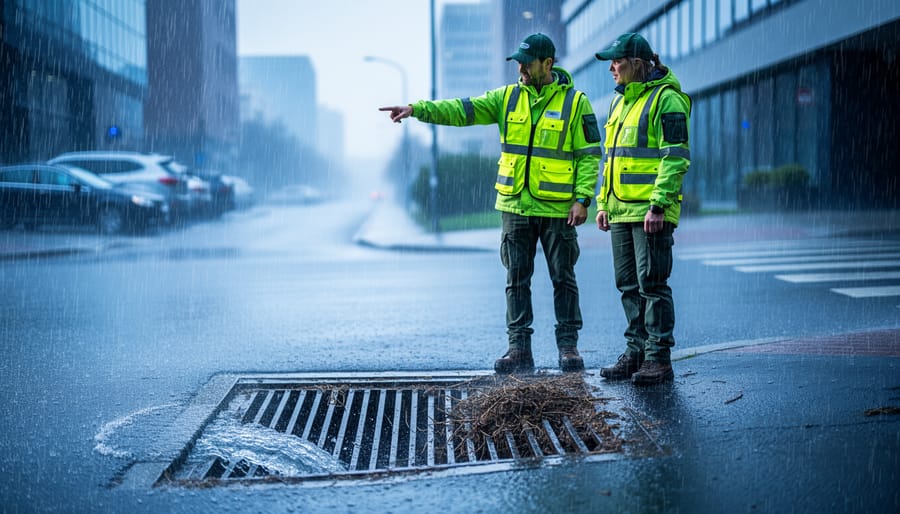
Climate adaptation knowledge exchange is the structured sharing of evidence, tools, and lived experience among the people who plan for climate impacts, so that a flood-defense lesson learned in one city can inform decisions in another. It covers everything from scientific datasets and risk maps to practical know-how from farmers, engineers, and local planners. Increasingly, AI helps carry that knowledge across languages, regions, and disciplines.
Why does this matter? Adaptation problems are rarely unique. A coastal town in one country and a delta community in another often face similar pressures, yet they may never learn what the other has tried. Without a way to share what works, and what doesn’t, communities repeat costly mistakes and slow their own preparation.
This is where AI-driven climate adaptation strategies come in. Machine learning can sort thousands of reports, match a local challenge to relevant past solutions, translate technical findings into usable guidance, and flag gaps where evidence is thin. It doesn’t replace human judgment. It shortens the distance between a question and the knowledge that answers it.
This article defines the concept in plain terms, explains how AI-supported exchange works and what it’s built from, and shows how it’s used in practice. It also looks honestly at where its limits lie, so you can judge both its promise and its boundaries.
What Climate Adaptation Knowledge Exchange Means
Why Sharing Adaptation Lessons Is Hard
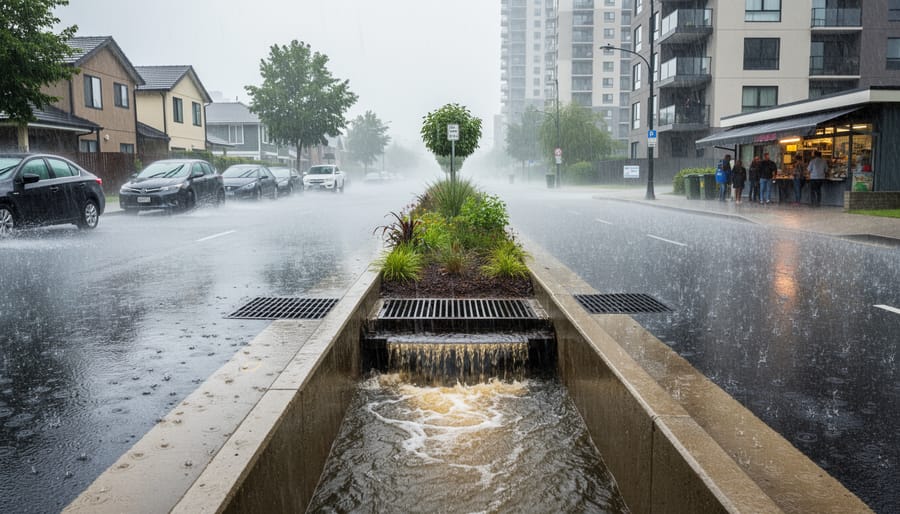
Picture two regions, one on a river delta and one inland, both watching floodwater climb a little higher each year. Each team builds its own response. Neither knows the other has already tested a cheaper fix. That kind of duplication is common, and it comes down to a handful of practical barriers.
First, the evidence is scattered. Reports, project archives, and local experience sit in different places and formats, which is why researchers describe fragmented adaptation knowledge as a real obstacle. Terminology adds friction too. One team’s “resilience” is another’s “preparedness,” and language gaps shut out whole bodies of work. The same goes for adjacent fields: lessons from low-carbon energy planning rarely reach the people designing flood defenses.
Context is the hardest part. A solution that works in one place depends on soil, budgets, governance, and culture, so judging whether it will transfer takes care.
A few terms help here:
- Climate adaptation
- Adjusting systems and communities to cope with climate impacts already happening or expected.
- Knowledge exchange
- The two-way sharing of lessons, data, and experience between people who produce knowledge and people who use it.
- Adaptation strategy
- A planned set of actions for reducing climate risk in a specific place.
- Climate resilience
- The ability to absorb climate shocks and recover without losing essential functions.
- Machine learning
- Computer methods that find patterns in large datasets, used here to sort and match adaptation evidence.
How AI Is Changing the Way Adaptation Knowledge Travels
The AI Tools Behind the Exchange
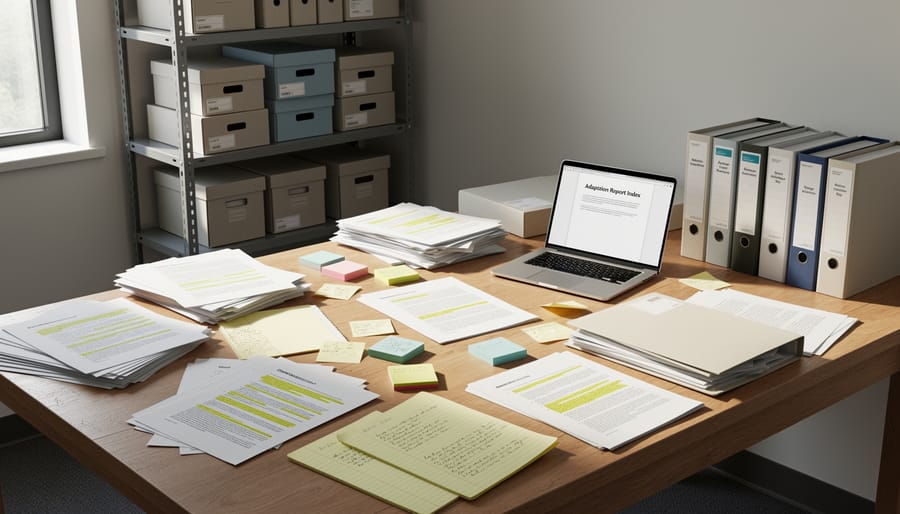
Several distinct tools do the work behind AI-supported knowledge exchange, and each handles a different part of the problem.
Natural language processing (NLP) is the reading layer. Adaptation lessons live in thousands of project reports, policy documents, and scientific papers, often in different languages. NLP systems can scan this material, pull out the key findings, and translate technical language into plain guidance. A planner in one country can then find a relevant lesson recorded in another without reading every page.
Machine learning is the pattern-finding layer. Climate and impact data are huge and messy, covering things like rainfall records, heat readings, crop yields, and flood damage. Machine learning methods can spot relationships in that data that people would struggle to see by eye, such as which conditions tend to precede a particular type of hazard. These patterns help show where a shared lesson is most likely to apply.
Knowledge graphs are the connecting layer. A knowledge graph maps relationships between things: a project, the risk it addressed, the place it happened, and the outcome it produced. Linking these pieces lets a user move from one flood-protection project to related heat or drought work, and to the conditions that made each succeed or struggle.
Downscaled climate models are the local relevance layer. Global models describe broad trends, but communities need to know what is likely to happen in their own valley, city, or coastline. Downscaling refines coarse projections into finer local detail, which makes it easier to judge whether a solution from elsewhere fits local conditions.
Together, these tools reduce the effort of finding and matching knowledge. They support human judgment rather than replacing it, since people still decide what suits their community.
How AI-Supported Knowledge Exchange Is Used in Practice
Shared knowledge only matters when someone uses it, and the clearest way to see its value is to look at where planners and practitioners put it to work. Across very different settings, the pattern is similar: a team facing a local risk searches a shared platform, finds how others handled something comparable, and adapts the approach to its own conditions. AI-assisted search shortens that hunt from weeks of reading to a few well-targeted queries, and it can surface relevant material even when it is filed under different terms or written in another language.
- Urban heat and flood planning: Cities adapt cooling strategies such as tree canopy, reflective surfaces, and stormwater design by comparing what worked in neighborhoods with similar layouts and climates.
- Agriculture and water management: Farmers and extension services find drought-resilient crop choices and irrigation practices that have performed well under conditions close to their own.
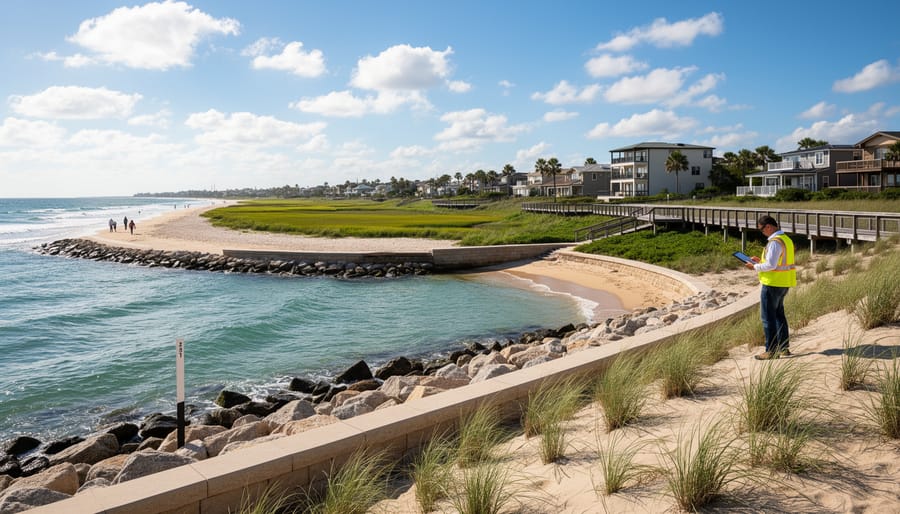
- Coastal protection: Planners weigh options like mangrove restoration, living shorelines, and engineered barriers by reviewing documented outcomes from comparable coastlines.
- Early warning and disaster preparedness: Communities draw on shared lessons about alert design, evacuation planning, and local communication channels to build warning systems people actually trust and act on.
What makes this more than a reading exercise is the matching step. A mountain community dealing with shifting rainfall and glacial melt, for example, can learn a great deal from how other highland regions have adjusted water storage and hazard mapping. Following developments in Nepal adaptation is one way to see how such lessons are weighed against steep terrain, seasonal monsoon patterns, and local livelihoods.
Good practice here rarely means copying a solution wholesale. Practitioners treat a shared example as a starting point, then test it against local soils, budgets, building stock, and cultural priorities. AI helps by narrowing a large body of experience down to the most relevant cases, while human judgment decides what is realistic on the ground. That division of labor, with machines doing the sifting and people making the call, is what lets proven ideas travel without losing sight of the place they are meant to serve.
Making Exchange Trustworthy: Limits and Good Practice
AI can speed up climate adaptation knowledge exchange, but it inherits the weaknesses of the material it learns from. Understanding those limits is what makes the exchange trustworthy rather than merely fast.
The first problem is uneven data. Many under-monitored regions have few weather stations, sparse impact records, and little published research. AI trained on abundant material tends to favor well-documented places, so a solution from a heavily studied city may surface again and again while equally valid lessons from elsewhere stay invisible. A second risk is confident but wrong guidance. A language model can phrase a shaky recommendation in the same assured tone as a sound one, and a measure that worked in one climate or community may fail in another.
There is also a question of respect. Local and Indigenous knowledge, built over generations of living with a changing landscape, is often unwritten and easily overlooked. When it is included, it should be credited and shared with the consent of the people who hold it.
Researchers and practitioners point to a few consistent safeguards. Human experts review AI outputs before they shape decisions. Sources are shown openly so users can check where a recommendation came from. Communities take part in defining which knowledge is shared and how it is used. For a grounded view of the wider picture, see what scientists say about progress and uncertainty.
Seen this way, the limits are a guide to good practice. Treating AI as one careful tool among many keeps the exchange honest and useful.
Common Questions About AI and Climate Adaptation Knowledge Exchange
How is adaptation different from mitigation?
Mitigation cuts greenhouse gas emissions to limit future warming, while adaptation adjusts communities and systems to impacts already underway, such as heat, floods, and drought. Most plans need both.
Can AI replace local expertise?
No. AI can surface and organize relevant experience, but residents, farmers, engineers, and Indigenous knowledge holders understand local conditions that data rarely captures. The best results come when people review and guide what AI suggests.
Does AI make adaptation planning more accurate?
It can help planners spot patterns and find comparable cases faster, but accuracy still depends on the quality and coverage of the underlying data. Outputs should be checked against local knowledge and transparent sources.
How can smaller communities with limited data take part?
They can start by learning from documented experience elsewhere, then add their own observations and lessons back into shared platforms. Partnerships with universities or regional networks can fill technical gaps.
Who can actually use these tools? In principle, almost anyone with an interest in adaptation. Municipal planners, farmers’ cooperatives, students, NGOs, and researchers can all search shared platforms, and many open resources are free to browse. Access to funding and technical support still varies, which is why collaboration matters. Readers curious about how international research money flows to this kind of work can explore Paris research funding for a closer look at eligibility and partnership routes.
Climate adaptation has always been a local story. A farmer reshapes planting dates, a city redesigns its drains, a coastal village rebuilds its shoreline. The real power comes when those hard-won lessons stop being isolated and start traveling. That is what knowledge exchange does: it turns scattered local experience into shared resilience that any community can draw on.
AI-Driven Climate Adaptation Strategies help that knowledge reach the people who need it. They read what no single team could, translate technical findings into plain guidance, and point planners toward experience that fits their own conditions. They work best alongside human judgment, local expertise, and open sourcing, not in place of them.
The field is moving quickly, and the outlook is encouraging. Follow ongoing research, look into open adaptation knowledge resources, and consider what your own community has learned that others could use. Shared knowledge grows more valuable every time it is passed along.