

Climate change has no balanced ledger of pros and cons, and the research doesn’t treat it as one. What the evidence offers is a map of documented risks, a short list of claimed benefits that come with heavy caveats, and a set of real trade-offs in how we respond. The risk side is the clearest. Climate risk climbs as more carbon dioxide enters the atmosphere, and the impacts grow exponentially rather than in a straight line. In the United States, shifts in temperature, precipitation and sea level are expected to worsen damage from hurricanes and floods.
The more useful question is what acting costs and what it returns. A World Health Organization report estimates that six climate and health measures could save 1.6 million lives a year and generate US$3.9 trillion in economic welfare benefits annually. The IPCC, whose Assessment Reports are the benchmark for this field, is giving growing attention to co-benefits, co-costs and trade-offs in mitigation and adaptation.
If you’re new to the topic, start with what climate change is and how it works. Then read on for what’s at stake, what the evidence says about claimed upsides, and where the real choices lie.
What ‘Pros and Cons’ Means in Climate Change Studies
Why risk is not a straight line
Climate risk doesn’t climb in a neat, even line. Researchers find that risk increases as more carbon dioxide is added to the atmosphere, and that the impacts exponential not linear pattern holds: each additional increment of carbon dioxide tends to bring larger consequences than the one before.
Think of a bridge carrying more and more weight. For a while, a little extra load changes almost nothing. Then the margin for error shrinks, and the same small addition starts to matter a great deal. Natural and human systems behave in a similar way. Many can absorb modest changes in temperature, rainfall or sea level, but the stress compounds as those changes grow.
This is why scientists focus on the pace and scale of added carbon dioxide, not just where the climate stands today. It also explains why early, smaller steps can matter more than they first appear: they help keep us on the gentler part of the curve.
The Documented Risks: Where the Evidence Is Strongest
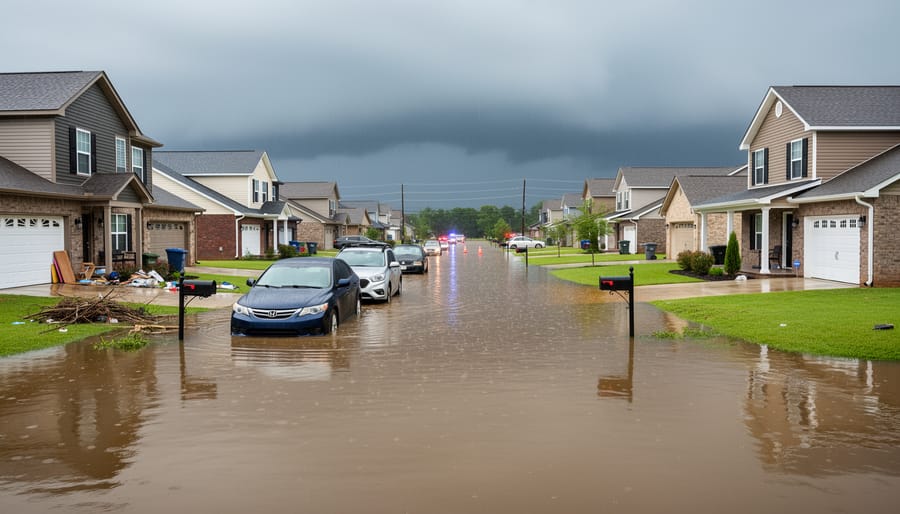
What this means for the United States
For readers in the United States, the clearest research signal is about damage from extreme weather. Changes in temperatures, precipitation, and sea levels are expected to increase damage from natural disasters such as hurricanes and floods. That finding matters because it ties physical shifts directly to money, safety, and daily life.
Think about what sits in harm’s way: roads, bridges, water systems, power lines, and homes. When storms and floods grow more damaging, the cost lands first on that infrastructure, then on the households and businesses that depend on it. Insurance is where many people feel it, since higher expected losses tend to show up in coverage terms and premiums. Planning is the lever that connects the two, because decisions about where to build and how to build shape how much damage occurs at all.
Risks also differ by place, so it helps to look at regional climate impacts alongside national findings. Local conditions decide which hazards matter most.
Claimed Benefits of a Warming World: What Holds Up and What Doesn’t
Some people point to real, observable upsides of a warming climate. Researchers take these claims seriously, then ask the harder question: do they hold up once you look at the whole system, across regions and over time? Usually they don’t, at least not as net gains.
Here are the benefits most often cited, each with the caveat researchers attach:
- Longer growing seasons in cooler regions: gains are regional, and heat stress, drought and shifting pests can erase them.
- Reduced winter heating demand: the savings are partly offset by higher summer cooling needs and more extreme cold-and-heat swings.
- Easier access to northern waterways and resources: this opens only for a time, and it comes with ecosystem disruption and infrastructure risks such as thawing ground.
- Milder winters in some places: these tend to be temporary and sit alongside greater flood, storm and wildfire exposure.
What links these examples is that the benefit is local and the cost is shared. A farmer in one area may see a longer season, while another region faces failed harvests. A household may spend less on heating, yet live in a place where hurricane and flood damage is expected to grow. The IPCC’s assessments exist precisely to weigh these effects together, rather than letting one favorable data point stand in for the whole picture.
Timing matters too. Because climate risk increases as more carbon dioxide is added to the atmosphere, and impacts rise exponentially rather than linearly, a modest early advantage can give way to larger losses as warming continues. A benefit that exists at lower levels of warming may not survive higher ones.
Fairness cuts both ways. Dismissing every claimed upside as myth would be inaccurate, because some are genuine in specific places and moments. But the research consistently finds them narrower and less durable than the risks. You can see how these patterns play out in real settings through these climate change examples, where an apparent opening in one respect often arrives alongside serious disruption in another.
The Benefits of Acting: Health and Economic Co-Benefits
Most of the climate conversation focuses on what could go wrong. There is a second, more encouraging question that researchers increasingly ask: what do we gain by acting? The short answer to “can climate action have health and economic benefits?” is yes, and the evidence for that comes from some of the world’s leading health institutions.
A World Health Organization report estimates that six climate and health measures could save 1.6 million lives a year. The same report estimates those measures could generate US$3.9 trillion in economic welfare benefits annually. Those are large numbers, and they point to something researchers call co-benefits: gains that arrive alongside the primary goal of limiting warming.
Why would climate measures help people’s health? Think about what many of these measures actually do. Cutting the burning of fossil fuels reduces the pollution people breathe every day. Cleaner air means fewer respiratory and heart problems. Health systems built to withstand floods, heat waves and storms keep serving patients when they are needed most. In this way, a policy aimed at the atmosphere can show up in a hospital waiting room, a school attendance record or a household budget.
It helps to be clear about what these figures are. They come from modeling, and models depend on assumptions about how measures are adopted, how populations respond and how benefits are valued in dollars. Different assumptions can produce different totals, so the estimates are best read as an indication of scale rather than a guarantee.
Still, the direction is worth noting. The pros of acting are not abstract. They are measured in lives, in healthier communities and in economic welfare, and that gives the research community good reason for cautious optimism.

Trade-offs and Co-Costs of Climate Responses
Climate action is not free of friction, and honest research says so. Both mitigation and adaptation carry costs, technological hurdles and financial challenges. Building new systems, retrofitting old ones and paying for the transition all demand resources, and those resources are not always available where the need is greatest.
The IPCC’s Working Group III notes that synergies and trade-offs with adaptation measures are of increasing interest, alongside co-benefits, risks and links to sustainable development. The IPCC’s Seventh Assessment Report is also set to cover co-benefits, avoided impacts, risks and co-costs of mitigation and adaptation. In plain terms, researchers want the full ledger, not half of it.
| Type of response | Potential co-benefits | Potential co-costs or challenges | What researchers examine |
|---|---|---|---|
| Mitigation | Cleaner air, improved public health, avoided future damage | Upfront investment, technology readiness, disruption to existing industries | How measures affect health, jobs and development goals |
| Adaptation | Greater resilience to floods, storms and heat | Ongoing maintenance costs, uneven access to funding | Who is protected, who is left out, and how measures interact with mitigation |
A single measure can help in one area and strain another. A shift toward low-carbon energy, for example, can cut emissions while raising questions about financing, grid readiness and who bears the transition’s costs.
That is why Climate Change Studies increasingly analyze interactions between measures rather than treating each in isolation. Looking at how responses reinforce or undercut one another, and how they line up with sustainable development goals, helps decision-makers choose combinations that deliver more benefit for the cost.
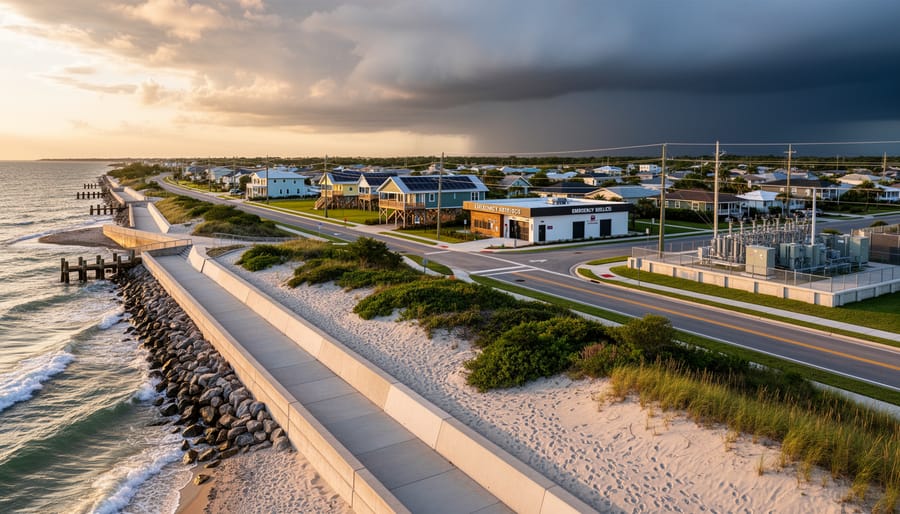
Who Is Affected: Eligibility Requirements for Climate Assessments and Support Programs
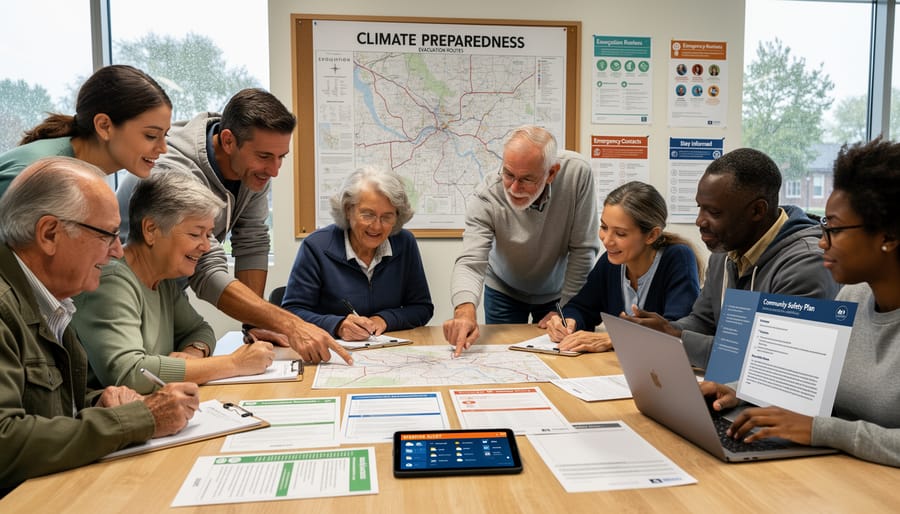
Not everyone asks the same question when they read about climate risk. Some want to know whether the research applies to them. Others want to know whether they qualify for help. Those are different questions, and the answers differ.
On the research side, assessments such as the IPCC reports cover everyone. Climate risk is global, so the findings describe people in every region, though impacts fall unevenly. Support programs are another matter. Eligibility for adaptation, health or resilience assistance varies by country, region and administering body, and no single universal rule exists. A program open in one jurisdiction may not exist in the next.
What research and support efforts tend to focus on, in general terms, are groups with higher exposure or fewer resources to cope:
- People living in flood- or hurricane-exposed areas, where damage from natural disasters is expected to increase.
- Communities near coasts facing changing sea levels.
- Households and neighborhoods with limited income or savings to recover from disruptions.
- Older adults, young children and people with existing health conditions who face greater health risks.
- Farmers, workers and small businesses whose livelihoods depend on stable weather.
Belonging to one of these groups does not automatically qualify you for anything. Actual eligibility depends on the specific program and the rules where you live.
To find out where you stand, start with your local or national government agencies, your emergency-management office, or the administrator of the program you’re interested in. They can confirm current criteria, documentation and application steps directly.
Your Rights and Obligations in a Changing Climate
Rights and responsibilities around climate risk are not written once and applied everywhere. They depend on where you live, how you hold property, and which public systems cover your area. Because the research shows damage from events like hurricanes and floods is expected to increase in the United States, these rules matter more over time. That is why they are worth understanding before an emergency, not during one.
In general terms, people can usually expect certain things from public systems, and public systems can reasonably expect certain things in return.
What you can generally expect:
- Access to public information about local hazards, such as flood, storm, or heat risk.
- Timely warnings and guidance from emergency-management authorities during hazardous events.
- Clear information about which support programs exist and how to apply for them.
What you can generally be expected to do:
- Follow local disaster-preparedness rules and evacuation instructions.
- Meet applicable building and land-use requirements, which often reflect local hazard data.
- Use government or insurance support honestly and according to its stated terms.
- Keep policies, records, and contact details current so help can reach you.
These lists are a starting point, not legal advice. Requirements differ between countries, regions, and even neighboring municipalities, and they change as hazard maps and policies are updated. Before making decisions about property, insurance, or preparedness, check with your local government, emergency-management office, or insurer to confirm what actually applies to you.
Where to Get Help and Find Reliable Climate Information
If you want to go beyond headlines on climate change pros and cons, start with the sources that synthesize research rather than any single study. The IPCC prepares comprehensive Assessment Reports on climate change, its causes, potential impacts and response options. Its Sixth Assessment Report Synthesis Report summarizes what is known about widespread impacts and risks, and its Working Group pages cover the science, impacts and response options in more depth.
- International assessment bodies (the IPCC): best for synthesized, peer-reviewed summaries of causes, risks and response options.
- Health organizations (the World Health Organization): best for material linking climate change and measures to reduce it with human health.
- National and local government agencies: best for regional hazard information and details on any support available where you live.
- Emergency-management offices: best for practical flood, hurricane and disaster-preparedness guidance for your area.
- University climate research programs: best for accessible expertise, new findings and region-specific analysis.
Knowing how to weigh what you find matters as much as knowing where to look. An assessment pulls together many studies and tells you where evidence is strong or uncertain, while a single paper shows one result under specific conditions. Check who produced a source, whether it has been peer reviewed, and whether its claims match the wider body of evidence.
For local questions, such as how flood or hurricane risk affects your community, your regional government and emergency-management offices are the right starting point. University programs are also a great place to explore, since many share explainers and invite public questions. Eligibility and support details vary by place, so confirm them with the administering authority.
Common Questions About Climate Change Pros and Cons
What does the IPCC say about climate change risks and trade-offs?
The IPCC’s Sixth Assessment Report Synthesis Report summarizes the state of knowledge on climate change and its widespread impacts and risks. Its Working Group III work also points to growing interest in synergies and trade-offs between mitigation and adaptation measures, along with co-benefits and links to sustainable development.
What are the risks of climate change to the United States?
Changes in temperatures, precipitation, and sea levels are expected to increase damage from natural disasters such as hurricanes and floods. Because climate risk rises as more carbon dioxide enters the atmosphere, and the impacts grow exponentially rather than linearly, the stakes climb faster than many people expect.
Can climate action have health and economic benefits?
Yes. A World Health Organization report estimates that six climate and health measures could save 1.6 million lives a year and generate US$3.9 trillion in economic welfare benefits annually. Like any modeled estimate, these figures depend on the assumptions behind them.
Does a warming climate have any real benefits?
Some benefits are sometimes cited, such as longer growing seasons in certain regions. Researchers generally find these gains are local, temporary, or outweighed by offsetting losses, and they are not shared evenly across communities.
These answers show why the research reads less like a scorecard and more like a map of risks, opportunities, and choices. The most useful next step is to follow the primary sources themselves, since assessment reports and agency publications explain how each conclusion was reached and where the uncertainties remain.
Taken together, Climate Change Studies tell a consistent story. Risk climbs as more carbon dioxide enters the atmosphere, and the impacts rise exponentially rather than in a straight line. The benefits sometimes claimed for a warming world turn out to be limited, regional and uneven. Responses, meanwhile, carry both rewards and costs: a WHO estimate suggests six climate and health measures could save 1.6 million lives a year, even as the IPCC notes that mitigation and adaptation bring trade-offs and technological and financial hurdles of their own.
What makes this moment encouraging is the pace of the science. The IPCC’s Seventh Assessment Report will examine co-benefits, avoided impacts, risks and co-costs in greater depth, giving decision-makers a sharper picture of which choices work well together. For the clearest view, read the assessment reports and the WHO material directly. The more closely we look at the evidence, the better our choices can become.