
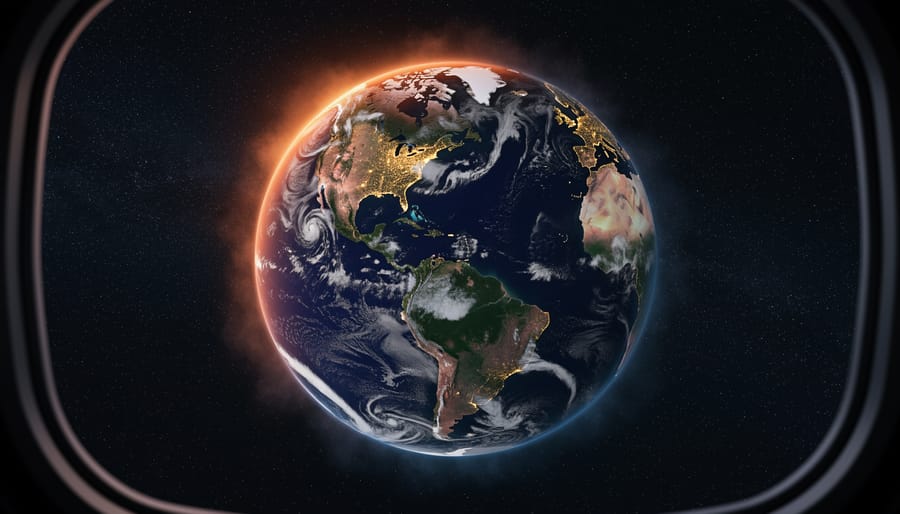
The short answer: today’s climate change comes mainly from human activity, and burning fossil fuels does more to change the climate than anything else we do. Natural forces matter too, but they can’t account for the warming of recent decades.
Here’s the quickest diagnostic check. Ask whether a natural driver could explain the timing. Shifts in Earth’s orbit and axis of rotation reshaped climate in the past, and changes in Northern Hemisphere summer sunshine appear to be the primary cause of past ice age cycles. Natural processes also explain climate shifts before the Industrial Revolution in the 1700s. But recent changes don’t fit that pattern. Scientists attribute the warming trend since the mid-20th century to the human expansion of the greenhouse effect, as the greenhouse gases we emit alter Earth’s energy balance. Changing the nature of the land adds to the effect.
So the culprit isn’t a mystery. It’s a mix of long-running natural rhythms and a newer, human-made push layered on top of them. Understanding how climate change works helps you see why that distinction matters.
This guide walks through the troubleshooting path: matching what we observe to likely drivers, examining each natural and human mechanism, and then laying out the response sequence and how to prevent further harm. The science is clear, and so is the opportunity to act on it.
What to Watch For
The first clue to what’s driving a change is its timescale. Shifts that unfold across enormous spans of time point toward natural processes, such as changes in Earth’s orbit and axis of rotation, while the warming trend scientists have tracked since the mid-20th century points toward human influence.
As you read on, keep that distinction in mind. When you encounter a claim about a climate shift, ask whether the explanation matches the pattern it describes. Orbital changes, which affect summer sunshine in the Northern Hemisphere, fit the slow rhythm of past ice-age cycles. Added greenhouse gases fit a change in Earth’s energy balance. Land alteration fits changes tied to a specific place. Matching the pattern to the likely driver is the habit that makes the rest of this diagnosis much easier to follow.
Quick Answer: The Main Drivers at a Glance
Here’s the short version. Greenhouse gases released by human activities alter Earth’s energy balance, and that shifts the climate. Burning fossil fuels changes the climate more than any other human activity, and people also affect it by changing the nature of the land itself.
Natural processes haven’t gone quiet, though. They explain climate shifts that came before the Industrial Revolution in the 1700s. Changes in Earth’s orbit and axis of rotation had a big impact in the past, and summer sunshine on the Northern Hemisphere appears to be the primary cause of past ice age cycles.
The catch is that recent changes not explained by natural causes alone point to a human fingerprint. That conclusion reflects the broader scientific consensus, which ties the warming trend since the mid-20th century to the human expansion of the greenhouse effect.
Symptom Triage: What Kind of Climate Change Are You Looking At?
When a climate shift shows up, the first diagnostic question isn’t “how big is it?” but “how long has it been going on?” Timescale is the strongest clue, because different drivers operate on very different clocks. Think of it like a doctor asking when the symptoms started before ordering any tests.
Start with the slowest patterns. Ice-age-scale cycles unfold over enormous spans of time, and they track changes in Earth’s orbit and its axis of rotation. The amount of summer sunshine reaching the Northern Hemisphere appears to be the primary cause of those past cycles. Next, consider shifts that predate the Industrial Revolution in the 1700s. Natural processes can explain those. Then there’s the warming trend observed since the mid-20th century, which scientists attribute to the human expansion of the greenhouse effect. Finally, changes confined to one area often point toward humans altering the land itself.
Here’s a quick way to sort what you’re seeing:
| Observed pattern or timescale | Most likely driver category | How researchers recognize it |
|---|---|---|
| Very long, repeating ice-age cycles | Orbital and axial changes | Timing lines up with shifts in Earth’s orbit and tilt, especially northern summer sunlight |
| Shifts before the Industrial Revolution | Natural processes | Occurs before large-scale human fossil fuel use, so natural causes account for it |
| Warming trend from the mid-20th century onward | Expanded greenhouse effect from human emissions | Cannot be explained by natural causes alone; matches altered energy balance from greenhouse gases |
| Local or regional change | Land-use change | Follows changes in the nature of the land itself |
Keep in mind that these categories can overlap. A regional change might have a land-use component layered on top of a broader warming signal, so the table is a starting point rather than a verdict.
If you want to practice this kind of sorting, look at real-world climate change examples and ask the same questions each time. How long did it take? Was it global or local? Does it predate large-scale fossil fuel burning? Those three answers will usually point you toward the right driver category before any detailed analysis begins.
Likely Causes: Natural Drivers That Have Always Shaped Climate
Orbit and Axial Tilt: The Pacemaker of the Ice Ages
Earth doesn’t travel around the Sun in a perfect, unchanging way. Its orbit shifts over time, and so does the tilt of its axis of rotation. Both changes have had a big impact on climate in the past, and they work like a slow pacemaker, setting the rhythm of the ice ages.
What makes this so powerful is that these shifts don’t change the total sunlight Earth receives so much as where and when it lands. The key variable appears to be the amount of summer sunshine on the Northern Hemisphere. That is the primary cause of past ice-age cycles, according to current research.
Why summer, and why the north? Think of snow and ice as a ledger of winter gains and summer losses. The Northern Hemisphere holds vast stretches of land at high latitudes, which is where thick ice sheets can build up. When summers there are cooler, less of the winter snow melts. Leftover snow accumulates year after year, compacts into ice, and reflects sunlight back to space, which cools the region further. When summers are stronger, the ice retreats instead.
So a small nudge in seasonal sunlight, repeated over a very long span, can tip the planet between glacial and warmer conditions. No sudden jolt is needed, just a steady change in the balance between snowfall and melt.
This is a natural driver, and it explains how Earth’s climate shifted long before humans were burning fossil fuels.
Why Natural Causes Alone Fall Short Today
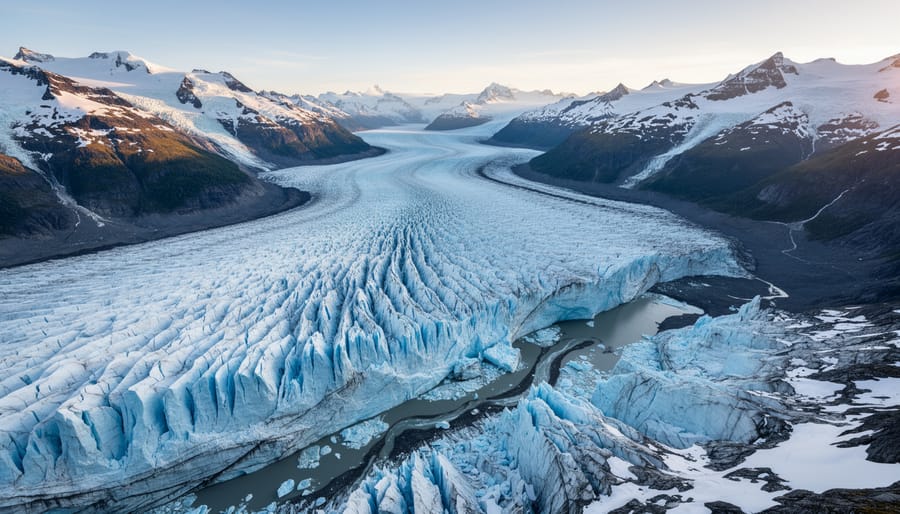
Natural drivers are real, and they matter. Shifts in Earth’s orbit and its axis of rotation have had a big impact on climate in the past, and summer sunshine in the Northern Hemisphere appears to be the primary cause of past ice-age cycles. Natural processes are always at work, and they can explain climate changes before the Industrial Revolution in the 1700s.
The trouble is that the same explanations stop working when researchers turn to recent decades. Recent climate changes cannot be explained by natural causes alone. That finding is the pivot point of the whole field. When natural drivers are checked against what has been observed lately, they leave a gap, and something else has to fill it.
Think of it like a detective ruling out suspects. Orbital shifts have been ruled in for the distant past. For the present, they don’t account for the full picture. Researchers look next at what has changed in the modern era, and the evidence points toward human influence.
Scientists attribute the global warming trend observed since the mid-20th century to the human expansion of the greenhouse effect. This conclusion doesn’t dismiss natural factors. It reflects a careful process of elimination, and it explains why so much attention now turns to the next question: how human activity alters the climate system.
Likely Causes: How Human Activity Changes the Climate
The Greenhouse Effect and How Added Gases Shift Earth’s Energy Balance
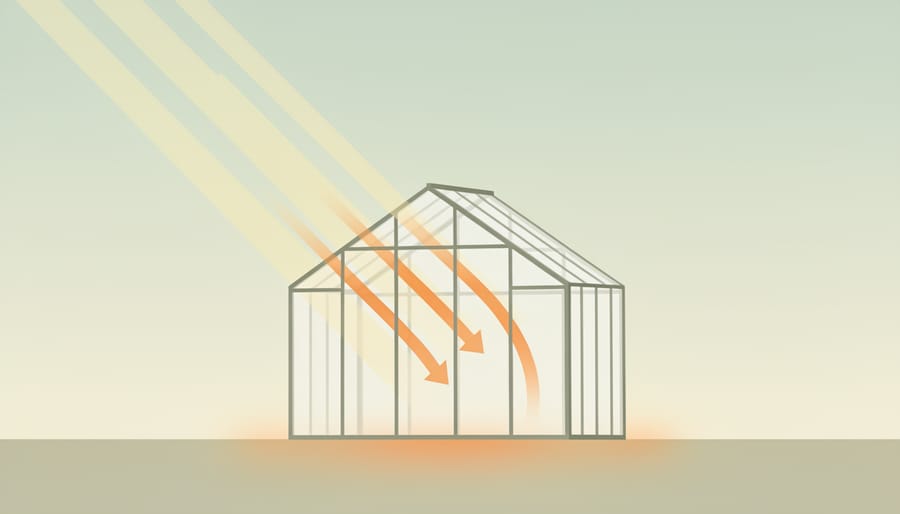
Think of Earth’s atmosphere as a blanket on a cold night. Sunlight passes through and warms the surface, and the surface sends heat back toward space. Certain gases in the air absorb some of that outgoing heat and radiate part of it back down, keeping the planet warmer than it would otherwise be. That natural process is the greenhouse effect, and without it Earth would be far too cold for life as we know it.
The trouble starts when we thicken the blanket. Scientists attribute the warming trend observed since the mid-20th century to the human expansion of greenhouse warming. Greenhouse gases emitted by human activities alter Earth’s energy balance, which is the bookkeeping between the sunlight coming in and the heat going back out. Add more heat-trapping gases, and less of that heat escapes. The balance tips, and the climate shifts with it.
A few terms make this much easier to follow:
- Greenhouse effect
- The natural warming that occurs when gases in the atmosphere absorb outgoing heat and send some of it back toward the surface.
- Greenhouse gas
- Any atmospheric gas that traps heat in this way, including those released by human activities.
- Energy balance
- The difference between the energy Earth receives from the Sun and the energy it releases back to space.
- Fossil fuels
- Coal, oil, and natural gas, whose burning changes the climate more than any other human activity.
- Orbital forcing
- Climate influence from changes in Earth’s orbit and its axis of rotation, a natural driver of past ice-age cycles.
What makes this finding so useful is its clarity. We are not guessing at a mysterious force. We are tracing a well-understood mechanism, and understanding a mechanism is the first step toward changing its outcome.
Fossil Fuels: The Single Largest Human Lever
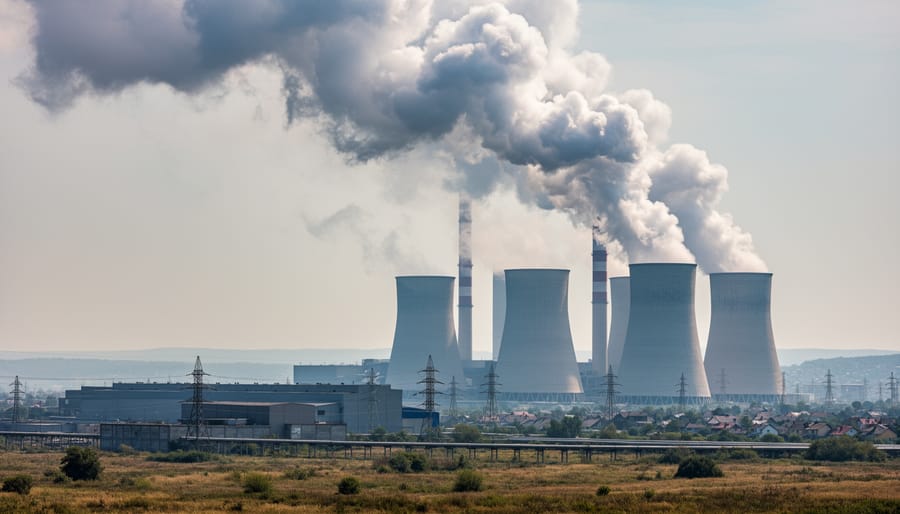
Of everything people do that affects the climate, burning coal, oil and natural gas has the biggest effect. Researchers consistently point to fossil fuels biggest human driver when they explain why the climate is changing now.
The mechanism ties back to the greenhouse effect. When we burn these fuels for electricity, transportation and heating, we release greenhouse gases that alter Earth’s energy balance. Those gases shift how much heat the planet holds onto, and that shift is what scientists link to the warming trend seen since the mid-20th century.
This is why fossil fuels sit at the center of Climate Change Studies. Natural processes can explain climate shifts before the Industrial Revolution in the 1700s, but they can’t account for recent changes on their own. Once researchers rule out those natural drivers, the human contribution stands out, and fossil fuel burning leads it. Pinpointing the largest lever is also encouraging, since it shows exactly where solutions can make the biggest difference.
Changing the Land Itself
Greenhouse gases get most of the attention, but they are not the whole story. Humans also affect climate by changing the nature of land, and that matters because the surface of the planet is an active player in the climate system.
Think of land as a working part of Earth’s energy balance. Forests, grasslands, farmland, wetlands, and cities each interact differently with sunlight, water, and the air above them. When a landscape is converted from one type to another, those interactions shift, and so does the way that patch of ground influences local and wider climate conditions.
This is why researchers treat land alteration as its own driver rather than folding it into emissions. It works alongside fossil fuel burning, not instead of it. In practical terms, it also means some of the solutions are about how land is managed, not only about how energy is produced. Spotting this pathway is part of telling the different causes of climate change apart.
Step-by-Step Fix: How Researchers and Communities Address the Causes
The good news about a problem with identifiable causes is that it has identifiable solutions. Researchers and communities work through the same logical sequence, and each step builds on what scientists already know about how climate changes.
- Identify the driver by timescale and pattern. Start by asking how fast, how long, and how widely a change is unfolding. That tells you whether you’re looking at a natural cycle, a human influence, or both.
- Rule out natural causes. Orbital and axial shifts explain past ice-age cycles, and natural processes explain climate change before the 1700s. But recent change can’t be explained by natural causes alone, so the search narrows to human activity.
- Reduce greenhouse gas emissions, starting with fossil fuel burning. Burning fossil fuels changes the climate more than any other human activity, so this is where cuts do the most good.
- Address land-use change. Because humans also affect climate by changing the nature of the land, managing how land is altered is a second, complementary lever.
- Keep monitoring and refining the science. Ongoing research shows whether actions are working and sharpens our understanding of the remaining unknowns.
What makes this sequence so hopeful is how directly the science feeds the solutions. Once researchers understood that greenhouse gases from human activities alter Earth’s energy balance, the path forward became clear: reduce those inputs at the source. That insight is part of why renewable energy development matters so much, since cleaner ways of producing power address the largest human driver head-on.
The same logic applies to land. Knowing that changes to the land itself influence climate gives planners and communities a reason to weigh those effects before reshaping it, rather than discovering them afterward.
Notice, too, that step five never really ends. Climate science is a living field, and every round of measurement and analysis tightens our grasp of cause and effect. That steady improvement is what turns a daunting global challenge into a series of practical, workable actions, each one grounded in evidence and each one within reach.
Prevention: Keeping the Problem From Getting Worse
The encouraging part of this story is that the human-driven causes are also the ones we can influence. Natural drivers like orbital shifts are beyond our control, but burning fossil fuels, adding greenhouse gases, and altering land are choices, and prevention means reducing each of those inputs.
- Lower fossil fuel burning, since it changes the climate more than any other human activity.
- Limit new greenhouse gas emissions that alter Earth’s energy balance.
- Protect and manage land, because humans also affect climate by changing its nature.
- Support ongoing climate research so our understanding keeps improving.
- Stay informed through reliable science reporting.
Cutting dependence on fossil fuels is the biggest lever, and that’s where low-carbon energy enters the picture. Our renewable energy coverage follows how researchers are developing cleaner alternatives, and each advance gives communities more ways to reduce emissions at the source.
Prevention also depends on knowledge. Climate Change Studies lets scientists separate natural patterns from human influence, test which actions matter most, and sharpen predictions as new evidence arrives. The better we understand the causes, the more precisely we can aim our solutions, and that’s a genuinely hopeful place to start.
Common Questions About What Causes Climate Change
Climate change has a short answer and a few common follow-ups. Here are the questions readers ask most, answered from what the research supports.
What causes climate change?
Climate change has both natural and human causes. Natural processes have always influenced Earth’s climate, but the warming trend seen since the mid-20th century is attributed by scientists to the human expansion of the greenhouse effect.
Can climate change be explained by natural causes alone?
Not anymore. Natural processes explain climate shifts before the Industrial Revolution in the 1700s, including past ice-age cycles tied to changes in Earth’s orbit and axis of rotation. Recent climate changes, however, cannot be explained by natural causes alone.
How do greenhouse gases affect Earth’s climate?
Greenhouse gases emitted by human activities alter Earth’s energy balance, which is the relationship between the energy the planet receives and the energy it releases. Shifting that balance changes the climate. Burning fossil fuels is the human activity with the largest influence.
What is the greenhouse effect?
The greenhouse effect is the natural process by which certain gases in the atmosphere help regulate Earth’s energy balance and, with it, the planet’s climate. The concern today is the human expansion of that effect through added greenhouse gases.
Humans also affect climate by changing the nature of the land, so emissions are not the whole story. That is why responses to climate change are usually framed around both cutting the causes and preparing for the effects. If you want to see how those two strands fit together, our guide to mitigation and adaptation is a good next read.
Earth’s climate has never stood still. Shifts in the planet’s orbit and axis of rotation shaped past climates, and the amount of summer sunshine reaching the Northern Hemisphere appears to be the primary cause of past ice age cycles. Those natural drivers explain changes long before the 1700s.
The warming trend since the mid-20th century tells a different story. Scientists attribute it to the human expansion of the greenhouse effect, led by burning fossil fuels and supported by the way we change the land.
That clarity is encouraging. Knowing what drives climate change is the first step toward addressing it, and Climate Change Studies keeps sharpening that understanding, turning knowledge into practical solutions.