
The climate change point of no return refers to a critical threshold beyond which certain planetary systems undergo irreversible change, continuing to warm or deteriorate even if greenhouse gas emissions stop completely. This concept encompasses multiple tipping points, from ice sheet collapse to ocean circulation shutdown, each with distinct timelines and consequences for life on Earth.
Understanding whether humanity has crossed this threshold matters because it shapes how we respond. The distinction between reversible warming and runaway climate change determines whether our focus should be purely on adaptation or whether emission cuts can still prevent the worst outcomes. Recent research from 2025 and 2026 has moved this question from theoretical modeling to observable reality, and the answers are more nuanced than a simple yes or no.
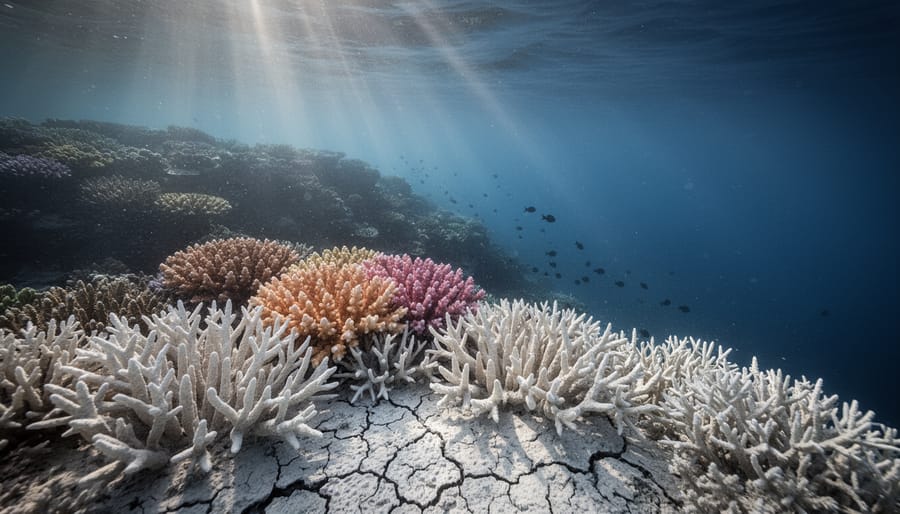
The three-year global average just broke through the 1.5-degree threshold set by the Paris Agreement, a milestone scientists warned would trigger cascading effects. Analysis from the Potsdam Institute for Climate Impact Research has identified a clear acceleration in the planet’s long-term warming trend beginning around 2015, suggesting the pace of warming itself is quickening. Meanwhile, several climate tipping points once considered future risks have become observed realities. Coral reef die-off, documented extensively throughout 2025 and 2026, represents one system that has likely passed its point of no return.
The latest research presents a sobering picture, yet scientists emphasize that while some thresholds have been crossed, others remain preventable. This article examines what the most current data reveals about where we stand, which systems have reached irreversibility, and what the science tells us about the tipping points still within our control.
What the ‘Point of No Return’ Actually Means
The phrase “point of no return” sounds absolute, like a single moment when Earth’s climate crosses an invisible line and becomes unfixable. But climate scientists rarely use this term because it oversimplifies how Earth’s systems actually respond to warming. What we’re really talking about are climate tipping points, thresholds where ongoing changes trigger self-reinforcing processes that continue even if we stop adding greenhouse gases.
Think of it like tilting a glass of water. At first, you can tilt it back. But past a certain angle, the water spills out on its own. That critical angle is a tipping point. In climate terms, these are moments when a system shifts from one stable state to another, often irreversibly on human timescales.
- Tipping Point
- A critical threshold where a climate system undergoes rapid, often irreversible change due to accumulated warming. Once crossed, the system may not return to its previous state even if temperatures stabilize.
- Feedback Loop
- A self-reinforcing cycle where an initial change amplifies itself, accelerating warming. For example, melting Arctic ice exposes darker ocean water, which absorbs more heat and melts more ice.
- Paris Agreement Threshold
- The 1.5°C temperature limit above pre-industrial levels that nations agreed to aim for in 2015. The three-year global average recently broke through this threshold, marking a significant milestone.
- Irreversible Change
- A transformation in a climate system that cannot be undone within centuries or millennia, even with aggressive emissions reductions. Examples include ice sheet collapse or species extinction.
Here’s the crucial distinction: there isn’t one single “point of no return” for the entire climate. Instead, scientists track multiple tipping points across different systems, ice sheets, ocean currents, rainforests, coral reefs. Some operate on decade-long timescales; others unfold across centuries.
We also need to separate two types of thresholds. Global temperature targets like 1.5°C are policy goals designed to minimize risk, not hard physical boundaries. Specific system collapses, like the Amazon rainforest shifting to savanna or the West Antarctic ice sheet destabilizing, are actual tipping points with measurable thresholds. Crossing 1.5°C doesn’t flip a cosmic switch, but it does make certain tipping points more likely and accelerates others already underway.
Scientists prefer “tipping point” precisely because it acknowledges this complexity. It’s not binary. We haven’t destroyed all hope, but we’ve already crossed certain thresholds that will reshape our world for generations.
How Climate Tipping Points Work
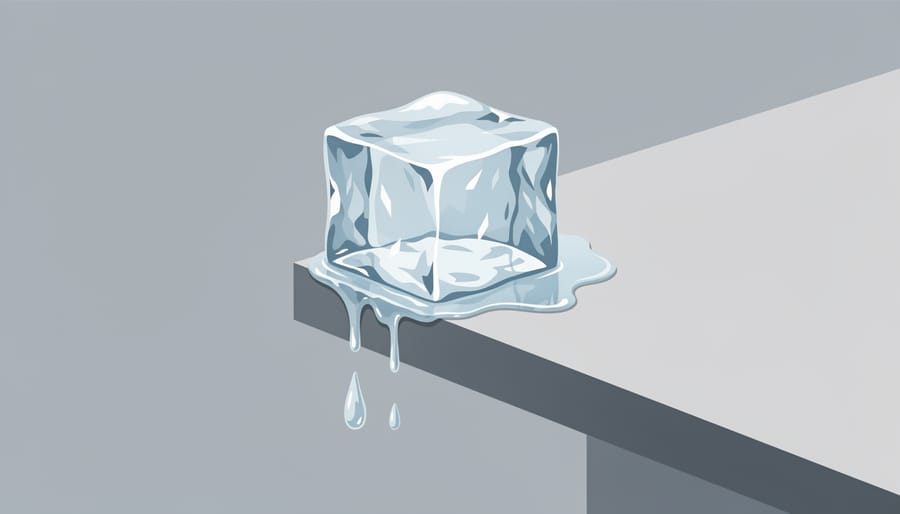
Climate tipping points work differently from the slow, steady warming you might expect. Imagine pushing a boulder up a gentle hill: you apply steady pressure and it moves steadily upward. But at the crest, that same boulder suddenly rolls down the other side on its own, accelerating as it goes. This is the essence of non-linear climate behavior, systems that appear stable under gradual warming suddenly shift into a new state once they cross a critical threshold.
The key mechanism behind these tipping points is positive feedback loops, where an initial change triggers effects that amplify the original warming rather than dampening it. Once triggered, these loops become self-reinforcing, making the changes extremely difficult to reverse even if we stopped all emissions immediately.
The most well-documented feedback loops include:
- Ice-albedo feedback: Melting ice exposes darker ocean or land surfaces that absorb more solar heat instead of reflecting it, causing further melting
- Permafrost methane release: Thawing permafrost releases trapped methane and carbon dioxide, which warm the atmosphere and thaw more permafrost
- Forest die-back: Drought and heat stress kill trees that normally absorb CO2, releasing stored carbon and removing a crucial carbon sink
- Ocean circulation slowdown: Freshwater from melting ice disrupts currents that distribute heat globally, altering weather patterns that can accelerate other changes
These feedback loops explain why certain Earth systems reach critical thresholds. Take Arctic sea ice: as temperatures rise gradually, ice melts at a predictable rate. But once ice coverage drops below a certain point, the albedo feedback kicks in so strongly that summer ice could disappear within years rather than decades, regardless of small changes in temperature.
Think of it like heating water. For a long time, the water just gets warmer, a linear response. But at 100 degrees Celsius, a threshold is crossed and the water transforms into steam, a completely different state. Climate tipping points work similarly: gradual pressure on a system builds until it suddenly reorganizes into a fundamentally different configuration.
The Amazon rainforest illustrates this cascading behavior. Deforestation and warming gradually dry the forest. But once tree cover drops below roughly 40 percent in certain regions, the forest can no longer generate enough rainfall to sustain itself. The system tips from rainforest to savanna, releasing decades of stored carbon in the process and eliminating a major planetary cooling mechanism. This transformation could happen within decades once the threshold is crossed, even if no additional trees were cut.
Types of Climate Tipping Points
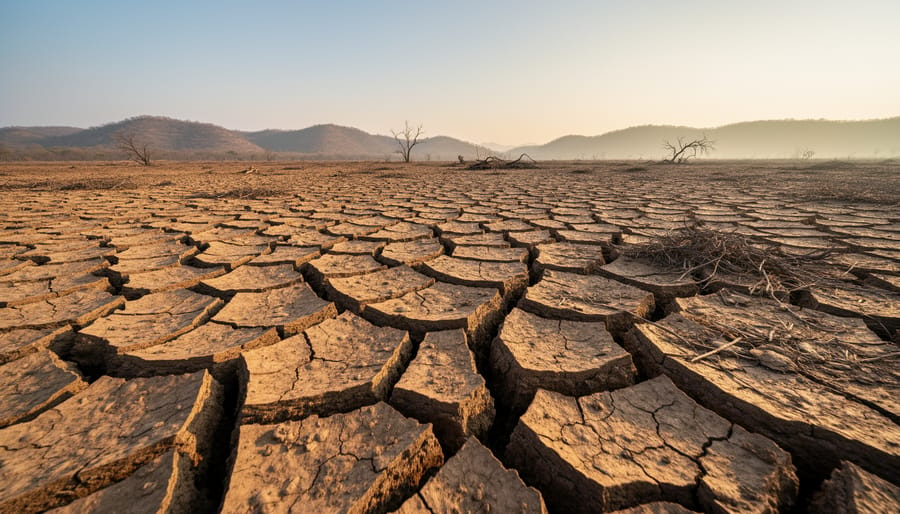
Scientists track tipping points across multiple interconnected Earth systems, each operating on different timescales and triggering distinct cascading effects. Understanding these categories helps clarify which thresholds we’re approaching and which may already be behind us.
Global Temperature Thresholds
The Paris Agreement’s 1.5°C and 2°C targets represent policy thresholds rather than single physical tipping points, but crossing them significantly increases the risk of triggering other system collapses. With the three-year global average having just broken through 1.5 degrees, we’re entering territory where multiple reinforcing feedbacks become more likely. Each tenth of a degree matters because it compounds the probability of crossing irreversible thresholds in ice, oceans, and ecosystems.
Ice Sheet Collapse
The Greenland and West Antarctic ice sheets contain enough frozen water to raise global sea levels by over 10 meters combined. Once melting accelerates past a critical threshold, the process becomes self-sustaining as the ice surface lowers into warmer air and meltwater lubricates the base. Greenland’s threshold likely sits between 1.5°C and 2°C of warming, with collapse unfolding over centuries to millennia. West Antarctica may be more vulnerable, potentially destabilizing within 100 to 300 years once triggered.
Ocean Circulation Changes
The Atlantic Meridional Overturning Circulation (AMOC), which includes the Gulf Stream, could weaken dramatically or collapse if freshwater from melting ice disrupts the density gradients driving it. This would radically alter weather patterns across Europe and North America, shift tropical rain bands, and disrupt marine ecosystems. Current models suggest significant weakening this century, with potential collapse on timescales of decades to centuries once a critical threshold is passed.
Ecosystem Collapses
Coral reef die-off has already moved from future risk to observed reality, with warming oceans triggering mass bleaching events that kill reef systems within years. The Amazon rainforest faces a tipping point where deforestation combined with drought could flip vast areas from carbon sink to carbon source, transforming the forest into savanna within 50 years. Boreal forests are similarly vulnerable to fire and pest outbreaks that could convert them to grassland.
Permafrost Thaw
Arctic permafrost contains twice as much carbon as the atmosphere. As it thaws, microbial decomposition releases methane and carbon dioxide, warming the planet further and accelerating additional thaw. This feedback operates on timescales of decades, with some regions already experiencing rapid collapse that creates dramatic sinkholes and releases ancient carbon stores locked away for millennia.
Where We Stand Now: The 2025-2026 Research
The latest research from 2025 and 2026 paints a picture of accelerating change rather than a single crossed threshold. The three-year global average temperature has broken through the 1.5-degree Celsius threshold established by the Paris Agreement, marking a symbolic but significant milestone. While this represents a rolling average rather than a permanent breach, it signals that Earth’s climate system is moving faster than many earlier projections suggested.
The Potsdam Institute for Climate Impact Research analyzed global temperature data and uncovered a clear acceleration in the planet’s long-term warming trend beginning around 2015. This acceleration matters because it shortens the window for avoiding more severe tipping points. The year 2025 itself ranked as the third-warmest year on record, continuing an unbroken streak of above-average temperatures that stretches back over a decade.
Some predicted tipping points have transitioned from theoretical risks to observed realities. Coral reef die-off, once discussed as a future concern, now qualifies as an ongoing collapse based on 2025 and 2026 observations. Widespread bleaching events have become so frequent that many reef systems lack sufficient recovery time between warming episodes. This represents a crossed threshold where the ecosystem’s ability to regenerate has been fundamentally compromised.
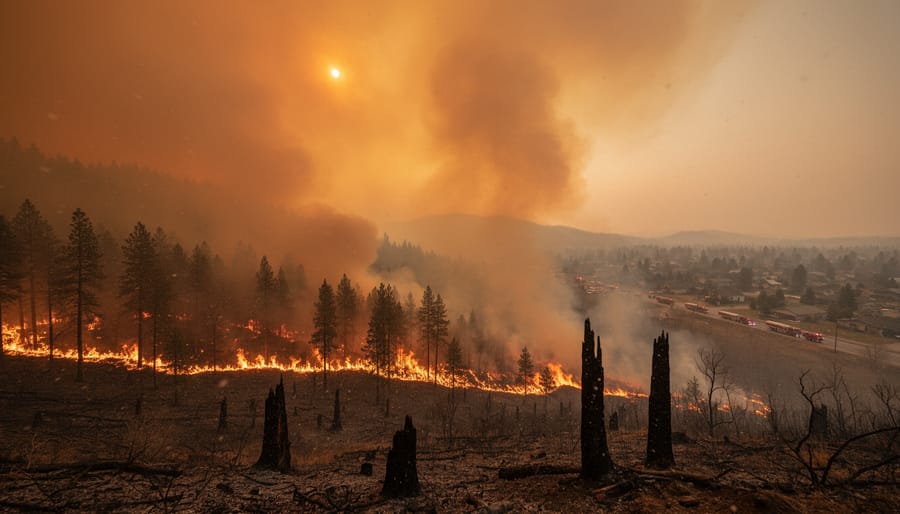
The current wave of wildfires across Canada and the United States can be clearly linked to climate change according to the latest research findings. Extended drought periods, earlier snowmelt, and hotter growing seasons have created conditions that turn what would have been manageable fires into catastrophic events. These aren’t just isolated incidents but rather symptoms of how warming alters baseline conditions, making extreme events more frequent and severe. Understanding how climate impacts locally helps researchers identify which regional thresholds are most vulnerable to these accelerating trends.
What distinguishes this current research period is the shift from modeling future scenarios to documenting present changes. Scientists are now measuring the speed and scale of shifts they previously projected for mid-century. The acceleration identified since 2015 suggests feedback loops are engaging more rapidly than earlier models anticipated, though this doesn’t mean every tipping point has been activated. Ice sheet dynamics, ocean circulation patterns, and permafrost systems remain in various stages of transition, with some changes still avoidable through aggressive emission reductions while others have moved beyond reversal.
Real-World Applications: How Scientists Use Tipping Point Research
Understanding climate tipping points isn’t just an academic exercise. Scientists translate this research into concrete tools that shape how governments, industries and communities respond to accelerating climate change.
The most immediate application involves early warning systems. Researchers monitor real-time indicators like ice sheet velocity, ocean temperature anomalies and permafrost thaw rates to detect when systems approach critical thresholds. These monitoring networks help coastal communities prepare for sea-level rise and inform evacuation planning for regions vulnerable to sudden ecosystem collapse.
Tipping point research directly guides emission reduction targets. The 2015-2025 acceleration in warming rates identified by the Potsdam Institute for Climate Impact Research helped refine carbon budgets, showing that previous timelines for mitigation and adaptation were too conservative. When scientists identify a tipping point approaching within decades rather than centuries, policymakers can justify more aggressive interventions.
Conservation priorities shift based on tipping point analysis. Knowing that coral reef die-off has moved from theoretical risk to observed reality means resources now focus on preserving genetic diversity in remaining reefs rather than assuming restoration will be possible later. Similarly, research on permafrost thaw guides land-use decisions in Arctic regions.
Agriculture planning increasingly incorporates tipping point scenarios. Farmers in regions projected to cross temperature or precipitation thresholds within 10-20 years receive guidance on crop transitions and carbon sequestration practices that might slow regional changes. Infrastructure engineers design coastal barriers, water systems and energy grids with abrupt climate shifts in mind, not just gradual warming.
The practical value lies in distinguishing what remains preventable from what requires adaptation, allowing societies to allocate finite resources where they’ll matter most.
Common Questions About Climate Tipping Points
The questions that arise most frequently about climate tipping points reflect both the scientific complexity and the emotional weight of this topic. Understanding what the research actually tells us, and what remains uncertain, helps cut through both false reassurance and unhelpful panic.
Have we passed the point of no return?
The answer depends on which threshold you’re examining. We’ve crossed some critical tipping points like widespread coral reef die-off, but others remain preventable. Climate change isn’t binary, it’s a spectrum where each fraction of a degree determines how severe the impacts become.
Can we reverse the changes that have already occurred?
Some Earth systems can recover while others cannot. Whether is climate reversible depends entirely on the specific system and how far it’s been pushed. Ice sheets that have collapsed won’t rebuild for thousands of years, but some ecosystems and atmospheric conditions could stabilize or partially recover within decades if emissions drop dramatically.
What does crossing 1.5°C really mean?
The recent breach of the 1.5-degree threshold in the three-year global average doesn’t mean the Paris Agreement has completely failed. That target was designed as a guardrail to minimize severe impacts, not an absolute line between safety and catastrophe. Crossing it temporarily matters, but permanently stabilizing temperatures determines whether we experience moderately dangerous warming or truly catastrophic levels.
How fast are these changes happening?
Recent research from the Potsdam Institute for Climate Impact Research reveals an acceleration in warming trends beginning around 2015. The pace itself is increasing, 2025 marked the third-warmest year on record, and multiple feedback loops are now reinforcing each other faster than many earlier models predicted.
These questions don’t have simple yes-or-no answers because Earth’s climate operates as interconnected systems rather than a single switch. The acceleration documented in recent years shows that some tipping points amplify others, creating cascading effects that weren’t fully captured in older climate projections. What scientists can say with confidence is that the speed and severity of future impacts still depend heavily on emission trajectories over the next decade. The concept of a single point of no return oversimplifies what’s actually a series of thresholds, each with different consequences and different possibilities for mitigation or adaptation.
The research is clear: we haven’t reached a single, absolute point of no return, but we’ve crossed several critical thresholds while others remain within our power to prevent. The breakthrough of the 1.5-degree three-year average and the transition of coral reef die-off from projected risk to observed reality mark genuine tipping points. Yet these crossings don’t doom every Earth system. The acceleration in warming since 2015 that researchers identified tells us the window is narrowing, but a window still exists.
What happens next depends entirely on how humanity responds. The speed at which remaining ice sheets collapse, the severity of ecosystem disruptions, and whether additional feedback loops trigger all hinge on emission trajectories over the coming decade. Some changes we’ll live with regardless, adaptation becoming as crucial as mitigation. Others we can still head off if we act with the urgency the science demands.
Climate Change Studies continues advancing our understanding of these thresholds, refining models and early warning systems that help us see what’s coming. The Potsdam Institute for Climate Impact Research and similar institutions are mapping the terrain ahead with increasing precision. This isn’t a moment for false comfort or resignation. It’s a moment for clear-eyed action, informed by the best research we’ve ever had about where the true boundaries lie and what crossing them actually means for the systems that sustain us.