
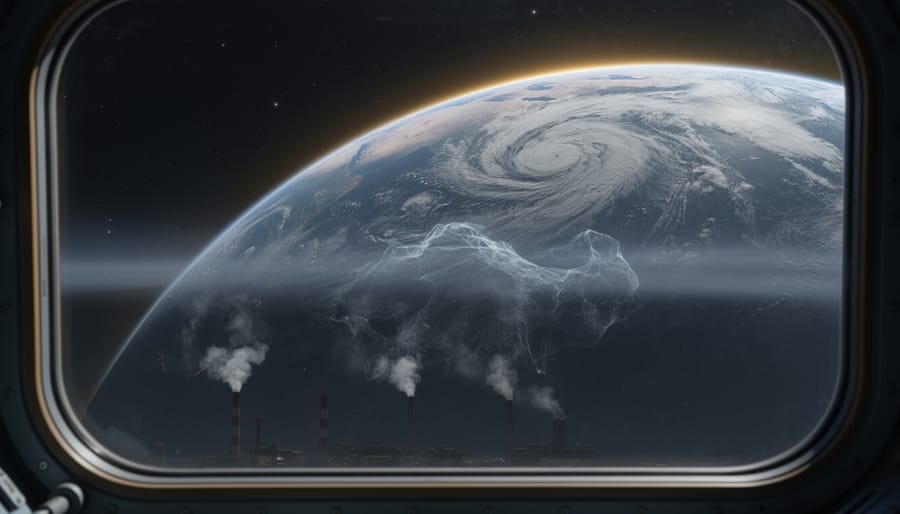
Climate change reversibility refers to the potential for Earth’s climate system to return to previous conditions after greenhouse gas concentrations decline or stabilize. The short answer is nuanced: while we can halt additional warming by reaching net-zero emissions, some changes already set in motion will persist for centuries or longer, making full reversal impossible on human timescales.
This question matters now more than ever because understanding what can and cannot be reversed shapes how nations allocate resources and set policy priorities. Canada, for instance, has committed to net-zero emissions by 2050 under the Canadian Net-Zero Emissions Accountability Act, with interim targets for 2030, 2035, 2040, and 2045. These frameworks acknowledge that stopping emissions growth isn’t enough. We need concrete pathways to draw down atmospheric carbon while adapting to changes we can no longer prevent.
The science reveals a spectrum of reversibility. Some impacts respond quickly when emissions drop. Surface temperatures, for example, would stabilize within decades if we stopped adding greenhouse gases. But ocean warming, sea level rise, and ice sheet collapse operate on geological timescales. The IPCC has made clear that some additional warming is irreversible, and many climate impacts will persist even after emissions cease.
What makes this topic compelling is the gap between public perception and scientific reality. Many people assume climate change operates like a light switch: turn off emissions, problem solved. Others fall into fatalism, believing nothing can improve. The truth sits between these extremes. We possess the technology and knowledge to prevent the worst outcomes, but physics places real limits on what restoration looks like.
This article examines the mechanisms that determine which climate changes can be reversed, which are locked in, and how quickly different parts of the climate system respond to emission reductions. You’ll discover what current science tells us about ocean recovery, atmospheric carbon removal, and the practical difference between slowing warming and truly reversing damage already done.
What Climate Change Reversibility Actually Means
Climate reversibility sounds straightforward at first: can we undo the damage we’ve caused? The reality is far more nuanced. In climate science, reversibility doesn’t mean returning Earth to pre-industrial conditions like rewinding a recording. It refers to whether specific climate changes would diminish or stabilize if we stopped adding greenhouse gases to the atmosphere.
Three distinct concepts often get conflated. Halting emissions means we stop releasing new carbon dioxide and methane into the air. Stabilizing temperatures means global warming stops increasing, holding steady at whatever level we’ve reached. Reversing warming means actually cooling the planet back down. Each represents a different goal with different requirements and timelines.
The IPCC has made clear that some additional warming is already baked in, regardless of immediate action. This happens because Earth’s climate systems don’t respond instantly to changes. Understanding why requires grasping several key terms:
- Climate inertia
- The delayed response of Earth’s systems to changes in greenhouse gas concentrations, primarily driven by oceans absorbing and slowly releasing heat over decades to centuries.
- Committed warming
- Additional temperature rise that will occur even after emissions cease, resulting from greenhouse gases already in the atmosphere and the climate system’s thermal lag.
- Tipping points
- Critical thresholds where climate systems shift irreversibly to a new state, such as ice sheet collapse or rainforest dieback, beyond which recovery becomes impossible on human timescales.
- Net-zero emissions
- Achieving a balance between greenhouse gases released and removed from the atmosphere, preventing further accumulation but not necessarily reversing past buildup.
- Carbon removal
- Actively extracting CO2 from the atmosphere through natural processes or technology, necessary for actual reversal rather than mere stabilization.
These concepts explain why some changes persist while others could theoretically reverse. Atmospheric composition responds relatively quickly, within years to decades, when emissions drop. Ocean warming and ice sheet melt operate on century-to-millennium timescales. Species driven to extinction can never return.
The permanence of any given impact depends on the physical processes involved and whether critical thresholds have been crossed. Changes governed by atmospheric chemistry reverse faster than those controlled by ocean circulation or ice dynamics. The distinction matters because it shapes realistic expectations for what climate action can achieve and over what timeframe.
How Climate Reversibility Works in Earth’s Systems
The Role of Carbon Removal
Removing carbon dioxide from the atmosphere represents humanity’s most direct pathway to potentially reversing some warming. While halting emissions stops the problem from worsening, active removal could theoretically pull temperatures back down. This distinction matters because atmospheric CO2 persists for centuries, meaning past emissions will continue driving warming long after we stop adding more.
Natural carbon sinks, forests, wetlands, oceans, and soil, already absorb roughly half of human CO2 emissions annually. Protecting and restoring these ecosystems offers the most proven removal approach. Reforestation can sequester carbon for decades as trees grow, while healthy ocean ecosystems continuously cycle CO2 into marine life and deep water. These natural processes work reliably but have limits: there’s only so much land available for forests, and ocean absorption rates depend on complex chemistry.
Technological solutions like carbon capture aim to remove CO2 at industrial scale through direct air capture facilities or by storing emissions from power plants and factories. These technologies exist but remain expensive and energy-intensive. Current global capacity removes only a tiny fraction of what we emit annually.
The scale required is staggering. To meaningfully reverse warming, we’d need to remove gigatons of CO2, billions of tons, not just once but sustained over decades. Even optimistic projections suggest technological removal couldn’t offset current emissions until mid-century at earliest. Natural and technological approaches together offer the best chance, but both require massive expansion and decades of sustained effort before measurable temperature reversal becomes possible.
System Response Times and Inertia
Earth’s climate systems operate on vastly different timescales, which is why some changes appear almost immediately while others persist for millennia. This disparity fundamentally shapes what reversibility means in practice.
The atmosphere responds fastest to emission changes. Carbon dioxide concentrations would stop rising within months if emissions halted, and methane levels would decline noticeably within a decade due to its relatively short atmospheric lifetime. Surface air temperatures would stabilize within years to decades once atmospheric greenhouse gas levels stopped increasing, though complete cooling takes far longer.
Oceans present the largest challenge for climate reversibility due to their immense thermal inertia. Water absorbs and stores heat roughly 1,000 times more effectively than air, and ocean currents circulate this heat globally over centuries. Even if atmospheric temperatures stabilized tomorrow, the upper ocean would continue warming for decades as it equilibrates with the atmosphere, and the deep ocean would keep absorbing heat for centuries. This means committed ocean warming and associated sea level rise from thermal expansion will persist long after emissions cease. Research indicates that roughly half of ocean heat uptake occurs in the first few decades, but the remainder unfolds over 500 to 2,000 years.
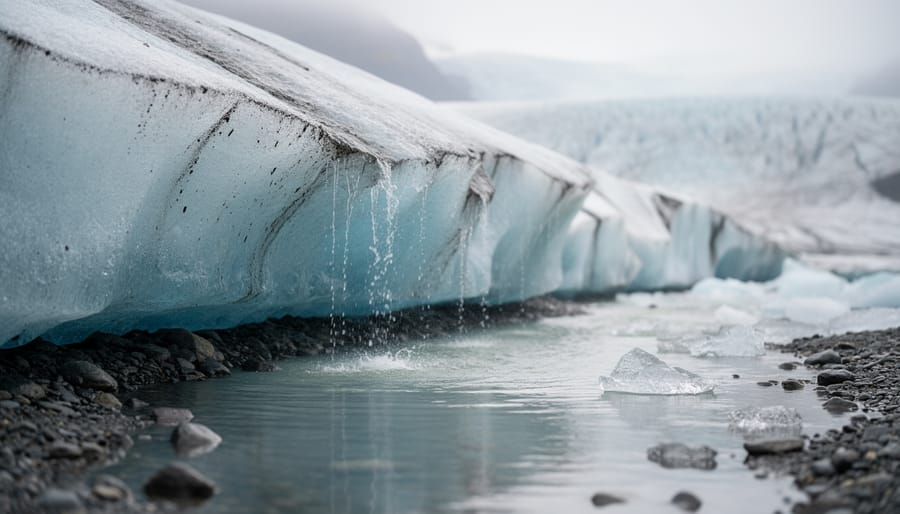
Ice sheets respond on the slowest timescales of all major climate components. Once warming triggers significant ice loss in Greenland or Antarctica, the process becomes self-reinforcing through feedback mechanisms like reduced surface elevation and changed albedo. The ice sheet dynamics involve processes that take centuries to millennia to fully play out. This is why some portion of future sea level rise appears essentially irreversible even with aggressive emissions cuts.
Understanding these different response times explains why immediate action matters even for century-scale goals.

What Can and Cannot Be Reversed
Reversible and Fast-Response Impacts
Some aspects of climate change would stabilize surprisingly quickly if emissions were cut sharply. Atmospheric temperature, for instance, would stop rising within about a decade of reaching net-zero emissions, though it wouldn’t immediately drop back to pre-industrial levels. The atmosphere responds faster than the oceans because gases mix and equilibrate relatively quickly compared to deep ocean circulation patterns.
Air quality improvements appear within weeks to months of emission reductions. Cities that implemented lockdowns during the COVID-19 pandemic saw dramatic drops in particulate matter and nitrogen dioxide, demonstrating how quickly cleaner air materializes when combustion decreases. While climate change itself operates on longer timescales, some impacts respond relatively quickly to policy interventions.
Certain extreme weather patterns would also moderate fairly rapidly. Heat wave intensity and frequency track closely with global average temperature, so stabilizing warming would prevent further increases in these events within decades rather than centuries. This fast-response category offers the most immediate incentive for aggressive emissions cuts, tangible benefits would emerge within a single generation’s lifetime, even if deeper ocean heat and ice sheet changes continue evolving for much longer.
Slow-Response and Partially Reversible Changes
Some of the most worrying climate impacts unfold over centuries, creating changes that persist long after emissions stop. Ocean warming tops this list because water absorbs heat slowly and releases it even more slowly. Even if we halted all greenhouse gas emissions today, the oceans would continue warming for decades as they equilibrate with the atmosphere, driving thermal expansion that causes sea level rises for centuries. This thermal lag means coastal communities face increasing inundation regardless of emission cuts, though the ultimate extent depends on how quickly we act.
Major ice sheets in Greenland and Antarctica represent another slow-motion challenge. Once melting accelerates past certain thresholds, these massive ice bodies can continue shrinking for millennia due to self-reinforcing feedbacks, where lower elevation exposes ice to warmer air and meltwater lubricates flow toward the ocean. Permafrost thaw follows a similar trajectory, releasing stored carbon as ground temperatures rise, though aggressive cooling could theoretically halt some emissions if implemented quickly enough.
These represent irreversible climate impacts over time on human scales, where “partially reversible” means we might limit the damage but can’t undo what’s already begun.
Irreversible Impacts
Some climate changes are permanent on any timeline that matters to human civilization. The IPCC and climate researchers have documented that many climate impacts are irreversible once triggered, regardless of how quickly we reduce emissions afterward.
Species extinction represents the starkest irreversible consequence. When a plant or animal species disappears due to shifting habitats, extreme weather, or ecosystem collapse, no amount of carbon removal can bring it back. Coral reefs that bleach and die, alpine plants that lose their mountaintop refuges, and Arctic specialists pushed beyond survival thresholds are gone permanently. Biodiversity loss reshapes ecosystems in ways that persist for millions of years.
Sea level rise demonstrates another form of irreversibility. Even if we halted all warming today, thermal expansion of seawater and the melting already in motion guarantee centuries of rising seas. Ice sheets in Greenland and West Antarctica have crossed thresholds where their collapse continues under their own physics, independent of future temperature changes. Coastal cities will face meters of sea level rise committed by decisions already made.
Glacier disappearance in many regions has become inevitable. Small mountain glaciers worldwide have shrunk past the point where they can rebuild, even with temperature stabilization. Their loss permanently alters water supplies for downstream communities and erases landscape features that shaped human settlements for millennia.
Certain tipping points, once crossed, trigger self-reinforcing changes. Thawing permafrost releases carbon that drives further warming. Amazon rainforest dieback transforms carbon sinks into sources. These transitions create new stable states that resist reversal, locking in changes for thousands of years regardless of human intervention afterward.
Current Efforts and Policy Frameworks for Climate Action
The science of climate reversibility remains theoretical until nations commit to measurable action. Around the world, governments are translating these scientific principles into binding policy frameworks that aim to slow warming and create conditions for potential reversal. These efforts center on aggressive emissions reduction targets backed by interim milestones, rather than vague long-term promises.
Canada’s approach offers a concrete example of how reversibility science informs policy design. The Canada net-zero law commits the nation to achieving net-zero emissions by 2050, with binding interim targets for 2030, 2035, 2040, and 2045. This scaffolded timeline acknowledges that climate systems respond slowly to intervention while ensuring accountability at regular intervals. The Act requires the government to publish emissions projections annually, creating transparency around whether policies are delivering measurable reductions.
Canada’s December 2025 projections scenarios illustrate how policy translates to outcomes. The framework uses two core scenarios: With Measures (WM) and With Additional Measures (WAM). The WM scenario projects emissions based on implemented policies, while WAM models the impact if all proposed and planned measures succeed. This dual-scenario approach reveals both the current trajectory and the potential if governments accelerate action, helping policymakers identify gaps between commitments and necessary reductions.
Effective climate frameworks share common elements that support reversibility goals:
- Legally binding long-term targets with enforceable accountability mechanisms
- Interim milestones at five-year intervals to prevent delayed action
- Annual measurement and transparent public reporting of progress
- Scenario modeling that distinguishes current policy from accelerated pathways
- Integration of low-carbon energy transitions with carbon removal strategies
These frameworks matter because they create conditions where reversible impacts can actually begin recovering. A nation that reaches net-zero stops adding to atmospheric carbon concentrations, stabilizing the forcing that drives temperature increases. Combined with active carbon removal, this approach could theoretically begin drawing down CO2 levels over decades. The policy architecture determines whether reversibility remains a scientific concept or becomes an achievable outcome, making these legislative commitments as important as the underlying climate science itself.
Steps to Slow and Potentially Reverse Climate Change
The path toward slowing and potentially reversing climate change follows a clear hierarchy: reduce emissions first, then enhance natural and technological carbon removal. Every avoided ton of CO2 matters more than any future removal effort, making immediate emissions cuts the foundation of any reversal strategy.
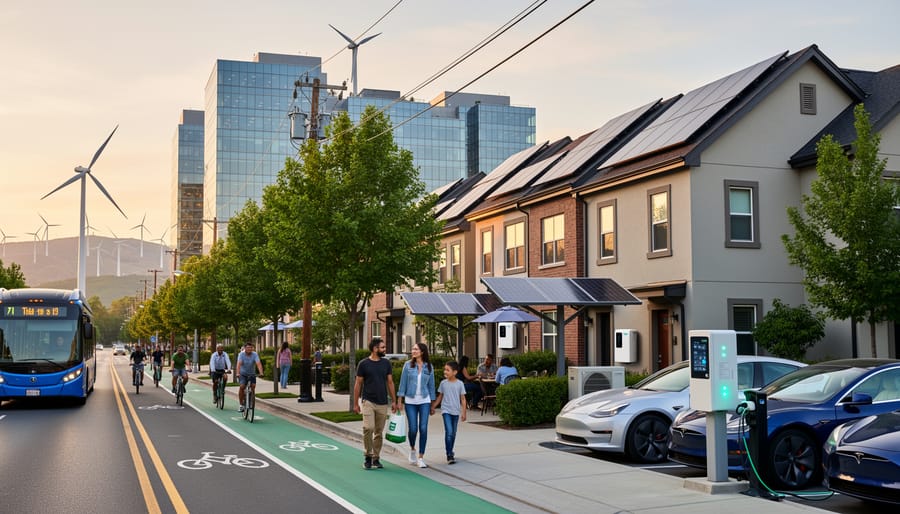
Transitioning away from fossil fuels remains the most critical step. Shifting electricity generation to wind, solar, and other renewable sources eliminates the largest source of greenhouse gases while creating infrastructure that grows cleaner over time. Transportation electrification and building efficiency improvements compound these gains. Countries that have already begun this transition demonstrate that economic growth and emissions reductions can occur simultaneously.
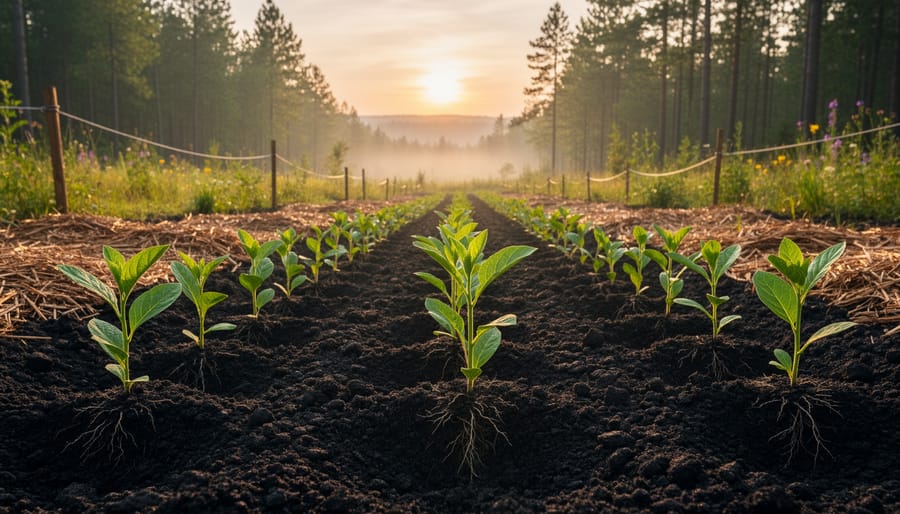
Nature-based solutions offer proven, cost-effective carbon removal at scale. Protecting existing forests prevents massive carbon releases while maintaining biodiversity and ecosystem services. Reforestation and afforestation sequester atmospheric carbon for decades as trees mature. Coastal wetland restoration, including mangroves and salt marshes, captures carbon at rates exceeding most terrestrial ecosystems. Agricultural carbon sequestration through practices like cover cropping and reduced tillage turns farmland into a climate solution while improving soil health.
Technological carbon removal methods are advancing but remain expensive and limited in scale. Direct air capture facilities use chemical processes to extract CO2 directly from the atmosphere, though current costs exceed $600 per ton removed. Enhanced weathering accelerates natural rock-CO2 reactions to lock carbon in stable minerals. Bioenergy with carbon capture and storage combines plant growth with underground CO2 storage, though land requirements and energy inputs present challenges.
Individual actions create demand signals that accelerate systemic change. Choosing renewable energy, reducing meat consumption, minimizing air travel, and supporting climate-forward policies collectively shift markets and political will. These personal choices matter not because individual footprints reverse warming alone, but because they normalize low-carbon lifestyles and demonstrate public demand for larger transformations.
The urgency cannot be overstated. Climate systems respond slowly, meaning today’s emissions commit Earth to decades of warming. Starting aggressive action now creates the longest possible timeframe for both emission reductions and carbon removal to accumulate meaningful effects. Delay shrinks the window for achieving any degree of reversal.
Common Questions About Climate Reversibility
Is climate change reversible or irreversible?
The answer is both. Some aspects, like atmospheric warming and extreme weather patterns, can be slowed and partially reversed through aggressive emission cuts and carbon removal over decades to centuries. However, certain impacts, including species extinctions and some committed sea level rise, remain irreversible on human timescales, even if we reach net-zero emissions.
How long would reversing climate change take?
The timeline varies dramatically by impact type. Atmospheric temperatures could stabilize within decades of reaching net-zero emissions, but ocean warming would continue for centuries due to thermal inertia. Some ice sheet changes and deep ocean warming could persist for thousands of years regardless of future human action.
What steps can be taken to slow climate change down?
The most effective action is rapidly cutting greenhouse gas emissions through renewable energy deployment, electrifying transportation, improving energy efficiency, and protecting natural carbon sinks like forests. Countries including Canada have formalized this approach through legislative frameworks like the Canadian Net-Zero Emissions Accountability Act, which sets interim targets for 2030, 2035, 2040, and 2045 on the path to net-zero by 2050.
What role does carbon removal play in reversibility?
Carbon removal, both natural approaches like reforestation and technological methods like direct air capture, is necessary to offset residual emissions and potentially reverse some warming. However, it complements rather than replaces emission reductions, since removal at the required scale faces significant technical and economic barriers.
These questions reflect what people genuinely want to know when they search about climate reversibility: whether the damage is permanent, how much time we’re working with, and what actually makes a difference. The nuanced reality is that we can’t restore Earth to its pre-industrial state, but we can prevent significantly worse outcomes and recover some stability.
Understanding the distinction between stopping and reversing matters for both policy and personal action. Stopping further warming requires getting to net-zero emissions, balancing what we emit with what we remove. Reversing warming means going beyond that to achieve net-negative emissions, pulling more CO2 from the atmosphere than we add. That’s a far more ambitious goal requiring both behavior changes and technological advances working in concert.
For specific impacts like drought, mitigation combines emission reduction with adaptation strategies. Restoring watersheds, improving water management, shifting agricultural practices, and protecting soil moisture all help communities become more resilient even as precipitation patterns continue shifting. These aren’t reversals in the strict sense, but they reduce harm and buy time for longer-term climate stabilization to take effect.
The science delivers a nuanced verdict on climate reversibility: we cannot undo all the damage, but we can stop making it worse and heal many of the wounds. Some impacts, particularly atmospheric temperature stabilization and improved air quality, respond within years to decades of sustained emission cuts. Others, like ocean warming and ice sheet retreat, carry momentum that persists for centuries. The IPCC has made clear that certain changes, including species extinctions and committed sea level rise, remain irreversible on human timescales no matter what we do now.
Yet this honest accounting should not paralyze us. Every fraction of a degree matters. Every ton of emissions avoided prevents additional harm. The choice before us isn’t between perfect restoration and surrender, but between managed recovery and uncontrolled deterioration. Canada’s Net-Zero Emissions Accountability Act, with its structured pathway through 2030, 2035, 2040, 2045, and ultimately 2050, demonstrates how nations are translating this science into concrete action despite the uncertainties.
Researchers continue refining our understanding of carbon removal technologies, ecosystem restoration, and climate system responses. What we learn in the coming years may expand the boundaries of what we can reverse. But we already know enough to act decisively. The window for preventing the worst impacts remains open, though it narrows with each passing year. Our actions today determine whether future generations inherit a climate in recovery or one locked into increasingly severe disruption. The reversal we achieve will be partial, hard-won, and measured in generations, but it remains within reach if we commit to the work now.