

Climate change is real: the scientific evidence confirms that Earth’s climate is warming and human activities are the principal cause. This isn’t a matter of opinion or political debate. More than 99.9% of peer-reviewed scientific papers agree that climate change is mainly caused by humans, representing a level of scientific consensus rarely seen in any field of research.
The question “is climate change real?” often masks a deeper need: people want to understand how scientists know what they know, and whether they can trust that knowledge. That trust is well-placed. Climate science draws on evidence from atmospheric physics, oceanography, glaciology, paleoclimatology, and dozens of other disciplines. Each field independently confirms the same core findings through different methods, from ice core analysis spanning 800,000 years to satellite measurements of heat retention in Earth’s atmosphere.
This overwhelming agreement didn’t happen overnight. A 2019 review analyzing thousands of scientific papers found the consensus on the human cause of climate change to be over 99%, and more recent surveys examining 88,125 peer-reviewed papers push that figure even higher. As Dr. James Powell, who conducted one of these comprehensive analyses, noted: “The scientific consensus is rock-solid. The debate is over.”
Beyond the consensus numbers, the evidence itself tells a compelling story. Scientists can now calculate precisely how much human-caused climate change influences specific extreme weather events, a field known as extreme weather event attribution. This article examines what makes climate change scientifically real by exploring how evidence is gathered across multiple disciplines, what types of data confirm the warming trend, and how this knowledge translates into real-world understanding and action.
What Climate Change Reality Means in Scientific Terms
When scientists confirm climate change is real, they’re making several precise, testable claims about the physical world. The statement encompasses measurable shifts in Earth’s climate system driven predominantly by human activity, distinguished from the natural variations that have always occurred.
At its core, the scientific claim rests on three observable components. First, global temperatures have risen approximately 1.1°C since pre-industrial times, tracked through thermometer records, satellite measurements, and proxy data from ice cores and tree rings. Second, atmospheric carbon dioxide concentrations have increased from roughly 280 parts per million before industrialization to over 420 ppm today, measured directly at monitoring stations worldwide. Third, this warming correlates directly with human fossil fuel combustion and land use changes, confirmed through isotopic analysis of atmospheric carbon and physics-based climate models.
- Anthropogenic warming
- The component of global temperature increase directly caused by human activities, particularly greenhouse gas emissions from burning fossil fuels, deforestation, and industrial processes.
- Climate system
- The interconnected components of Earth’s physical environment, including the atmosphere, oceans, ice sheets, land surface, and biosphere, which together determine climate patterns and variability.
- Greenhouse effect
- The process by which certain atmospheric gases trap heat radiating from Earth’s surface, warming the planet beyond what solar radiation alone would produce.
- Scientific consensus
- The collective agreement among actively publishing climate researchers, with more than 99.9% of peer-reviewed papers agreeing that climate change is mainly caused by humans.
The distinction between natural climate variability and anthropogenic warming matters crucially for attribution science. Earth’s climate has fluctuated throughout geological history due to volcanic eruptions, solar cycles, and orbital variations. What makes current warming real in scientific terms is the rate, magnitude, and fingerprint of change that matches predictions from greenhouse physics rather than these natural drivers. Scientists can isolate human influence by comparing observed warming patterns against what natural factors alone would produce, consistently finding that recent changes exceed anything natural processes can explain.
How Scientists Establish Climate Change Evidence

Multiple Lines of Physical Evidence
Scientists confirm climate change is real through converging measurements from independent physical systems. Global surface temperatures have risen approximately 1.1°C since pre-industrial times, documented through thousands of weather stations, ocean buoys, and satellite observations. These records show accelerating warming, with each of the past four decades successively warmer than any preceding decade since 1850.
Ice cores drilled from Antarctica and Greenland preserve atmospheric samples dating back 800,000 years, revealing current carbon dioxide concentrations of over 420 parts per million, levels not seen in at least three million years. The trapped air bubbles provide direct evidence linking greenhouse gas concentrations to temperature changes throughout Earth’s history.
Sea levels have risen roughly 20 centimeters since 1900, measured by tide gauges and satellite altimetry. The rate has doubled since 2006 as warming accelerates ice sheet melt and thermal expansion of ocean water. Ocean heat content measurements show the upper 2,000 meters of ocean have absorbed more than 90% of the excess energy trapped by greenhouse gases, quantifying the planet’s energy imbalance.
Atmospheric monitoring stations track real-time increases in carbon dioxide, methane, and other greenhouse gases, with isotopic analysis confirming these gases originate from fossil fuel combustion rather than natural sources. Each measurement method independently confirms the same conclusion: Earth’s climate system is changing in ways directly attributable to human activities.
Extreme Weather Event Attribution Science
Extreme weather event attribution is the science of calculating how much human-caused climate change influences extreme weather events providing real-time evidence of climate change impacts. Scientists use advanced climate models to compare the likelihood and intensity of events like heatwaves, floods, and droughts in our current warming climate against a hypothetical world without human influence. This approach quantifies the “fingerprint” of climate change on specific disasters, translating abstract projections into tangible, observable consequences.
Extreme weather attribution studies have demonstrated that certain events, such as the 2021 Pacific Northwest heatwave, would have been virtually impossible without human-caused warming. By running thousands of simulations with and without greenhouse gas emissions, researchers assign probabilities showing how much more likely or severe an event became. This method transforms the question from “Is climate change real?” to “By how much did climate change worsen this disaster?”, delivering concrete evidence that links scientific predictions to everyday experience.
Types of Scientific Evidence Confirming Climate Change
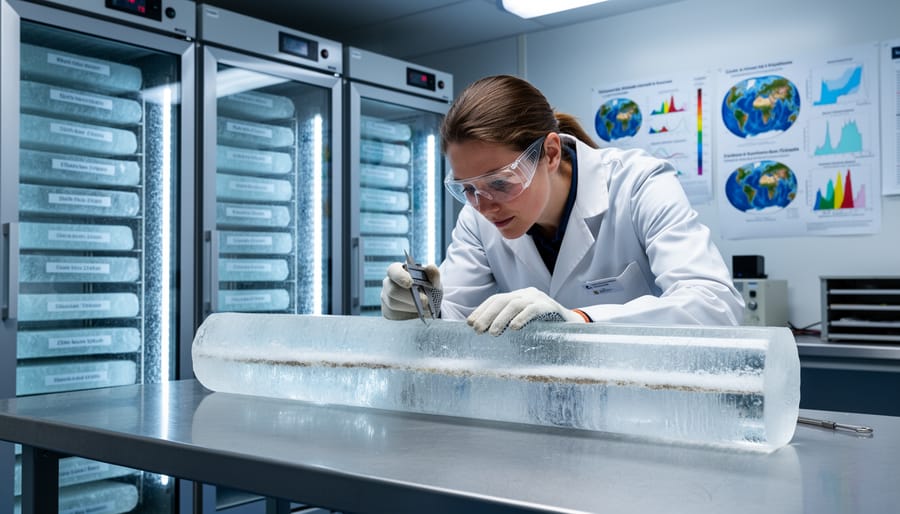
Climate change reality stands confirmed by evidence from multiple scientific disciplines, each using distinct methods to measure different aspects of the Earth’s climate system. The strength of the scientific case lies in how these independent lines of inquiry converge on the same conclusion.
Atmospheric scientists track greenhouse gas concentrations using ground-based stations and satellite instruments. Carbon dioxide levels have risen from 280 parts per million before industrialization to over 420 ppm today, measurements that show a direct correlation with global temperature increases. Air trapped in ancient ice cores extends this record back 800,000 years, revealing that current CO₂ levels far exceed natural variability over that entire period. Temperature data from thousands of weather stations, ocean buoys, and satellites document a warming trend of approximately 1.1°C since the late 1800s, with accelerated warming in recent decades.
Oceanographic research provides compelling physical evidence through multiple measurements. Ocean heat content has increased dramatically as the seas absorb more than 90% of excess heat trapped by greenhouse gases. Sea surface temperatures have risen measurably, affecting marine ecosystems worldwide. Ocean acidification, caused when seawater absorbs atmospheric carbon dioxide, has increased acidity by about 30% since pre-industrial times, a change detectable through chemical analysis. Sea level measurements from tide gauges and satellites show global mean sea level rising at an accelerating rate, now over 3 millimeters per year.
Glaciologists document the physical retreat of ice. Mountain glaciers on every continent have lost mass since systematic records began. The Greenland and Antarctic ice sheets shed hundreds of billions of tons of ice annually, measured by satellite gravity sensors and airborne surveys. Arctic sea ice extent has declined roughly 13% per decade in summer months since satellite monitoring started in 1979. Permafrost temperatures have warmed across the Arctic and sub-Arctic, destabilizing ground that remained frozen for millennia.
Major categories of climate change evidence include:
- Atmospheric measurements: Rising greenhouse gas concentrations, warming air temperatures, and changes in precipitation patterns documented through ground stations and satellites
- Oceanographic data: Increasing ocean heat content, sea surface temperatures, sea level rise, and measurable ocean acidification from absorbed CO₂
- Glaciological observations: Mass loss from mountain glaciers, ice sheet decline, shrinking Arctic sea ice, and warming permafrost across polar regions
- Ecological indicators: Species range shifts toward poles and higher elevations, earlier spring events, and ecosystem disruptions tied to temperature changes
- Paleoclimatic records: Ice cores, tree rings, coral deposits, and sediment layers revealing current warming as unprecedented in rate and cause over millennia
Ecological studies reveal biological responses to warming. Thousands of species have shifted their ranges poleward or to higher elevations, tracking temperature changes. Spring events like flowering and bird migration now occur weeks earlier than historical records show. Marine species move toward cooler waters as ocean temperatures rise, disrupting fisheries and food webs.
Paleoclimatology extends our understanding beyond instrumental records. Tree ring analysis reconstructs past temperatures and reveals current warming as exceptional. Deep ocean sediments preserve chemical signatures of ancient climates, showing natural climate cycles operate on vastly different timescales than current changes. Fossil pollen records demonstrate how vegetation zones shifted during past climate changes, but over thousands of years, not decades.
Each discipline uses rigorous, peer-reviewed methods. The evidence doesn’t rely on any single measurement or dataset. When scientists from separate fields, using different instruments and techniques, reach identical conclusions about warming and its human cause, that convergence builds an exceptionally robust case. This is why more than 99.9% of peer-reviewed papers agree climate change is mainly caused by humans, the physical evidence across disciplines is overwhelming.
The Scientific Consensus: What the Numbers Show

When researchers want to quantify how much agreement exists in climate science, they examine the published literature systematically. The numbers are striking. An 88,125 paper survey published in 2021 found that more than 99.9% of peer-reviewed scientific papers agree climate change is mainly caused by humans. This analysis reviewed every climate study published between 2012 and 2020, screening for those taking a position on the cause of recent warming.
The consensus isn’t new, but it has strengthened over time. A 2019 consensus finding reported 100% agreement in studies explicitly examining human causation, with over 99% of scientific papers supporting the conclusion that human activity drives contemporary climate change. These figures represent thousands of independent research teams working across continents and institutions, all arriving at compatible conclusions through different methods.
This level of agreement matters because scientific consensus doesn’t emerge from groupthink or politics. It builds from converging evidence that withstands repeated testing and scrutiny. When 99.9% of published research aligns on a fundamental question, it signals that the evidence is overwhelming and the conclusion is as reliable as scientific knowledge gets.
Understanding this consensus changes how people respond to climate information. Research shows that communicating the scientific consensus increases climate change beliefs, worry and support for public action among the public. When people learn that scientists aren’t divided on whether climate change is real and human-caused, they’re more likely to take the issue seriously. This matters for everything from regional climate impacts to global policy decisions, because public understanding shapes the political will needed for meaningful climate action.
How Climate Change Science Is Applied Today
Public Communication and Belief Formation
Understanding the science is only half the battle, communicating it effectively shapes public response. Research demonstrates that when people learn about the overwhelming scientific consensus on climate change, their acceptance of its reality increases measurably. Studies tracking consensus messaging effects show that simply informing the public that more than 99% of climate scientists agree on human causation boosts climate change beliefs, elevates concern about its impacts, and strengthens support for policy action.
This communication effect matters because public understanding lags far behind scientific certainty. Many people underestimate the level of expert agreement, perceiving false debate where virtually none exists among researchers. When that gap closes through clear messaging about the consensus, it creates a foundation for informed decision-making on everything from carbon pricing to investments in renewable energy sources.
The evidence confirms that consensus communication works across diverse audiences, making it a practical tool for science educators, journalists, and policymakers aiming to build public literacy on climate change reality.
How The Scientific Consensus on Climate Change Reality Works
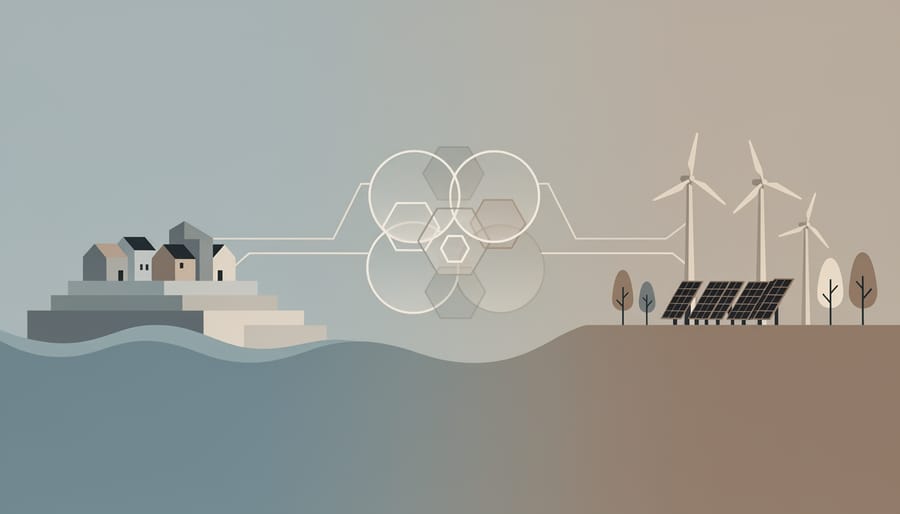
The scientific consensus on climate change emerges through a rigorous, self-correcting process that spans thousands of independent research teams across the globe. Scientists publish their findings in peer-reviewed journals, where other experts scrutinize methods, data and conclusions before publication. This quality control filters out weak or biased claims, allowing only robust evidence to enter the scientific record.
When multiple independent studies using different methods reach the same conclusion, confidence in that finding grows stronger. For climate change, researchers examining ice cores, satellite data, ocean temperatures and atmospheric composition have all arrived at consistent results: the planet is warming, and human activity is the principal cause. Modern tools like AI for climate data analysis now help researchers process millions of observations, strengthening the evidence base further.
The consensus itself becomes measurable when researchers survey the published literature. A 2019 review found 100% consensus on the cause of climate change, with over 99% of papers agreeing on human causation. A subsequent survey of 88,125 peer-reviewed papers confirmed that more than 99.9% agree climate change is mainly caused by humans. This extraordinary agreement matters because communicating it increases public understanding, worry and support for action. The consensus doesn’t suppress debate, it represents the accumulated weight of evidence after decades of testing, replication and refinement. This foundation now guides practical work in mitigation and adaptation worldwide.
Common Questions About Climate Change Reality
The most frequently asked questions about climate change reality reflect both scientific curiosity and the need for clarity in public understanding. These answers draw directly from the evidence and consensus data presented throughout this article.
Is climate change real?
Yes, climate change is real according to overwhelming scientific evidence from multiple independent disciplines including atmospheric science, oceanography, glaciology, and paleoclimatology. More than 99.9% of peer-reviewed scientific papers agree that climate change is mainly caused by humans, based on a survey of 88,125 papers.
What is extreme weather event attribution?
Extreme weather event attribution is the science of calculating how much human-caused climate change influences specific extreme weather events. This field uses statistical analysis and climate models to determine the role of anthropogenic warming in making events like heatwaves, hurricanes, or floods more likely or severe.
Do climate scientists disagree about global warming?
No, climate scientists do not disagree about the reality of human-caused global warming. A 2019 review found the consensus on the cause of climate change to be at 100%, with over 99% of scientific papers agreeing on the human cause of climate change.
What does the scientific consensus say about human-caused climate change?
The scientific consensus confirms that human activity is the principal cause of Earth’s warming. This agreement spans all major climate science disciplines and represents one of the strongest consensuses in modern science, comparable to the agreement on smoking causing cancer or vaccines preventing disease.
Understanding that communicating this scientific consensus increases climate change beliefs, worry, and support for public action underscores why accurate information matters. The questions people ask reflect genuine attempts to understand a complex issue, and the answers rest on decades of rigorous research across multiple fields. When someone asks whether climate change is real, they’re asking whether the scientific evidence supports a specific claim, and the answer from the research community is unequivocal.
The question “is climate change real?” has a definitive answer grounded in extraordinary scientific agreement and converging evidence from every corner of Earth science. More than 99.9% of peer-reviewed scientific papers confirm that climate change is mainly caused by humans, a level of consensus rarely seen in any scientific field. This isn’t agreement on a single data point. It’s independent confirmation across atmospheric science, oceanography, glaciology, ecology, and paleoclimatology, each discipline measuring different aspects of the same underlying reality.
The strength of this conclusion lies in how these separate lines of evidence support one another. Temperature records align with ice core data. Ocean heat measurements confirm atmospheric changes. Ecological shifts match what climate models predict. When fundamentally different research methods all point to the same conclusion, that convergence becomes exceptionally powerful.
Understanding climate change as an established scientific reality matters beyond academic circles. Research shows that communicating this consensus increases climate change beliefs, worry, and support for public action. Climate Change Studies continues refining our understanding of attribution science, extreme weather connections, and regional impacts, not to determine whether climate change is real, but to improve how we respond to it. The evidence is settled. The work now focuses on protecting communities, guiding adaptation strategies, and supporting the transition to sustainable systems based on what we know with near-total scientific certainty.