
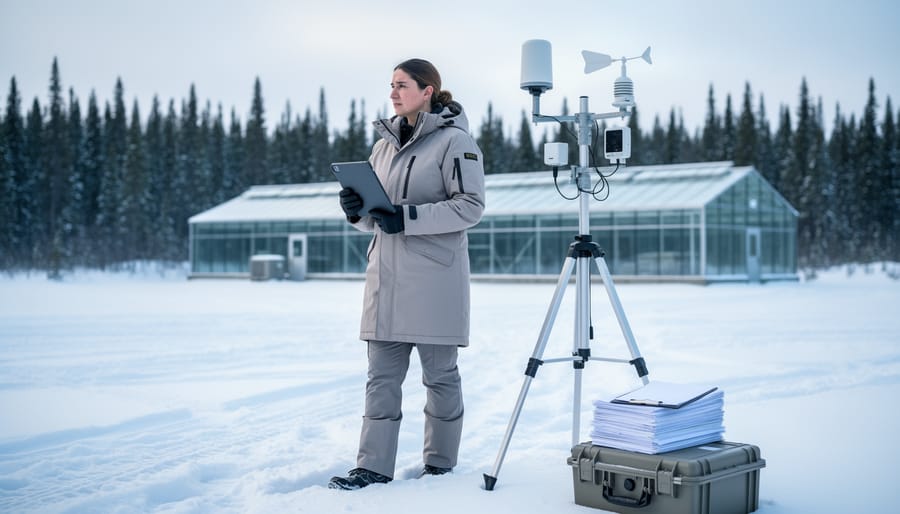
Canada’s Canadian Net-Zero Emissions Accountability Act, enacted through Bill C-12, establishes legally binding greenhouse gas reduction targets with the explicit goal of reaching net-zero emissions by 2050. The legislation transforms environmental science from an advisory role into a core component of national policy, requiring the Minister of the Environment to set milestone targets for 2030, 2035, 2040, and 2045, each accompanied by detailed emissions reduction plans, progress reports, and assessment reports tabled before Parliament.
This framework represents a fundamental shift in how climate research informs public policy. Rather than producing recommendations that may or may not influence government action, scientists now contribute to mandated, transparent processes with built-in accountability mechanisms. The Act establishes an advisory body to guide the Minister on achieving net-zero emissions, creating direct channels between research findings and policy development. For researchers, this means their work on carbon capture technologies, renewable energy systems, ecosystem restoration, and climate modeling directly shapes the metrics and strategies Canada pursues.
The legislation also opens meaningful avenues for public participation, ensuring that climate action planning incorporates diverse perspectives beyond government and academic circles. Every emissions reduction plan undergoes public scrutiny, and the advisory body’s recommendations become part of the public record. This transparency allows citizens, advocacy groups, and industry stakeholders to track progress against targets and hold policymakers accountable when projections fall short.
Understanding how the Canadian Net-Zero Emissions Accountability Act operates matters for anyone engaged in environmental science, policy advocacy, or climate-focused industries. The law creates concrete opportunities to influence research priorities, participate in national climate planning, and contribute expertise to one of the most consequential environmental initiatives in Canadian history.
What the Canadian Net-Zero Emissions Accountability Act Does
Bill C-12, the Canadian Net-Zero Emissions Accountability Act, received Royal Assent and is now law. The Act establishes a binding framework that requires the Minister of the Environment to set national greenhouse gas reduction emissions targets for 2030 2035, 2040, and 2045, with an overarching objective of achieving net-zero emissions by 2050. This creates a transparent, legally mandated timeline that shapes how Canada approaches climate action across government, industry, and the research community.
The legislation operates through a three-part reporting system designed to ensure accountability. For each target year, the Minister must table an emissions reduction plan in Parliament that outlines strategies and measures to meet that specific target. Progress reports follow, documenting whether Canada is on track and identifying gaps or challenges. Assessment reports then evaluate the effectiveness of implemented measures and recommend adjustments. This cycle repeats for each milestone, creating regular checkpoints that hold government action to public scrutiny.
The Act also establishes an advisory body tasked with providing independent expert guidance to the Minister on pathways to net-zero. This body reviews technical approaches, evaluates policy options, and addresses specific questions referred by the Minister. Critically, the legislation includes provisions for public participation, allowing citizens, organizations, and researchers to contribute input during target-setting and plan development. This participation mechanism ensures that diverse perspectives, including scientific expertise from climate change studies, inform Canada’s emissions reduction strategy.
Together, these elements transform abstract climate commitments into concrete, measurable obligations with built-in transparency and expert oversight, directly influencing which research questions receive priority funding and attention.
Institutional Responsibilities and Eligibility
The Canadian Net-Zero Emissions Accountability Act places responsibility squarely on the federal government, not on individual citizens or private organizations. The Minister of the Environment holds the central authority, tasked with setting national greenhouse gas reduction targets for 2030, 2035, 2040, and 2045, each milestone working toward the net-zero objective by 2050. This ministerial role extends beyond target-setting to overseeing the entire reporting framework and ensuring that emissions reduction plans, progress reports, and assessment reports reach Parliament on schedule.
Three core institutional functions define how the Act operates:
- The Minister of the Environment sets binding national targets and coordinates the preparation of all mandatory reports.
- An advisory body, established by the Act, provides expert guidance to the Minister on strategies for achieving net-zero emissions and on any matters referred to it.
- Parliament receives and reviews emissions reduction plans, progress reports, and assessment reports, creating a formal accountability loop.
The advisory body acts as a bridge between scientific expertise and policy implementation, drawing on climate researchers, economists, and technical specialists to inform the government’s approach. This structure ensures that emissions targets rest on credible evidence rather than political expediency.
Public participation is woven directly into the framework. The Act requires consultation mechanisms during target-setting and plan development, allowing research institutions, environmental organizations, industry groups, and individual Canadians to submit input. These provisions recognize that effective climate policy demands transparency and broad engagement, particularly from the scientific community whose work underpins emissions accounting and mitigation strategies.
Crucially, the Act applies to federal government institutions and establishes national targets. There is no individual compliance requirement, no permit to apply for, no personal emissions ceiling to meet. The legislation creates a governance structure that holds the government accountable to Parliament and the public, not a regulatory burden on households or small organizations.
How the Act Shapes Climate Change Research Priorities
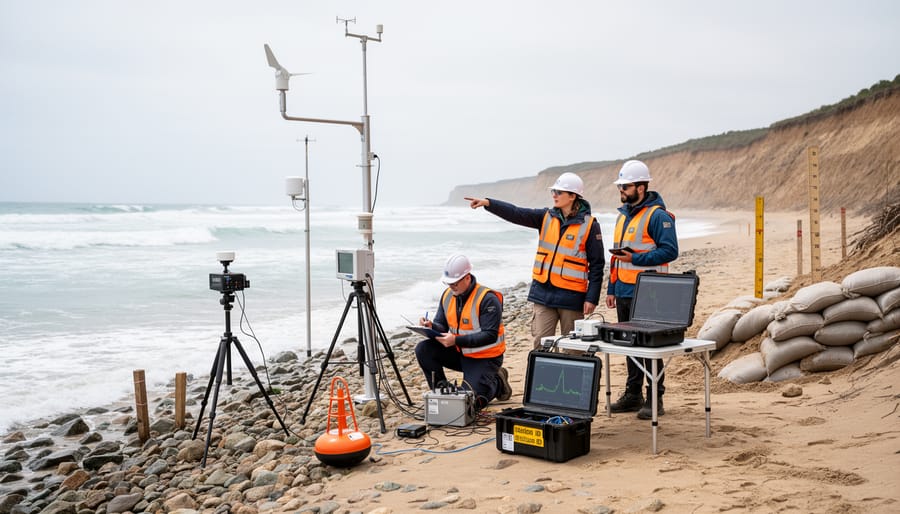
The Canadian Net-Zero Emissions Accountability Act has fundamentally reoriented environmental science funding and research agendas across the country. By mandating five-year target cycles through 2050, the legislation creates predictable, ongoing demand for specific research domains that directly support Canada’s emissions reduction planning and progress reporting.
Emissions measurement science has moved to the forefront. Researchers now focus on developing more granular, sector-specific methodologies to track greenhouse gas outputs with the precision required for credible national reporting. Universities and federal labs have expanded programs in atmospheric monitoring, satellite remote sensing, and AI for environmental data analysis to provide the empirical foundation the Act demands. This emphasis contrasts sharply with pre-legislation priorities, when measurement work often competed for attention against broader climate modeling studies.
Carbon accounting methodologies represent another growth area. The Act’s requirement for detailed emissions reduction plans means government and industry need standardized, defensible frameworks to quantify reductions across diverse sectors, from heavy industry to agriculture to transportation. Research teams are developing lifecycle assessment protocols, carbon budget models, and verification systems that can withstand public scrutiny and parliamentary review.
Mitigation technology research has gained institutional momentum. Knowing that targets escalate every five years, funding agencies now prioritize work with near-term deployment potential. Carbon capture tech renewable energy integration, industrial decarbonization processes, and low-emission materials all benefit from this legislated sense of urgency. Researchers report that proposal success rates improve when projects explicitly align with the Act’s timelines and target years.
Impact assessment studies have similarly expanded. Because the Act requires progress reports that evaluate both achievements and gaps, there’s sustained demand for research quantifying how specific policies and technologies actually perform in Canadian conditions. Field studies, pilot projects, and retrospective analyses that generate measurable outcomes now attract more support than purely theoretical work.
Environmental scientists note that this accountability framework shifts the research culture itself. One climate researcher at a Canadian university explained that the Act transforms abstract climate goals into concrete, dated obligations, which in turn makes research proposals more compelling to funders who can directly connect the work to legislated requirements. The result is a tighter coupling between environmental science and policy implementation than existed before the legislation took effect.

Public Participation: How Organizations and Individuals Engage with the Process

The Canadian Net-Zero Emissions Accountability Act includes explicit provisions for public participation, recognizing that effective climate policy requires input from diverse stakeholders. Both organizations and individual citizens have structured opportunities to shape Canada’s emissions reduction targets and the plans designed to meet them.
When the Minister of the Environment prepares to set a new national target, for 2030, 2035, 2040, or 2045, the law requires a consultation process. Research institutions can submit technical analyses and data to inform realistic target-setting. Environmental organizations contribute perspectives on ambition and equity. Industry groups provide input on feasibility and economic implications. Individual Canadians can share concerns about how targets affect their communities or sectors.
The same participation framework applies when the government develops emissions reduction plans. These plans outline the policies and measures Canada will use to meet each target, from carbon pricing to low-carbon energy infrastructure investments. Stakeholders can propose specific strategies, challenge assumptions in draft plans, or highlight gaps in proposed measures.
To submit feedback, participants typically respond during designated comment periods announced by Environment and Climate Change Canada. These consultations may include online surveys, written submissions sent directly to the Minister’s office, virtual town halls, or sector-specific roundtables. The government publishes notices through official channels when consultation periods open, detailing submission deadlines and preferred formats.
The Act also establishes an advisory body to provide ongoing counsel to the Minister on achieving net-zero by 2050. While this body’s composition is determined by government appointment, its mandate includes considering stakeholder input, creating another avenue for expertise from climate science, economics, and affected communities to inform national strategy.
Public participation doesn’t end after target-setting. When progress reports and assessment reports are tabled in Parliament, civil society can scrutinize whether Canada is on track, applying public pressure when action lags behind commitments.
Rights, Obligations, and Accountability Mechanisms

The Canadian Net-Zero Emissions Accountability Act establishes a clear division between government obligations and public rights, creating a transparency framework uncommon in environmental legislation. Understanding these mechanisms shows how the law attempts to make climate policy both binding and participatory.
Government Obligations Under the Act
The Minister of the Environment carries the primary legal responsibility. For each milestone year, 2030, 2035, 2040, and 2045, the Minister must set specific national greenhouse gas reduction targets and table three distinct documents in Parliament: an emissions reduction plan outlining how Canada will meet each target, progress reports tracking implementation, and assessment reports evaluating outcomes against goals. This triple-reporting structure creates recurring accountability checkpoints rather than a single static commitment.
Public transparency isn’t optional. All plans, reports, and target announcements must be made publicly available, ensuring that climate data and policy decisions reach beyond parliamentary chambers. The Act also mandates expert consultation through an advisory body that provides independent guidance to the Minister, adding a layer of scientific oversight to political decision-making.
Public Rights and Participation
The Act grants explicit participation rights. Citizens, research institutions, environmental organizations, and industry groups can contribute input during target-setting and plan development phases. This builds stakeholder voices into the policy cycle, allowing researchers studying climate impacts in ecosystems or emissions reduction technologies to inform national strategy directly.
Access rights matter too. The public can review all emissions reduction plans, progress reports, and assessment documents, creating accountability through visibility.
Oversight and Accountability to Parliament
Parliament serves as the ultimate accountability mechanism. By requiring the Minister to table all reports in both Houses, the Act subjects climate targets and progress to parliamentary scrutiny and debate. This legislative oversight creates political consequences for missed targets or inadequate action, distinguishing legal accountability from voluntary commitments.
Where to Get Help and Official Resources
Environment and Climate Change Canada serves as the primary contact point for all matters related to the Canadian Net-Zero Emissions Accountability Act. The department coordinates target-setting, publishes mandatory reports, and manages public consultation processes under the Act’s framework.
Researchers, organizations, and citizens can access official resources through several government portals:
- Environment and Climate Change Canada’s website hosts emissions reduction plans, progress reports, and assessment reports required under the Act
- The Parliament of Canada’s legislative database (LEGISinfo) provides the full text of Bill C-12 and related parliamentary documents
- The National Inventory Report published by ECCC offers detailed emissions data that supports mitigation and adaptation research
- Public consultation portals announce comment periods when the Minister seeks input on new targets or plan revisions
Research institutions seeking emissions data for climate change studies can contact ECCC’s Science and Technology Branch directly. Organizations interested in participating in advisory processes should monitor announcements from the Minister of the Environment regarding advisory body appointments and stakeholder engagement opportunities. The Act’s transparency requirements ensure that all plans, reports, and public submissions remain accessible through government portals, creating an open resource for both scientific research and public accountability.
How to Apply or Complete the Process
The Canadian Net-Zero Emissions Accountability Act operates as a government accountability framework rather than a program requiring public applications or individual compliance filings. There is no application process for citizens, businesses, or organizations to “complete” under this legislation.
The Act places legal obligations directly on the Minister of the Environment to set greenhouse gas reduction targets for 2030, 2035, 2040, and 2045, then table emissions reduction plans, progress reports, and assessment reports in Parliament for each target period. These ministerial responsibilities follow a statutory timeline embedded in the legislation itself.
For research institutions and environmental organizations interested in contributing to the process, engagement happens through public participation provisions built into the framework. When the Minister develops emissions reduction plans or revises targets, Environment and Climate Change Canada announces consultation periods and solicits input through official channels. Monitor the department’s website for notices about upcoming consultations, which typically include details on submission deadlines, preferred formats for comments, and specific questions the government seeks to address.
Individual researchers can access published emissions data, reduction plans, and progress reports through government portals once they’re tabled in Parliament. This transparency requirement creates research opportunities without requiring formal registration or clearance to participate in the broader climate accountability conversation the Act establishes.
At-a-Glance Details
The Canadian Net-Zero Emissions Accountability Act establishes a clear timeline and structure for national climate action. This table summarizes the framework’s essential components for researchers, organizations, and stakeholders tracking Canada’s emissions reduction commitments.
| Component | Requirement | Responsible Authority |
|---|---|---|
| Target Years | 2030, 2035, 2040, 2045 (net-zero by 2050) | Minister of the Environment |
| Emissions Reduction Plan | Required for each target period | Federal Government |
| Progress Reports | Tabled in Parliament for each milestone | Minister of the Environment |
| Assessment Reports | Independent evaluation of progress | Advisory Body |
| Public Participation | Built into target-setting and plan development | Environment and Climate Change Canada |
This structure creates predictable cycles for climate research funding and policy alignment. Each five-year milestone generates demand for updated emissions data, impact assessments, and mitigation technology validation. Research institutions can align grant applications and study timelines with these reporting periods, while environmental organizations can prepare input for consultation windows tied to plan development and target updates.
Frequently Asked Questions
What does the Canadian Net-Zero Emissions Accountability Act do?
The Act requires the federal government to set binding national greenhouse gas reduction targets for 2030, 2035, 2040, and 2045, with the objective of reaching net-zero emissions by 2050. It establishes a mandatory reporting framework that includes emissions reduction plans, progress reports, and assessment reports that must be tabled in Parliament for each target period.
Who sets the emissions targets under the Act?
The Minister of the Environment sets all national emissions reduction targets. The Minister is supported by an advisory body established under the Act, which provides expert guidance on achieving net-zero emissions and addresses specific matters referred by the Minister.
What reporting requirements does the Act create?
For each target year, the government must table three documents in Parliament: an emissions reduction plan outlining how the target will be met, a progress report tracking implementation, and an assessment report evaluating whether the target was achieved. This creates a transparent, cyclical accountability system that spans nearly three decades.
How can I participate in the process?
The Act includes provisions for public participation in the development of emissions reduction plans and target-setting. Citizens, researchers, and organizations can submit input during consultation periods, which are coordinated by Environment and Climate Change Canada when new plans are being developed or targets are under review.
These questions reflect the practical concerns of researchers tracking how climate policy shapes funding opportunities and priorities, as well as organizations and individuals looking to engage with Canada’s national climate framework. The Act’s public participation provisions create formal channels for scientific input, ensuring that emissions reduction strategies are informed by current research and expert analysis. For climate scientists, understanding these accountability mechanisms helps contextualize how their work on emissions measurement, mitigation technologies, and impact assessment feeds into national policy development and evaluation.
The Canadian Net-Zero Emissions Accountability Act represents more than a legislative milestone, it creates a binding framework that transforms how Canada approaches both climate policy and scientific research. By mandating emissions reduction plans, progress reports, and assessment reports for each national target through 2050, the Act establishes a structured accountability cycle that demands rigorous, evidence-based climate change studies. This legal architecture drives research funding toward emissions measurement, mitigation technologies, and carbon accounting methodologies, while public participation provisions ensure that scientific findings inform policy development. As Canada’s research community responds to these mandated timelines and transparency requirements, it is uniquely positioned to generate the data, innovations, and expertise needed to meet net-zero commitments and advance global understanding of climate solutions.