

The United Nations Framework Convention on Climate Change (UNFCCC) serves as the world’s primary platform for coordinating global climate action, bringing together 198 countries to negotiate binding emissions targets, climate finance mechanisms, and adaptation strategies. As we approach the 2026 UN Climate Change Conference (UNFCCC COP 31), scheduled for November 9-20 in Antalya, Türkiye, the stakes have never been higher. Recent data shows atmospheric carbon dioxide has crossed unprecedented thresholds, while extreme weather events continue to disrupt communities worldwide.
What makes this year’s summit particularly significant is the unveiling of the Global Climate Action Agenda, designed to accelerate solutions across six strategic axes ranging from renewable energy transitions to nature-based climate solutions. The June UN Climate Meetings already showcased progress through Plans to Accelerate Solutions, a framework that connects national commitments to measurable outcomes. UN Secretary-General delivered a special address on climate and energy on June 23, 2026, emphasizing the urgency of closing the gap between current policies and the 1.5°C warming target.
For students, researchers, and anyone tracking climate policy, understanding how the UNFCCC operates is essential. The conference of parties (COP) system translates climate science into diplomatic agreements that shape everything from carbon markets to international climate finance. This year’s gathering in Türkiye will test whether nations can move from pledges to implementation at the speed and scale scientists say we need.
Understanding UN Climate Change and the UNFCCC Framework
The United Nations Framework Convention on Climate Change, known as UNFCCC or simply UN Climate Change, is the international treaty signed at the 1992 Earth Summit in Rio de Janeiro that brought the world together to tackle rising greenhouse gas concentrations. With 198 Parties (countries that have ratified the treaty), it represents one of the most universal agreements in UN history, establishing a framework where nations meet annually to negotiate concrete climate action.
At the heart of this framework sits the Conference of the Parties, or COP, where member nations convene to assess progress and make decisions on implementation. Think of COP as the treaty’s steering committee: delegates from each Party gather to negotiate new commitments, review scientific findings, and hammer out the technical details of how countries will meet their climate pledges. These aren’t ceremonial gatherings. The decisions made at COP, from the landmark Paris Agreement in 2015 to the loss and damage fund established more recently, shape national policies, redirect billions in climate finance, and set the pace for the global energy transition.
Several key terms define how this system operates:
- UNFCCC (United Nations Framework Convention on Climate Change)
- The 1992 treaty that established the international legal foundation for coordinated climate action, committing signatory nations to stabilize greenhouse gas concentrations at levels that prevent dangerous interference with the climate system.
- COP (Conference of the Parties)
- The annual decision-making forum where all treaty members meet to assess climate progress, negotiate new agreements, and establish implementation mechanisms, COP 31 convenes in Antalya, Türkiye this November.
- Parties
- The 198 countries plus the European Union that have ratified the UNFCCC, each with equal standing in negotiations regardless of size or emissions levels.
- NDCs (Nationally Determined Contributions)
- Each country’s official climate action plan submitted under the Paris Agreement, outlining specific emission reduction targets and adaptation strategies updated every five years.
Recent research on international climate governance highlights how this multilateral structure, while complex, creates accountability mechanisms that bilateral agreements can’t match. When a country submits its NDC, it enters a transparent review process where progress gets tracked publicly, creating diplomatic pressure to follow through. The Conference of the Parties also serves as a forum where smaller nations, often most vulnerable to climate impacts, can coalition-build and influence outcomes in ways they couldn’t through separate negotiations with major emitters.
COP 31 in Antalya: What’s at Stake This November
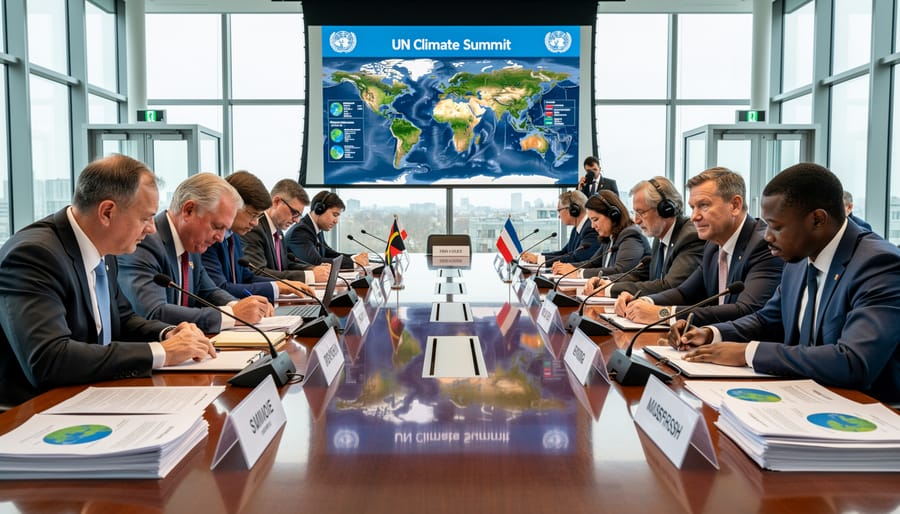
The 2026 UN Climate Change Conference (UNFCCC COP 31) will convene from November 9-20 in Antalya, Türkiye, marking a pivotal moment for international climate cooperation. This twelve-day summit arrives at a time when the gap between climate commitments and necessary action continues to widen, making the outcomes in Türkiye potentially decisive for staying within survivable temperature limits.
Antalya’s selection as host city carries symbolic weight beyond logistics. Türkiye sits at the geographic crossroads of Europe, Asia, and the Middle East, positioning COP 31 as a bridge between developed economies and emerging nations most vulnerable to climate impacts. The Mediterranean location also serves as a stark reminder of climate risks, with the region experiencing accelerating heat waves, water scarcity, and ecosystem shifts that preview challenges facing much of the world.
What distinguishes this particular COP from its predecessors is the urgency underscored by recent climate data and the narrowing window for effective intervention. The Secretary-General’s special address on climate and energy delivered on June 23, 2026, highlighted the critical nature of this year’s negotiations, emphasizing that incremental progress no longer suffices when measured against the scale of the crisis.
COP 31 will test whether nations can move beyond the framework-setting of previous summits to binding commitments with enforcement mechanisms. Observers expect intense negotiations around climate finance, with developing nations pressing for substantial support to transition away from fossil fuels while adapting to unavoidable impacts already underway. The summit must also address gaps in emissions reduction pledges that current modeling shows lead to dangerous warming levels.
For researchers and policymakers alike, Antalya represents a final opportunity to implement course corrections before certain climate tipping points become irreversible.
The Six Axes: A New Framework for Climate Action
At the June 2026 UN Climate Meetings, international negotiators unveiled a restructured Global Climate Action Agenda built around six strategic Axes, marking a deliberate shift from aspirational declarations toward implementable action plans. This framework emerged from recognition that previous climate agreements, while establishing critical targets, often lacked the concrete mechanisms needed to translate commitments into measurable progress. The Plans to Accelerate Solutions presented alongside these Axes demonstrated tangible achievements in renewable energy deployment, adaptation financing, and technology transfer, evidence that the evolution toward action-oriented cooperation is already producing results.
The six Axes structure the global climate response around interconnected priority areas:
- Energy Transition: Accelerating the shift to low-carbon energy systems through technology deployment, grid modernization, and phasing out fossil fuel subsidies
- Nature-Based Solutions: Protecting and restoring ecosystems that sequester carbon while supporting biodiversity and community resilience
- Climate Finance: Mobilizing public and private capital to fund both mitigation projects and adaptation measures in vulnerable regions
- Sustainable Transportation: Transforming mobility systems through electric vehicles, public transit expansion, and urban planning reforms
- Circular Economy: Redesigning production and consumption patterns to eliminate waste and reduce emissions across supply chains
- Climate Adaptation: Building resilience in infrastructure, agriculture, and water systems to withstand changing climate conditions
Research on implementation mechanisms reveals why this framework represents genuine evolution. Each Axis connects to specific monitoring protocols that track progress quarterly rather than annually, enabling course corrections in real time. Dr. Elena Marquez, who studies international environmental governance at Oxford, notes that the accompanying Plans to Accelerate Solutions include binding timelines and designated lead institutions for each initiative, addressing the accountability gaps that plagued earlier frameworks.
The June meetings showcased concrete achievements under this structure. Nations reported deploying 180 gigawatts of new renewable capacity in the first half of 2026, exceeding projections by 23%. The Climate Finance Axis channeled $47 billion in adaptation funding to developing nations, with transparency mechanisms allowing citizens to track how resources reach frontline communities. These aren’t projections for the distant future, they’re operational systems demonstrating that the Axes provide practical infrastructure for turning climate policy into physical reality ahead of the critical COP 31 negotiations in November.
The Science Behind the Urgency

The mounting evidence from climate science leaves little room for ambiguity: we’ve entered a decade that will determine the trajectory of human civilization for centuries to come. Recent research shows that Earth’s carbon budget, the total amount of CO₂ we can still emit while limiting warming to 1.5°C, continues to shrink at an alarming rate, now measured in years rather than decades.
What makes the science particularly urgent is our growing understanding of climate tipping points. Dr. Johan Rockström, director of the Potsdam Institute for Climate Impact Research, has documented how interconnected Earth systems can cascade beyond critical thresholds. When Arctic permafrost melts, it releases methane that accelerates warming, which melts more permafrost, a feedback loop that operates independently of human emissions once triggered. Several of these tipping points sit dangerously close to current warming levels of approximately 1.2°C above pre-industrial temperatures.
The window for effective action narrows with each passing year. Climate researchers emphasize that limiting warming requires cutting global emissions roughly in half by 2030 and reaching net-zero by mid-century. That timeline makes COP 31 in November critically important. Every negotiation cycle that passes without bold commitments consumes more of our remaining carbon budget and pushes additional tipping points closer to the edge.
Modern climate science also reveals that climate impacts arrive faster and hit harder than earlier models predicted. Heat waves, droughts, and extreme precipitation events now occur with intensities that weren’t expected until several more decades of warming. This acceleration underscores why tools like AI for climate action have become essential for both understanding complex climate dynamics and implementing rapid solutions.
The research is unequivocal: the next few years represent humanity’s last practical opportunity to prevent the most catastrophic warming scenarios. What happens at UN climate conferences directly translates into whether we preserve that opportunity or watch it slip away.
From Promises to Practice: Tracking Real-World Impact
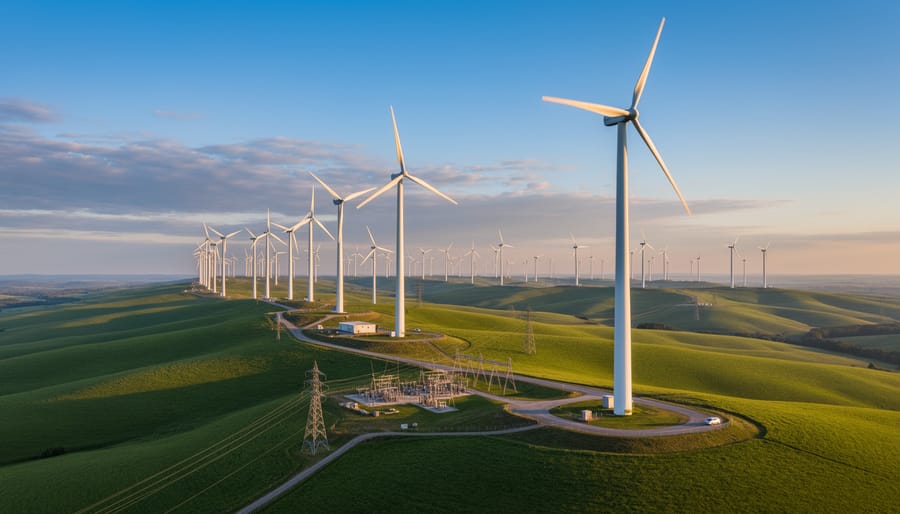
The gap between climate commitments and concrete action has narrowed considerably, though significant work remains. UN Climate Change initiatives have catalyzed measurable shifts in renewable energy deployment, climate finance flows, and national policy frameworks, transformations now visible in electricity grids, adaptation projects, and technology transfer programs worldwide.
Renewable energy provides the clearest success metric. Global solar capacity has expanded from 1,185 gigawatts in 2022 to over 2,000 gigawatts by mid-2026, driven partly by frameworks established through successive COP negotiations. Wind power installations similarly accelerated, with offshore wind capacity tripling in developing nations between 2023 and 2025. These aren’t abstract statistics, they represent millions of households powered by clean energy and avoided gigatons of carbon emissions. Research tracking renewable deployment patterns shows the strongest growth occurs in countries with explicit nationally determined contributions (NDCs) aligned with Paris Agreement targets.
| Sector | Current Progress (2026) | Target Goals | Example Initiative |
|---|---|---|---|
| Renewable Energy | 2,000+ GW solar capacity | 11,000 GW by 2030 | India’s National Solar Mission |
| Climate Finance | $116B annual flows | $100B baseline met | Green Climate Fund projects |
| Adaptation Funding | $21B committed (2024) | Double by 2025 baseline | Bangladesh delta resilience |
| Technology Transfer | 47 countries receiving support | 100+ by 2028 | Kenya geothermal partnerships |
Climate finance, long a contentious negotiation point, finally exceeded the $100 billion annual commitment in 2023, reaching approximately $116 billion by 2024. The Green Climate Fund has approved over 250 projects spanning 130 countries, channeling resources toward both mitigation and adaptation. Adaptation funding deserves particular attention: vulnerable nations received $21 billion in 2024 specifically for climate resilience projects, seawalls in Pacific island states, drought-resistant agriculture in sub-Saharan Africa, early warning systems across South Asia.
Technology transfer mechanisms demonstrate how policy frameworks enable practical knowledge sharing. Kenya’s geothermal energy expansion benefited directly from UNFCCC Technology Mechanism support, while Vietnam’s coastal mangrove restoration projects drew on international expertise facilitated through climate negotiations. These examples illustrate the connective tissue between international agreements and local implementation.
Challenges persist, naturally. Many countries struggle to translate NDCs into enforceable legislation. Implementation timelines slip, financing gaps remain for the most vulnerable regions, and monitoring systems for emissions reductions need strengthening. The Plans to Accelerate Solutions showcased at the June 2026 UN Climate Meetings aim to address these bottlenecks by emphasizing concrete, verifiable progress across the Global Climate Action Agenda’s framework. Whether rhetoric converts fully to results depends on sustained commitment beyond conference halls, but the trajectory shows genuine momentum building from decades of negotiation into tangible climate action.
What COP 31 Means for Your Future
The decisions made in Antalya this November will ripple through your daily life in ways both immediate and lasting. While international climate negotiations might seem abstract, the outcomes from COP 31 will directly shape your household budget, career opportunities, and the environment where you live.
Energy costs represent the most tangible connection between global policy and your wallet. The financing mechanisms and renewable energy targets negotiated at COP 31 will influence electricity prices, fuel costs, and the pace of clean energy infrastructure buildout in your region. Countries that secure stronger climate finance commitments typically accelerate their transition to cheaper renewable sources, which translates to more stable long-term energy prices for consumers. Conversely, nations that lag in implementing mitigation and adaptation strategies often face volatile energy markets and higher costs as extreme weather disrupts supply chains.
The job market is already transforming in response to climate policy. Green industries, solar installation, battery manufacturing, sustainable agriculture, climate risk analysis, are projected to create millions of positions worldwide by 2030. The specific commitments made at COP 31 will determine how quickly these opportunities materialize in different regions and which skills will be most valuable.
Extreme weather preparedness will increasingly depend on the adaptation funding negotiated at summits like COP 31. These agreements determine which communities receive resources for flood defenses, drought-resistant infrastructure, and early warning systems. Your local government’s capacity to protect you from climate impacts often traces back to international finance flows decided at these conferences.
The physical environment around you will continue changing regardless of policy outcomes, but the pace and severity depend entirely on the collective action, or inaction, that COP 31 represents.
The 200% surge in searches for United Nations climate change signals something profound: people recognize these negotiations aren’t distant diplomatic exercises but mechanisms that directly influence their lives. When COP 31 convenes in Antalya this November, the decisions made there will ripple through energy markets, infrastructure investments, agricultural practices, and community resilience plans worldwide. The connection between atmospheric science and household budgets, between international agreements and local flood defenses, has never been clearer.
This growing awareness reflects a maturation in how we understand climate action. It’s no longer about choosing between economy and environment, or waiting for perfect solutions. The research presented throughout this article demonstrates that effective climate response requires all three pillars working together: rigorous science identifying problems and solutions, policy frameworks enabling coordinated action, and individuals making informed choices in their communities and careers.
As COP 31 approaches, watch for how the six Axes of the Global Climate Action Agenda translate into binding commitments, how adaptation funding reaches vulnerable regions, and how technology transfer agreements materialize. The conversations in Antalya will set the trajectory for the next decade of climate action, and this time, the world is paying attention.