

Contributions to diversity in university research refer to the measurable ways individual scientists and institutions broaden participation, perspectives, and problem-solving approaches within academic fields, particularly in STEM disciplines where underrepresentation remains a persistent challenge. Rather than simply tracking demographic statistics, leading research universities in 2026 evaluate how faculty members actively mentor underrepresented students, design inclusive lab cultures, address research questions that serve diverse communities, and collaborate across traditional disciplinary boundaries to expand scientific inquiry.
The concept gained traction as universities recognized that homogeneous research teams often overlook critical questions and solutions. A geophysicist studying coastal erosion who partners with Indigenous communities, for example, doesn’t just add demographic diversity to a department roster. She fundamentally changes what questions get asked and whose knowledge counts as valid data. As Dr. Maria Chen from Stanford’s Earth Sciences department observed in a recent interview, “When we expanded our research partnerships beyond traditional academic circles, we discovered entire datasets about historical sea level changes that transformed our predictive models.”
Universities now assess these contributions during hiring, tenure reviews, and grant evaluations, though the criteria vary widely between institutions. Some prioritize teaching innovations that improve retention rates for first-generation students. Others value research that addresses health disparities or environmental justice. The challenge lies in creating evaluation frameworks that recognize meaningful impact without reducing complex efforts to checkbox exercises, particularly as funding agencies increasingly require diversity statements that demonstrate concrete outcomes rather than aspirational language.
Why Diversity Matters in Scientific Research
Diverse research teams consistently outperform homogeneous ones in producing novel solutions to complex scientific challenges. Studies show that diverse science teams generate more innovative research outputs and cite a broader range of prior work, directly correlating with higher-impact discoveries. When researchers from different backgrounds, experiences, and ways of thinking collaborate, they challenge assumptions that might otherwise go unquestioned, leading to experimental designs and interpretations that wouldn’t emerge from uniform perspectives.
In climate science, this diversity advantage proves particularly critical. Dr. Maria Chen, a geophysicist studying Arctic feedback mechanisms, notes that “having team members who grew up in coastal communities versus landlocked regions, or who’ve experienced extreme weather events firsthand, fundamentally shapes how we frame research questions about climate adaptation. These lived experiences surface blind spots in our models that pure technical training might miss.” This expanded perspective has driven breakthroughs in understanding how climate change affects vulnerable populations differently across geographies.
The impact extends to cutting-edge physics research as well. Teams working on quantum computing applications report that researchers trained in different educational systems approach error correction problems with distinct methodologies, accelerating progress when combined. Dr. James Okonkwo, who leads a quantum materials lab, explains that “colleagues from different scientific traditions often see patterns the rest of us overlook. One team member’s background in statistical mechanics opened an entire new approach to qubit stability that we’d been missing.”
The business case reinforces what DEI in higher education initiatives recognize: diversity isn’t a checkbox exercise but a strategic advantage. Universities investing in diverse research communities see measurably better outcomes in grant success rates, publication impact, and real-world technology transfer. The data shows that mixed-background teams publish in higher-tier journals and attract more collaborative opportunities across disciplines.
How Universities Are Building Diverse Research Communities

Recruitment and Access Initiatives
Universities are redesigning their recruitment pipelines to reach students who might never have considered earth sciences or physics as viable paths. Rather than waiting for applicants to arrive, institutions now actively cultivate interest years before students apply to graduate programs.
Bridge programs connect community colleges with research universities, creating transfer pathways that bypass traditional barriers. These partnerships offer lab experience and faculty mentorship to students at two-year institutions, many of whom are first-generation college students or from underrepresented backgrounds. The University of California system, for example, pairs community college students with research mentors for summer projects in geophysics and atmospheric science, demonstrating that talent exists everywhere but opportunity doesn’t.
Scholarship initiatives target specific demographics historically excluded from STEM fields. The National GEM Consortium funds graduate degrees in earth sciences for underrepresented minorities, covering tuition and providing stipends that make advanced research financially feasible. Similarly, programs like the American Geophysical Union’s Bridge Program link students from minority-serving institutions directly to PhD opportunities, removing the networking gap that often determines who enters research careers.
Effective recruitment strategies universities are deploying include:
- High school outreach programs that bring lab equipment and field research experiences to underserved communities
- Summer research academies designed for students with limited prior STEM exposure
- Application fee waivers and GRE score flexibility for candidates from economically disadvantaged backgrounds
- Partnerships with Indigenous communities to integrate traditional ecological knowledge into earth science curricula
These initiatives recognize that the pipeline problem starts long before college applications. Physics departments now run Saturday science clubs in urban neighborhoods, while earth science programs sponsor field camps specifically for students who’ve never had access to outdoor education. The goal isn’t lowering standards, it’s expanding the pool of who gets to compete.
Mentorship and Retention Programs
Retaining diverse talent requires intentional support systems that extend far beyond initial recruitment. Universities have developed structured mentorship programs specifically designed to help underrepresented students and early-career researchers navigate the unique challenges they face in STEM fields.
Formal mentorship pairings connect students from underrepresented backgrounds with faculty advisors who understand their experiences. At several leading research universities, these programs pair first-generation physics students with professors who can guide them through graduate school applications, funding opportunities, and research publication processes that might otherwise remain opaque. The mentors often share similar backgrounds, providing both practical guidance and proof that success is achievable.
Peer networks create horizontal support structures that complement vertical mentorship. Cohort-based programs group incoming graduate students in earth sciences and physics, enabling them to build communities of mutual support. These cohorts meet regularly to discuss research challenges, share strategies for navigating departmental politics, and celebrate each other’s achievements. One environmental science researcher noted, “Having peers who understood the isolation I sometimes felt made the difference between leaving and persevering through my doctorate.”
Professional development programming addresses skills that traditional curricula often overlook. Universities now offer workshops on grant writing, conference presentation techniques, negotiation skills, and work-life balance specifically tailored to the concerns of underrepresented researchers. Some institutions have established peer review groups where junior scientists from diverse backgrounds critique each other’s manuscripts before journal submission, building both confidence and competence.
These retention programs recognize that recruitment alone cannot create lasting change. They provide the scaffolding that transforms initial diversity gains into sustained representation throughout academic careers.
Creating Inclusive Research Environments
Creating inclusive research environments requires universities to transform the everyday structures and cultures where science happens. Beyond recruiting diverse talent, institutions must ensure that all researchers, regardless of background, can access resources, contribute ideas, and advance their careers without facing systemic barriers.
Many universities now mandate implicit bias training for principal investigators and hiring committees in physics and earth sciences departments. MIT’s Department of Earth, Atmospheric and Planetary Sciences, for instance, requires faculty to complete structured workshops before participating in admissions or hiring decisions. These sessions address how unconscious assumptions can influence evaluations of grant proposals, conference presentations, and publication contributions.
Equitable resource allocation has become another critical focus. Historically, lab space, equipment access, and research funding often flowed through informal networks that excluded newcomers from underrepresented groups. Leading institutions now implement transparent processes for distributing resources. The University of Washington’s College of the Environment established clear criteria for assigning fieldwork budgets and laboratory time, reducing reliance on “who you know” networks that perpetuate inequity.
“When we changed how we allocate field research funding, we saw immediate shifts in who could pursue ambitious projects,” notes a geosciences department chair at a major research university. “Transparency matters.”
Cultural shifts extend to everyday lab practices: rotating meeting times to accommodate caregiving responsibilities, establishing codes of conduct that define harassment clearly, and creating feedback mechanisms where junior researchers can report concerns without fear of retaliation. These seemingly small changes compound into environments where talent from all backgrounds can flourish.
Real-World Impact: Diversity-Driven Research Breakthroughs
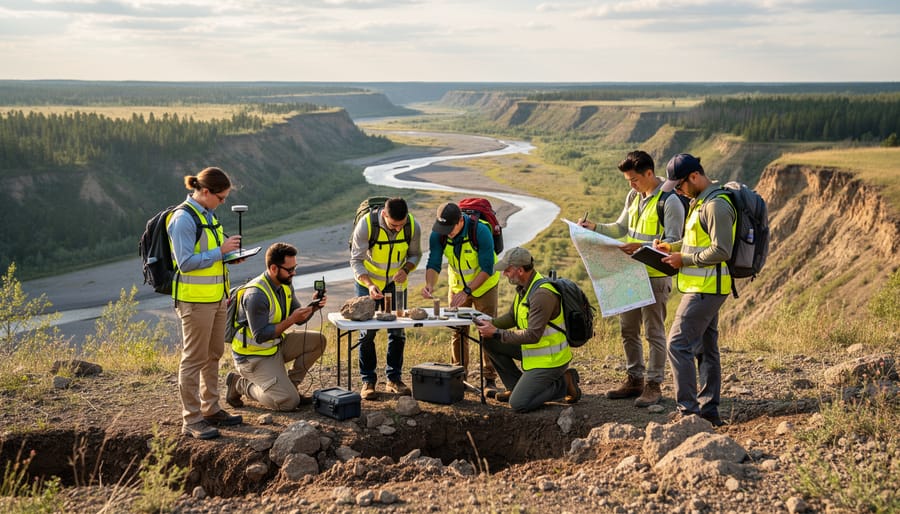
Diversity in research teams produces tangible breakthroughs that advance science and solve real-world problems. At Stanford University, a climate adaptation project led by Dr. Maria Santos brought together researchers from coastal communities in the Philippines, indigenous populations in Alaska, and urban planners from the Netherlands. “We were studying sea-level rise, but our team members from vulnerable communities identified adaptation strategies we would never have considered from a purely technical standpoint,” Santos explains. Their work produced innovative flood-mitigation designs now being implemented in fifteen countries.
In renewable energy, MIT’s low-carbon energy research centre achieved a major advancement when Dr. Kwame Osei, who grew up in rural Ghana without reliable electricity, approached solar panel efficiency from a maintenance perspective rarely considered in lab settings. His focus on durability in harsh conditions and ease of field repair led to a panel design that increased efficiency by eighteen percent in high-temperature, high-humidity environments. “My childhood experience taught me that brilliant technology means nothing if it breaks down and can’t be fixed locally,” Osei notes.
The University of Toronto’s quantum computing lab demonstrates how gender diversity drives innovation. Dr. Elena Volkova credits her team’s breakthrough in error correction to collaborative problem-solving shaped by different approaches. “Our female researchers consistently asked ‘why’ questions that challenged assumptions the field had accepted for decades,” she says. That persistent questioning revealed a flaw in conventional approaches, leading to a new algorithm that reduced quantum decoherence by thirty-two percent.
Measuring Progress and Ongoing Challenges

Universities employ several methods to track their diversity contributions, though transparency and standardization remain uneven across institutions. Most research universities now publish annual diversity reports detailing demographic data for faculty, graduate students, and postdoctoral researchers in STEM departments. These reports typically break down representation by gender, race, ethnicity, and sometimes disability status or socioeconomic background. Some institutions have adopted dashboards showing year-over-year progress in hiring, retention rates, and degree completion for underrepresented groups in earth sciences and physics.
However, meaningful measurement extends beyond headcounts. Leading universities also track participation in research opportunities, authorship on publications, conference presentations, and leadership roles within labs. A climate physicist at MIT notes that “we started tracking not just who’s in the room, but whose ideas are shaping the research agenda.”
Persistent barriers continue to limit progress. Funding remains a major constraint, particularly for universities serving predominantly minority populations. The “leaky pipeline” still sees disproportionate attrition of diverse talent between undergraduate and faculty levels. Implicit bias in peer review, grant allocation, and promotion decisions creates systemic disadvantages. Recent findings in the UN climate report highlighted how underrepresentation in earth sciences limits perspectives on climate solutions affecting vulnerable communities.
Many universities acknowledge that current metrics capture representation but struggle to measure true inclusion, belonging, or the quality of research environments for diverse scientists.
Common Questions About University Diversity Contributions
Prospective students and researchers often want to understand how diversity initiatives translate from policy documents into daily research life. The questions below address the most common concerns about evaluating and experiencing these programs.
How can I tell if a university’s diversity commitment is genuine or just marketing?
Look for transparent data on retention rates of underrepresented groups, not just recruitment numbers. Strong programs publish outcomes, fund dedicated positions beyond temporary initiatives, and demonstrate sustained budget commitments across multiple years.
Do diversity programs actually improve research quality?
Research teams with diverse backgrounds consistently approach problems from multiple angles, catching blind spots that homogeneous groups miss. This leads to more robust methodologies and solutions that work across different contexts and populations.
What should I ask during campus visits about diversity support?
Request meetings with current students and postdocs from backgrounds similar to yours. Ask specific questions about mentorship access, whether they feel heard in lab meetings, and how the department handles concerns when they arise.
Are diversity initiatives only for certain groups?
While programs often target historically underrepresented communities in STEM, the resulting inclusive environments benefit everyone by creating research cultures where different ideas and approaches receive fair consideration.
Beyond these basics, examine whether diversity leadership holds institutional power. Universities serious about change place diversity officers in positions with budget authority and direct reporting lines to senior administration, not buried within HR departments. Check if the institution tracks career progression beyond the graduate level, do diverse hires advance to tenure and leadership at comparable rates?
The most telling indicator remains the experiences of current community members. Reach out through professional networks or departmental contacts to hear unfiltered perspectives about whether support structures function as advertised when challenges arise.
University contributions to diversity represent far more than demographic statistics or compliance benchmarks. These initiatives fundamentally strengthen the scientific enterprise by expanding the range of questions asked, methodologies employed, and solutions proposed. When earth sciences departments include researchers from coastal communities threatened by climate change, or physics labs welcome perspectives shaped by different cultural approaches to problem-solving, the resulting research becomes more robust, relevant, and innovative.
The evidence is clear: diverse teams produce more cited papers, generate more patents, and tackle problems others overlook. Universities investing in inclusive recruitment, mentorship, and research environments are not sacrificing excellence for representation, they are redefining what excellence means in modern science.
As global challenges grow more complex, from climate adaptation to quantum computing breakthroughs, the scientific community cannot afford to leave talent untapped or perspectives unheard. The universities making genuine commitments to diversity today are building the research infrastructure needed to solve tomorrow’s most pressing problems. This evolution continues, driven by the recognition that the strongest science emerges when the full spectrum of human experience and creativity contributes to discovery.