
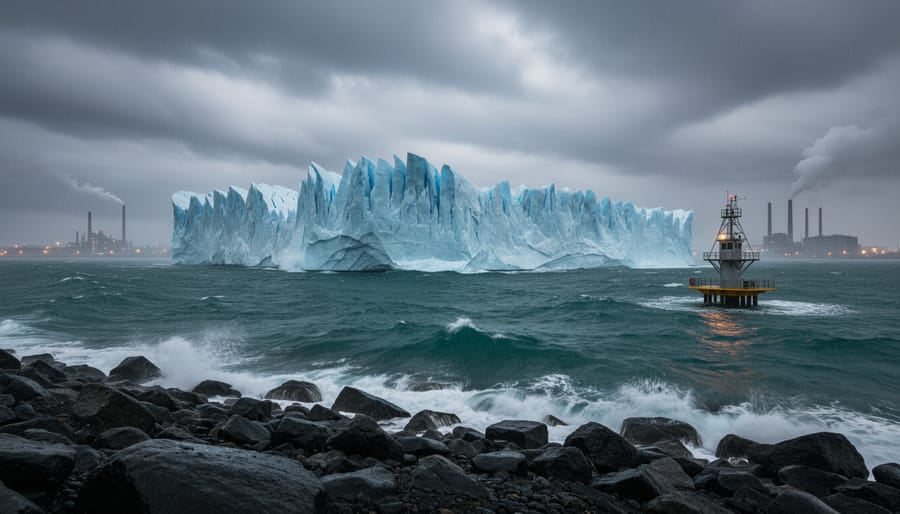
The United Nations released major climate assessments in mid-2026 that sharpen the scientific picture of planetary risk and adaptation needs. The UN Secretary-General’s Scientific Advisory Board published “Earth System Tipping Points” on June 23, 2026, warning that critical thresholds in ice sheets, ocean currents, and ecosystems may be closer than earlier models suggested. Just weeks earlier, on April 29, the World Meteorological Organization delivered the “European State of the Climate 2025,” documenting record warmth and extreme weather across the continent. Together with ongoing updates to the UN Environment Programme’s Adaptation Gap Report, these documents underscore a sobering reality: climate disruption is already affecting billions of people, and the window to prevent the most dangerous outcomes is narrowing fast.
What makes this wave of reporting significant is not just fresh data, but the convergence of evidence across regions and systems. Scientists are now tracking feedback loops that could accelerate warming beyond current projections, while adaptation efforts lag far behind the scale of need. For policymakers, businesses, and communities, the message is clear: the choices made in the next few years will determine whether humanity can stabilize the Earth system or lock in irreversible change.
What Changed: Major UN Climate Reports Released This Year
The first half of 2026 has marked a notable acceleration in UN climate reporting, with a cluster of high-stakes assessments landing within weeks of each other. On April 29, the World Meteorological Organization released the European State of the Climate 2025 report, documenting regional trends and observed impacts across the continent. Less than two months later, on June 23, the UN Secretary-General’s Scientific Advisory Board published the Earth System Tipping Points brief, spotlighting irreversible thresholds in the climate system. These releases join ongoing warnings from the UN’s Impacts, Adaptation and Vulnerability series, which emphasizes that climate change is causing dangerous disruption in nature and affecting billions of people worldwide.
Together, these reports represent a shift from periodic, synthesis-focused assessments to a more continuous stream of targeted briefings addressing specific dimensions of the climate crisis. The UN’s climate reports page now serves as a central hub for these findings, cataloging key reports on climate impacts and solutions from across the UN system. This coordinated release strategy signals recognition that the pace of climate change demands equally rapid communication of the science, particularly around adaptation strategies and vulnerability mapping that governments need to implement now rather than wait for the next major assessment cycle.
Key Developments in 2026 UN Climate Reporting
1. Earth System Tipping Points Brief by UNSG’s Scientific Advisory Board
On published 23 June 2026 the UN Secretary-General’s Scientific Advisory Board issued a brief on Earth System Tipping Points, escalating the global conversation about climate thresholds we cannot afford to cross. This report marks a stark acknowledgment at the highest levels of international governance that certain Earth systems are edging toward a point of no return where changes become self-reinforcing and effectively irreversible on human timescales.
Tipping points are critical thresholds in the climate system. Once exceeded, they trigger cascading, often abrupt shifts, such as the collapse of ice sheets, dieback of major rainforests, or shutdown of ocean circulation patterns, that reshape regional and global climates for centuries. The brief warns that several of these systems are already showing signs of destabilization under current warming, and that breaching 1.5°C above pre-industrial temperatures significantly raises the risk of triggering multiple irreversible tipping changes.
Why does this matter? Once a tipping point is passed, adaptation options narrow and impacts compound. The brief underscores that these thresholds are not distant hypotheticals but active frontiers of risk today. It calls for urgent emissions reductions, enhanced monitoring of vulnerable systems, and recognition that delaying action increases the likelihood of crossing thresholds that lock in profound, long-term disruption. The Advisory Board’s framing brings tipping-point science directly into the policy mainstream, signaling that decision-makers must now factor these non-linear risks into climate strategy and investment.
2. European State of the Climate 2025 Report by WMO
On April 29, 2026, the World Meteorological Organization released the European State of the Climate 2025 report, providing a detailed regional assessment of how climate change is reshaping conditions across the continent. Unlike global summaries, this report zooms in on Europe’s specific trends, offering governments and communities concrete data to guide local adaptation efforts.
The report tracks observable shifts in temperature, precipitation patterns, and extreme weather events throughout 2025. European nations experienced record-breaking heat waves, altered rainfall distribution, and intensified storm activity, all consistent with long-term warming projections. These aren’t abstract future scenarios, they’re measurable changes affecting agriculture, water supply, energy demand, and public health right now.
What makes this report particularly valuable is its focus on adaptation pathways. It doesn’t just document what happened; it identifies where vulnerabilities are greatest and what interventions work. For example, southern regions face increasing drought stress requiring water management overhauls, while northern areas must prepare infrastructure for heavier precipitation and flooding. The data helps policymakers prioritize investments in resilient infrastructure, updated building codes, and early warning systems.
The European State of the Climate series also serves as a model for regional climate reporting worldwide. By breaking down global trends into tangible local impacts, the WMO makes the science actionable. Cities can use this intelligence to redesign drainage systems, farmers can adjust crop choices, and health services can anticipate heat-related illnesses.
This regional lens complements broader UN assessments, translating planetary-scale warnings into decisions that protect lives and livelihoods today.
3. Ongoing Series: Impacts, Adaptation and Vulnerability Warnings
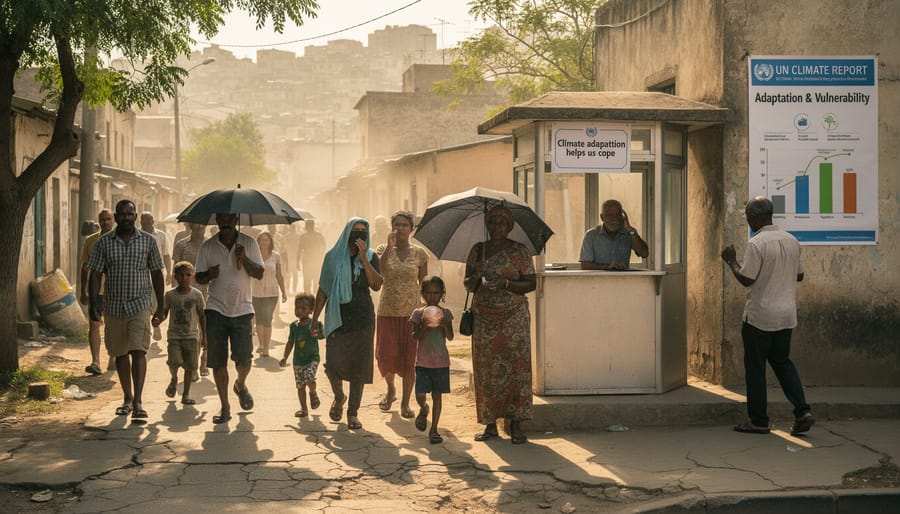
Beyond the specific reports released in 2026, the United Nations maintains a sustained focus on three interconnected pillars: impacts already underway, strategies for adaptation, and the vulnerability of communities worldwide. This ongoing series of assessments, coordinated across UN agencies and centralized on the broader climate reports page, consistently warns that climate change is causing dangerous disruption in nature and affecting billions of people, with escalating consequences for ecosystems, economies, and human security.
The reports collectively reinforce several critical themes:
- Climate impacts are accelerating across all regions, from extreme weather to ecosystem collapse.
- Billions of people face direct threats to water security, food systems, and livelihoods.
- Adaptation gaps are widening, especially in the most vulnerable nations.
- Urgent action is required now to avoid irreversible tipping points.
- Current mitigation efforts remain insufficient to meet Paris Agreement targets.
The UN climate reports page serves as a central hub, aggregating key findings from bodies such as UNEP, WMO, and the Secretary-General’s Scientific Advisory Board. One prominent example is the Adaptation Gap Report, which tracks the growing disparity between adaptation needs and available resources. By consolidating these assessments in one location, the UN ensures that policymakers, researchers, and the public can access the latest science and understand how different dimensions of the crisis intersect, from rising seas and vanishing ice to migration pressures and food insecurity.
Why It Matters: Real-World Implications for Policy and Action
These 2026 UN climate reports translate cutting-edge science into frameworks that governments, researchers, and the public rely on to shape real action. The Earth System Tipping Points brief and European State of the Climate 2025 report aren’t academic exercises, they form the evidence base for international negotiations, national adaptation blueprints, and funding priorities across sectors. When diplomats gather to discuss COP 2026 stakes these findings will anchor debates on emissions targets, climate finance, and loss-and-damage mechanisms.
At the national level, the warnings about dangerous disruption affecting billions drive updates to adaptation plans, governments use this data to prioritize infrastructure upgrades, coastal defenses, and drought-resistant agriculture. City planners in Europe are already incorporating the WMO’s regional climate trends into water management systems and heat-resilience programs. The tipping points brief pushes scientists to refine early-warning systems for ice sheet collapse and ocean circulation shifts, directing research funding toward predictive modeling.
For the public, these reports clarify why mitigation and adaptation matter in daily life. Food security hinges on crop forecasts informed by climate data; disaster preparedness protocols draw from impact assessments the UN compiles. Insurance markets recalibrate risk models based on this science, affecting premiums and coverage availability. By grounding policy in verified observation and projection, the UN ensures that action isn’t speculative but responsive to measurable change, bridging the gap between what we know and what we must do.
What to Watch: Next Steps in UN Climate Reporting and Action
The UN climate reporting landscape continues to evolve as scientific understanding deepens and climate impacts accelerate. Readers should monitor the United Nations climate reports page, which serves as the central hub for new releases and updates from WMO, UNEP, and other UN bodies. The Adaptation Gap Report remains a critical annual publication to watch, assessing progress on global adaptation efforts and identifying where action falls short of need.
Tipping points science will command growing attention in coming reporting cycles. The June 2026 brief from the UN Secretary-General’s Scientific Advisory Board established Earth system thresholds as a priority concern, and expect subsequent reports to refine risk assessments, improve early warning indicators, and quantify regional vulnerabilities. Researchers are working to narrow uncertainty ranges around ice sheet collapse, ocean circulation shifts, and permafrost thaw, work that will directly inform future UN assessments.
Policy communities will focus on translating these scientific warnings into concrete adaptation and mitigation pathways. National climate plans, infrastructure standards, and disaster preparedness frameworks all depend on the latest evidence synthesis. The reporting doesn’t stop with publication; each major release feeds into international negotiations, bilateral agreements, and domestic legislation.
Stay engaged with partner research institutions like WMO and UNEP, which publish complementary analyses throughout the year. The reports provide the roadmap, but consistent monitoring and rapid response turn scientific insight into resilience. The next wave of UN climate reporting will test whether governments can match the urgency scientists have made unmistakably clear.
Common Questions About UN Climate Reports
The United Nations climate reporting system raises practical questions for readers trying to navigate official assessments. Understanding who produces these documents, how they differ from one another, and where to find them helps readers engage with the scientific consensus more effectively.
What is a UN climate report?
A UN climate report is an assessment produced by United Nations agencies or advisory bodies examining climate science, impacts, adaptation needs, or mitigation strategies. These reports synthesize research from multiple institutions to inform policy and public understanding.
Who writes UN climate reports?
Different UN entities produce climate reports depending on their mandate. The World Meteorological Organization released the European State of the Climate 2025 report, while the UN Secretary-General’s Scientific Advisory Board authored the Earth System Tipping Points brief. UNEP contributes the Adaptation Gap Report.
How do these differ from IPCC reports?
IPCC assessments follow multi-year cycles with comprehensive peer review, while other UN reports often focus on specific regions, themes, or urgent developments between IPCC cycles. Both draw on peer-reviewed science but serve different reporting schedules and scopes.
Where can I read the full reports?
The United Nations climate reports page centralizes access to key documents, including read-the-report links for titles like the Adaptation Gap Report. Individual UN agencies also host reports on their dedicated sites.
Multiple reports appear in a single year because climate science advances continuously and different UN bodies address distinct aspects of the crisis. The June 2026 tipping points brief, for example, responds to emerging research on irreversible thresholds, while the April 2026 European report tracks regional observations that demand timely attention for adaptation planning. This distributed approach ensures relevant findings reach decision-makers without waiting for the next comprehensive IPCC cycle.
The 2026 UN climate reports, from the Earth System Tipping Points brief to the European State of the Climate 2025, deliver a clear message: the window for action is narrowing, but the roadmap forward exists. These assessments confirm that climate change is causing dangerous disruption in nature and affecting billions of people, yet they also arm policymakers, researchers, and communities with the data needed to respond effectively. The science isn’t just sounding alarms; it’s identifying thresholds, quantifying risks, and spotlighting adaptation strategies that work.
Staying informed matters. The UN climate reports page centralizes key findings from across the United Nations system, offering accessible summaries and full reports as they’re released. Bookmark it. Check back regularly for updates like the Adaptation Gap Report and future assessments from the WMO and the Secretary-General’s Scientific Advisory Board. Partner institutions, research universities, climate observatories, national meteorological agencies, are expanding the evidence base daily. We know what needs to happen. The challenge now is turning knowledge into momentum, and that starts with understanding what the latest science tells us.