
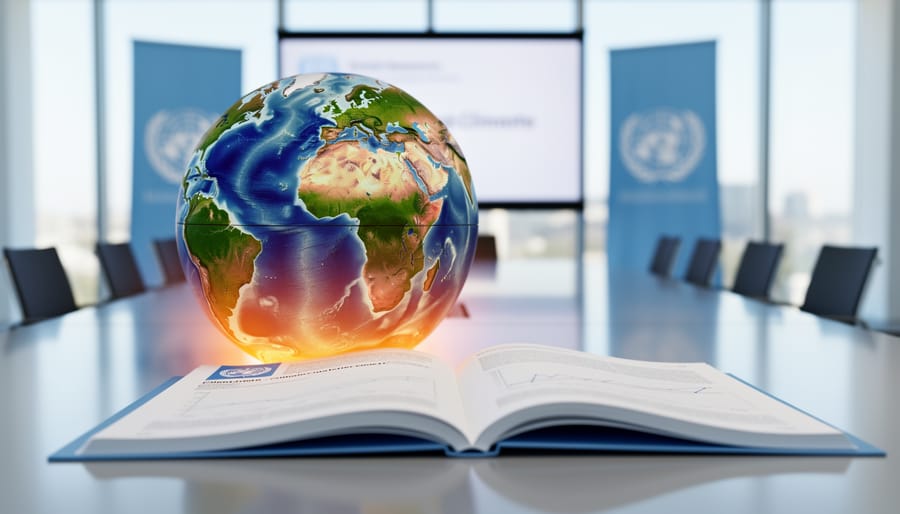
The United Nations Intergovernmental Panel on Climate Change delivered its starkest assessment yet in March 2023 with the Synthesis Report of the Sixth Assessment Report (AR6), concluding that humans are responsible for all global heating over the past 200 years and that Earth’s temperature has already risen 1.1°C above pre-industrial levels. This comprehensive document, which caps nearly a decade of work by hundreds of scientists worldwide, represents the most authoritative scientific consensus on climate change available today.
What makes AR6 particularly significant is not just its updated data, but how it fundamentally shifted the conversation from whether climate change is happening to how quickly we must act. The report synthesizes thousands of peer-reviewed studies into a clear narrative: the window for limiting warming to 1.5°C is rapidly closing, and every fraction of a degree matters for ecosystems and human communities worldwide. Unlike previous assessments, this report emphasizes solutions with unprecedented urgency, showing that the tools to address climate change exist but require immediate deployment at scale.
For anyone trying to understand where climate science stands in 2026, the AR6 Synthesis Report remains the essential baseline, offering both a sobering reality check and a roadmap forward grounded in rigorous evidence rather than speculation.
What Changed: The AR6 Synthesis Report and Its Landmark Findings

The Intergovernmental Panel on Climate Change delivered its most comprehensive climate assessment to date when the Sixth Assessment Report (AR6) Synthesis Report was finalized in March 2023. This capstone document brought together findings from three working groups, covering physical science, impacts and adaptation, and mitigation, into a unified picture of where climate science stands. Unlike previous reports that examined these dimensions separately, the AR6 Synthesis Report integrated thousands of peer-reviewed studies into both a Summary for Policymakers and a comprehensive Longer Report.
The report’s central finding carries profound weight: humans are responsible for all global heating over the past 200 years, driving the current temperature rise of 1.1°C above pre-industrial levels. This unequivocal attribution represents a strengthening of scientific certainty since the Fifth Assessment Report in 2014. The Synthesis Report doesn’t just document warming, it maps widespread impacts and risks across ecosystems and human systems, emphasizing new results that have emerged over the past nine years. For researchers, policymakers, and anyone tracking climate science, this report serves as the baseline for understanding where we stand in 2026.
Key Developments in the Latest UN Climate Assessment
1. Unequivocal Human Attribution Across 200 Years of Warming
The AR6 delivers the most emphatic statement yet on human influence: every degree of warming over the past two centuries traces directly back to human activity. This conclusion represents a significant tightening of the science since 2014’s AR5, which established human influence as “extremely likely” but left narrow room for uncertainty. The latest assessment closes that gap entirely.
Attribution science has advanced through multiple lines of evidence. Researchers now track the fingerprint of greenhouse gases across atmospheric layers, ocean heat content, and regional climate patterns with unprecedented precision. Computer models that strip out human emissions consistently fail to reproduce observed warming, while models including fossil fuel burning, deforestation, and industrial agriculture match the temperature record. The conclusion that humans responsible for warming have caused the full 1.1°C rise eliminates the last refuge of natural variability arguments.
This sharpened attribution carries practical weight for climate accountability. It removes ambiguity from discussions about responsibility for damages, from Pacific island nations facing submersion to farmers dealing with shifted growing seasons. Courts considering climate liability cases now cite this unequivocal link. The statement also reframes mitigation: if humans caused every fraction of a degree, humans control every fraction of future warming through emissions choices. The 200-year timescale matters because it encompasses the entire industrial era, connecting nineteenth-century coal combustion directly to present conditions and establishing a clear causal chain that policymakers can’t dismiss as coincidental.
2. Comprehensive Integration of Physical Science, Impacts, and Mitigation Pathways
The AR6 Synthesis Report represents a methodological breakthrough in climate assessment. Rather than treating climate science, impacts, and solutions as separate domains, it weaves together findings from three distinct working groups into a cohesive narrative of what we know, what’s happening, and what we can do about it.
This integrated structure delivers climate knowledge in two formats. The Summary for Policymakers distills the essential findings into approximately 36 pages designed for decision-makers who need clear, actionable intelligence. The Longer Report, spanning 85 pages, provides researchers and practitioners with detailed evidence and context. Both documents draw from the same comprehensive assessment, making the science accessible to different audiences without compromising accuracy.
The integration brings together:
- Physical science basis, understanding how the climate system works, what’s causing observed changes, and how warming will progress under different scenarios
- Impacts and adaptation, documenting what climate change is already doing to ecosystems and human systems, who’s most vulnerable, and how communities can adapt
- Mitigation strategies, assessing pathways to reduce emissions, the technologies and policies needed, and the costs and benefits of climate action
This unified approach advances Climate Change Studies by revealing connections that siloed assessments miss. When physical scientists, impact researchers, and mitigation experts share a single framework, they can address questions that matter most to decision-makers: Which impacts are unavoidable? Where does adaptation make sense, and where must we prevent warming altogether? What emission cuts are feasible, and how do they reduce specific risks?
The methodology sets a precedent for how climate science translates into real-world action, connecting laboratory measurements to policy choices through a continuous chain of evidence.
3. Updated Risk Assessment and Widespread Impact Documentation
The AR6 represents the most comprehensive global stocktake of climate impacts to date, documenting changes across every inhabited continent and ocean basin. Unlike the 2014 assessment, which identified emerging patterns, the latest report presents overwhelming observational evidence of climate change already transforming natural and human systems worldwide.
The risk assessment framework evolved significantly between AR5 and AR6. Scientists now quantify widespread impacts and risks with greater precision, linking specific warming levels to cascading effects across ecosystems, infrastructure, and human health. The report documents that approximately 3.3 to 3.6 billion people currently live in contexts highly vulnerable to climate change, a figure grounded in direct observations rather than projections.
What distinguishes this assessment is its geographical specificity. The working group contributions detail regional impacts from coral reef bleaching in tropical waters to permafrost thaw in Arctic communities, from crop yield reductions in sub-Saharan Africa to coastal flooding in small island nations. Each impact is traced to observed warming, moving beyond correlation to establish clear causation.
The documentation also captures compound risks where multiple climate hazards intersect with social vulnerabilities. Heat waves, droughts, and extreme precipitation events now occur simultaneously in patterns that strain adaptation capacity, particularly in regions with limited resources. This integrated risk perspective marks a methodological advance, showing how climate change amplifies existing inequalities while creating entirely new challenges that single-sector approaches cannot address.
Why This Report Matters for Climate Action Now
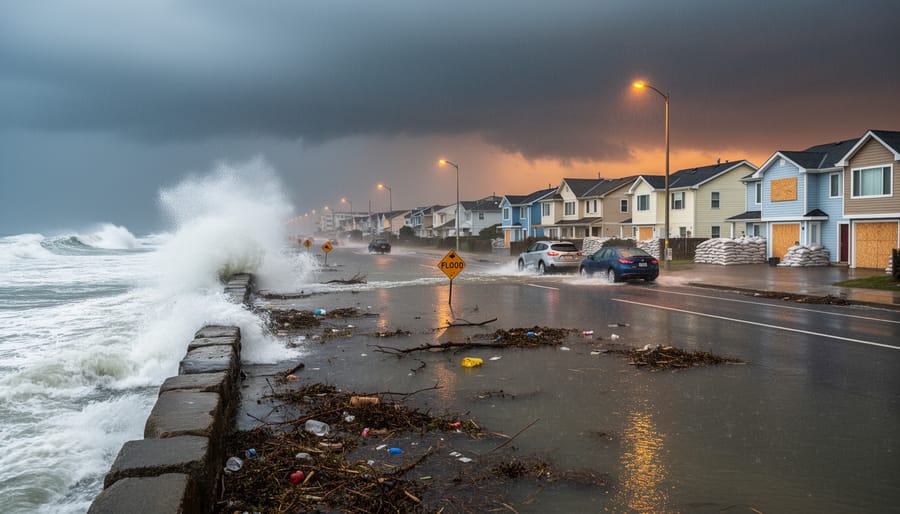
The AR6’s 1.1°C warming baseline carries profound weight for climate action in 2026 because it provides the definitive scientific foundation against which all climate commitments, policies, and progress are measured. When negotiators gather for international climate talks, they reference this report’s findings to set reduction targets. When governments design adaptation strategies, they rely on its risk assessments to identify vulnerable populations and ecosystems. The report’s unequivocal attribution of warming to human activity eliminates scientific uncertainty as an obstacle to policy decisions, shifting debates from whether action is needed to how quickly and comprehensively it must happen.
For the research community, the AR6 shapes funding priorities and investigation directions in Climate Change Studies. The report identifies critical knowledge gaps, from understanding tipping points to quantifying co-benefits of different mitigation approaches. Its emphasis on low-carbon energy transitions and nature-based solutions guides where researchers concentrate their efforts. The comprehensive risk assessment pushes scientists to explore whether certain thresholds represent a point of no return for specific systems.
Perhaps most significantly, the report translates complex climate science into accessible findings that inform public discourse. The Summary for Policymakers distills thousands of pages of technical assessment into clear statements about what’s happening, why it matters, and what options exist. This accessibility empowers citizens, journalists, and local leaders to make informed decisions and hold institutions accountable. In 2026, as climate impacts intensify, the AR6 remains the authoritative reference that bridges scientific consensus and real-world action.
What to Watch: Climate Science and Policy After AR6
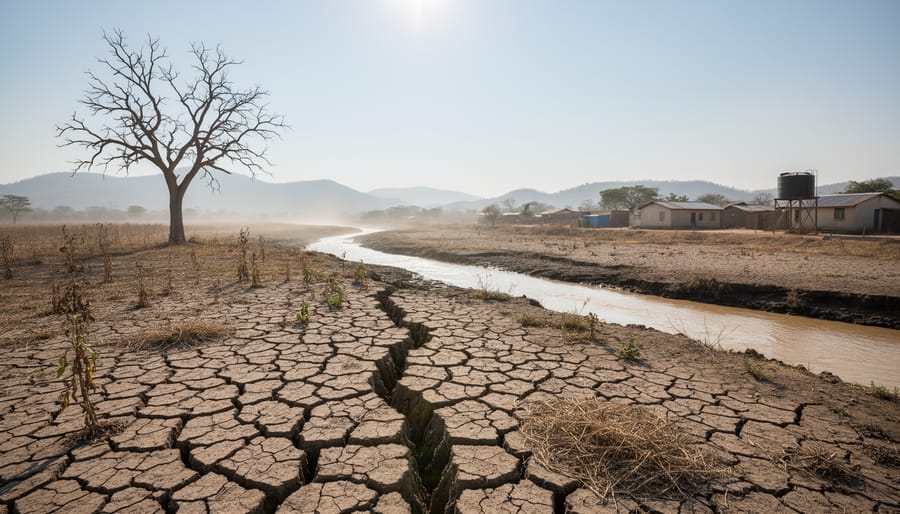
The IPCC operates on a multi-year assessment cycle, meaning we won’t see another comprehensive report matching AR6’s scope until the early 2030s. The Seventh Assessment Report (AR7) is already in planning stages, with author nominations and scoping meetings underway to identify critical knowledge gaps and emerging research priorities. Between major assessments, the IPCC produces special reports targeting specific themes, offering opportunities for focused updates on topics like tipping points, carbon removal technologies, and ocean-atmosphere interactions.
Several research frontiers are rapidly evolving. Attribution science continues refining its ability to link specific weather events to climate change, building on AR6’s unequivocal findings. Scientists are also deepening their understanding of regional climate impacts, moving beyond global averages to provide actionable projections for specific communities and ecosystems. Tipping point research has gained urgency, with studies examining thresholds in ice sheets, ocean circulation patterns, and tropical forests that could trigger irreversible changes.
On the policy front, the 2026 climate update landscape centers on implementation rather than new commitments. Countries are testing whether their nationally determined contributions align with the 1.5°C pathway AR6 identified as still achievable with rapid action. Climate finance mechanisms, adaptation strategies for vulnerable regions, and the operationalization of loss and damage frameworks dominate negotiations.
For those following climate science, watch for emerging research on feedback loops, improved climate modeling at local scales, and studies quantifying the effectiveness of different mitigation pathways. The scientific community is actively translating AR6’s findings into sector-specific guidance, helping decision-makers in agriculture, infrastructure, public health, and energy apply the latest climate knowledge to real-world challenges.
Common Questions About UN Climate Reports
The IPCC produces climate assessments through a rigorous process involving hundreds of scientists who volunteer their expertise to evaluate thousands of peer-reviewed studies. These reports represent the most authoritative scientific consensus on climate change, reviewed by governments worldwide before publication.
What is the IPCC and what does it do?
The Intergovernmental Panel on Climate Change (IPCC) is the UN body responsible for assessing the science related to climate change. It evaluates existing research rather than conducting new studies, synthesizing findings from thousands of peer-reviewed publications into comprehensive reports.
How often does the IPCC release reports?
The IPCC operates on roughly six-to-seven-year cycles, producing major Assessment Reports along with special reports on specific topics. The Sixth Assessment Report was finalized between 2021 and 2023, with the Synthesis Report released on 20 March 2023.
What’s the difference between the Summary for Policymakers and the full report?
The Summary for Policymakers provides a condensed overview approved line-by-line by governments, designed for non-specialists. The Longer Report contains detailed scientific findings, methodology, and evidence that underpin the summary statements.
How can I access the full IPCC findings?
All IPCC reports are freely available on the IPCC website, including the Synthesis Report and working group contributions. The materials range from technical chapters to accessible summaries, allowing readers to engage at their preferred depth.
Understanding how these reports are structured helps readers navigate the wealth of information available and choose the right entry point for their needs, whether that’s a quick policy overview or detailed scientific analysis.
The AR6 stands as the authoritative scientific consensus on climate change in 2026, representing the most comprehensive assessment of climate science available. Its definitive conclusion that human activity has driven 1.1°C of warming over two centuries provides the foundation for ongoing research, policy development, and climate action worldwide. As Climate Change Studies continues to advance, staying engaged with this evolving science matters more than ever.
Understanding the AR6’s findings isn’t just an academic exercise. These conclusions shape international climate negotiations, inform adaptation strategies in vulnerable regions, and guide investment in mitigation technologies. The report’s integration of physical science, impacts assessment, and solution pathways offers a roadmap for decision-makers at every level.
Climate science will continue developing beyond AR6, with new research filling gaps and refining projections. But this report’s core message remains clear: the evidence is unequivocal, the impacts are widespread, and the window for effective action is narrowing. Engaging with these findings empowers informed choices about our collective climate future.