
Climate change is a long-term shift in the average weather patterns that define Earth’s local, regional and global climates. In the more formal wording used by the Intergovernmental Panel on Climate Change (IPCC), it is a change in the state of the climate that can be identified by changes in the mean and/or the variability of its properties. Put simply, the typical conditions of a place, and how widely they swing, move over decades rather than days.
That last part is what separates climate from weather. Weather is what’s happening outside this afternoon. Climate is the pattern you’d see after years of afternoons.
The cause matters as much as the definition. Natural forces have always nudged the climate, but since the 1800s human activity has been the main driver, chiefly through burning coal, oil and gas. Those fuels release greenhouse gases that trap heat from the sun and push global temperatures up. NASA, a global leader in studying Earth’s changing climate, and the IPCC, created to give policymakers regular scientific assessments, anchor the science behind this explainer. Below, we break down how the mechanism works, what drives it, and why a clear definition is the first step toward understanding the solutions taking shape.
What Climate Change Means: A Plain-Language Definition
Climate Versus Weather
Think of weather as your mood on a given day and climate as your personality. A grumpy morning doesn’t redefine who you are, and one freezing afternoon doesn’t disprove a warming planet. Weather is what’s happening outside right now, in one place. Climate is the pattern that emerges when you look across many years and many places.
That’s why shifts have to be judged over long periods. A single cold snap is a data point, not a trend. Climate change shows up only when the long-term average, or the range of extremes around it, moves over time.
- Weather
- The short-term conditions in a specific place, such as today’s temperature, rain, or wind.
- Climate
- The long-term average weather patterns that define Earth’s local, regional, and global conditions.
- Climate change
- Long-term shifts in temperatures and weather patterns.
- Greenhouse gas
- A gas in the atmosphere that traps heat from the sun and warms the planet.
- Variability
- How much climate properties, like temperature, swing around their average from year to year.
With those terms in hand, the formal scientific definition becomes much easier to unpack.
The Scientific Definition: Changes in Mean and Variability
Scientists don’t just say the planet is “getting warmer.” They use a precise definition. According to the IPCC definition of climate change, it is a change in the state of the climate that can be identified by changes in the mean and/or the variability of its properties.
Two terms carry the weight here. The mean is simply the average. Think of the typical temperature or rainfall for a region, measured over many years. If that average drifts upward or downward, the mean has changed.
Variability describes how much conditions swing around that average. A place might keep the same average temperature yet see more extreme heat waves and deeper cold snaps. That is a change in variability, and it counts too. The “and/or” in the definition matters: either shift, or both together, signals a changing climate.
This framing keeps the discussion grounded in measurable properties rather than impressions from a single season. It also explains why the definition is so widely used. The IPCC provides regular assessments to policymakers on climate change, its implications and potential future risks, giving decision-makers a shared, science-based starting point.
How Climate Change Works: Trapped Heat and a Warming Planet
Picture sunlight crossing about 93 million miles of space and arriving at Earth as pure energy. Some of it bounces back out, but much of it is absorbed by the land, the oceans, and the air. Once the surface warms, it releases that energy again as heat, sending it back toward space.
This is where the atmosphere steps in. Greenhouse gases such as carbon dioxide, methane, and water vapor act like a blanket around the planet. They catch some of the outgoing heat and hold it near the surface for a while longer before it escapes. Without this natural greenhouse effect, Earth would be far too cold for liquid water, let alone for us. It’s one of the reasons life exists here at all.
So the greenhouse effect isn’t the problem. The question is how thick the blanket gets.
Since the 1800s, human activities have been the main driver of climate change, mainly through burning fossil fuels such as coal, oil, and gas. Those activities release greenhouse gas emissions into the atmosphere, and the extra gases trap more of the sun’s heat than the atmosphere did before. The result is a stronger version of a natural process, and the Earth’s temperature rises as more heat stays in the system.
Think of it like adding another layer to a blanket that was already doing its job. The first layers kept you comfortable. Pile on more, and you start to overheat.
That is the mechanism in short: sunlight in, heat trapped by greenhouse gases, and extra emissions tipping the balance toward warming. The rising temperature then shows up as the long-term shifts in weather patterns that define climate change. Understanding this chain of cause and effect is what lets researchers pinpoint where the changes begin, and where practical solutions can make the biggest difference.
What Drives Climate Change: Natural Factors and Human Activity
Earth’s climate has never been static. Natural processes have shifted it for as long as the planet has had an atmosphere, and understanding those shifts is the first step in sorting out what is different today. If you want a deeper look at how scientists separate the two, this guide to natural drivers vs human influences walks through the evidence.
Here is a quick overview of the main drivers, grouped by origin:
- Natural: changes in the energy output of the sun.
- Natural: volcanic eruptions that release gases and particles into the atmosphere.
- Natural: slow shifts in Earth’s orbit and tilt over long timescales.
- Natural: variations in ocean circulation that redistribute heat.
- Human: burning fossil fuels such as coal, oil and gas, the main driver since the 1800s.
- Human: other activities that add greenhouse gases to the atmosphere.
The natural factors operate over a wide range of timescales, from years to many thousands of years. They explain much of the climate record stretching back through Earth’s history, including ice ages and warmer interglacial periods.
What sets the modern era apart is the scale and speed of a single cause. Human activities have been the main driver of climate change since the 1800s, mainly through the burning of fossil fuels. Fossil fuels drive climate change because combustion releases greenhouse gas emissions into the atmosphere. Those gases trap heat from the sun, and the extra trapped heat causes the Earth’s temperature to rise.
Think of it as a thermostat nudged upward. Coal in a power plant, oil in a vehicle engine and gas in a furnace all do the same basic thing: they take carbon that was locked underground for ages and release it into the air. The result is a gradual strengthening of the natural greenhouse effect, one that is measurable in the long-term averages scientists track.
Keeping both categories in view is what makes the science clear. Natural factors explain how the climate has varied in the past, while human emissions explain the sustained shift observed since the 1800s.
How Climate Science Is Put to Work
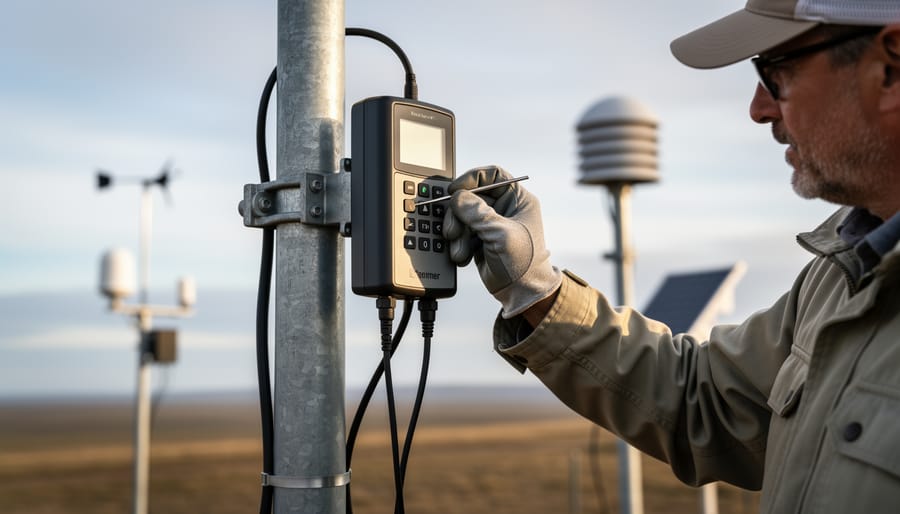
A clear definition is more than a vocabulary exercise. When scientists, governments and the public all use “climate change” to mean the same thing, evidence can be compared, assessments can be trusted, and decisions can rest on a shared foundation. That is exactly why the IPCC exists: it was created to provide policymakers with regular scientific assessments on climate change, its implications and potential future risks.
Observation is the other half of the story. NASA, a global leader in studying Earth’s changing climate, tracks and studies how our planet is shifting, turning raw measurements into the long-term records that reveal real patterns rather than passing weather. Researchers also look beyond temperature itself, exploring how living systems respond, a topic covered in depth in climate change and the biosphere.
Here is where the science turns practical. Because we know that human activities, mainly the burning of fossil fuels such as coal, oil and gas, have been the main driver since the 1800s, researchers can focus on the sources that matter most. That understanding guides renewable energy research, which aims to supply power without adding to the heat-trapping emissions behind the warming. It also supports planning for climate risks, helping communities and decision-makers prepare using the best available evidence rather than guesswork.
The outlook is encouraging. Every improvement in measurement and definition sharpens the picture, and a sharper picture makes smarter solutions possible.
Common Questions About Defining Climate Change
What is climate change?
Climate change refers to long-term shifts in temperatures and weather patterns. Scientists define it more precisely as a change in the state of the climate that can be identified by changes in the mean and/or the variability of its properties.
What is the difference between climate change and weather?
Weather describes short-term, local conditions, such as today’s rain or this week’s heat. Climate is the long-term pattern of those conditions, so one unusual day doesn’t tell you much about whether the climate is shifting.
What is the main cause of climate change today?
Human activities have been the main driver since the 1800s, mainly through burning fossil fuels such as coal, oil and gas. These activities release greenhouse gases that trap heat from the sun and cause Earth’s temperature to rise.
Who provides the official scientific assessments of climate change?
The IPCC was created to give policymakers regular scientific assessments on climate change, its implications and potential future risks. Agencies like NASA, a global leader in studying Earth’s changing climate, add to that body of research.
Once you have these basics, the natural next question is what can be done about it. Researchers generally group the answers into two broad responses, and our guide to mitigation and adaptation explains how each one works and why both matter. Knowing the definition is the starting point, and it makes every later conversation about solutions clearer and more productive.
At its simplest, climate change refers to long-term shifts in temperatures and weather patterns, identifiable through changes in the mean and variability of the climate’s properties. Since the 1800s, human activities, mainly the burning of coal, oil and gas, have been the main driver, releasing greenhouse gases that trap the sun’s heat and push the planet’s temperature up.
Getting that definition right matters more than it might seem. When researchers, journalists, and policymakers share the same meaning for a term, they can compare findings, communicate clearly, and make decisions on common ground. That shared footing is what lets assessments from the IPCC and the monitoring work at NASA feed directly into real planning.
If you want a deeper walk-through of the basics, our guide to climate change explained covers the mechanism in more detail. The encouraging part is that understanding is the first step toward solutions, and each advance in climate science brings sharper tools for tackling the challenge.