
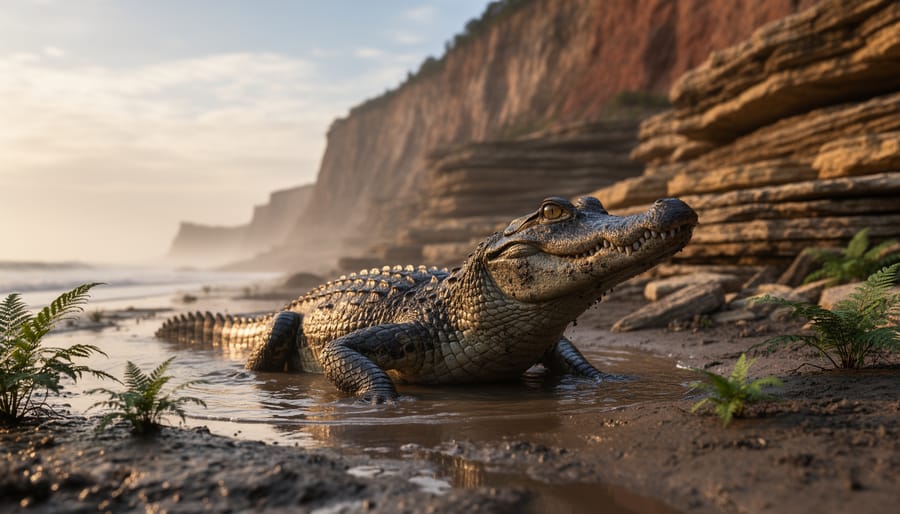
A new species of prehistoric crocodile has emerged from the deep past of Britain, rewriting our understanding of early crocodile evolution. Published in the journal Palaeontology on 13 February 2026, Galahadosuchus jonesi represents a remarkable discovery of a Triassic-era crocodylomorph unearthed in Gloucester, UK. This finding pushes back the timeline of crocodile diversity in what is now the British Isles and offers fresh insights into how these ancient reptiles adapted to vastly different environments than their modern descendants.
The discovery matters because it fills a critical gap in the fossil record. While we know crocodiles ultimately survived the extinction event that claimed the dinosaurs, the Triassic period marked their origins and early diversification, a chapter of their story that remains frustratingly incomplete. Galahadosuchus jonesi provides a rare window into this formative era, revealing anatomical features that help scientists trace how these creatures evolved from small, agile land predators into the semi-aquatic ambush hunters we recognize today. The Gloucester fossil site has proven exceptionally rich, and researchers suggest that more specimens may lie waiting in the ancient sediments, promising additional chapters in this prehistoric narrative.
What Changed: A New Species Rewrites Triassic History
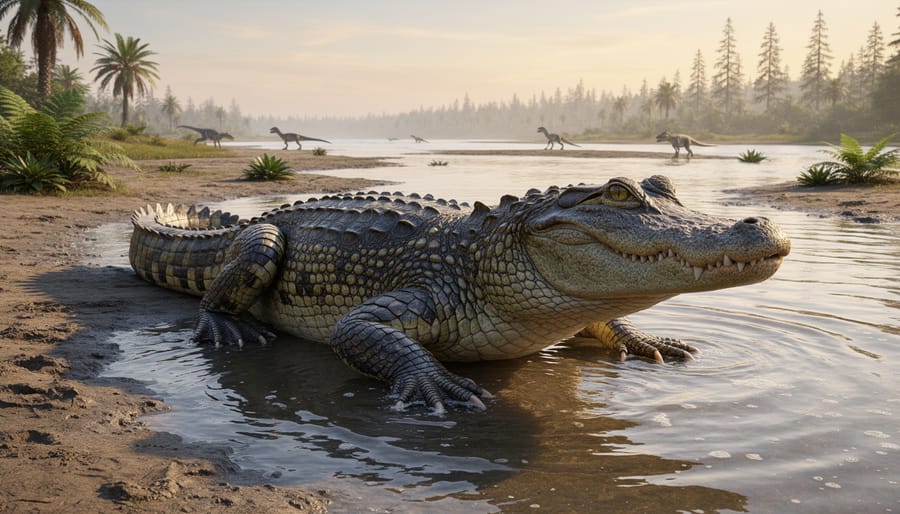
On 13 February 2026, paleontologists formally introduced the scientific community to Galahadosuchus jonesi, a previously unknown species of crocodylomorph that lived during the Triassic period. The species description, published 13 February 2026 in the peer-reviewed journal Palaeontology, represents a significant addition to our understanding of early reptile diversification in what is now the United Kingdom. The fossil material, recovered from Gloucester, provides rare physical evidence of crocodylomorph presence in British Triassic ecosystems, a snapshot of life more than 200 million years ago.
What makes this discovery particularly valuable is its timing and geographic origin. Triassic crocodylomorphs are relatively scarce in the fossil record, especially from the UK, where preservation conditions rarely favour such finds. The formal naming process confirms that this specimen represents a distinct evolutionary lineage rather than a variant of known species. For paleontologists, each new species description refines the broader picture of how these ancient reptiles radiated across different environments and eventually gave rise to the crocodilians we recognize today. The Gloucester specimen offers a tangible link to a pivotal chapter in reptile history.
Key Developments in the Discovery
1. The Gloucester Fossil Site Yields a Rare Specimen
The Gloucester fossil site has yielded one of the most complete early crocodylomorph specimens discovered in the UK, preserved in rocks dating back roughly 205 million years to the Late Triassic. The specimen described from Gloucester includes remarkably intact cranial and postcranial elements, skull bones, vertebrae, and limb fragments, that provided researchers with enough anatomical detail to distinguish it as a new species. This level of preservation is uncommon for Triassic crocodylomorphs, which typically survive as fragmentary remains.
The fossil’s quality allowed paleontologists to identify diagnostic features not seen in previously known species. Unique characteristics in the skull structure, tooth placement, and vertebral anatomy set Galahadosuchus jonesi apart from its contemporaries. The Gloucester deposit represents a terrestrial environment from a time when the region lay much closer to the equator, part of a supercontinent experiencing seasonal monsoons. Fossil assemblages from this site suggest a diverse ecosystem where early crocodylomorphs shared the landscape with early dinosaurs, mammal relatives, and other archosaurs.
What makes this specimen particularly valuable is the combination of completeness and the geological context it provides. Triassic rocks in the UK are relatively rare compared to other periods, and sites that preserve articulated reptile skeletons are rarer still. The Gloucester material offers a window into how crocodylomorphs were diversifying during a pivotal moment in reptile evolution, just before the end-Triassic extinction reshaped terrestrial ecosystems worldwide.
2. Classification as a Triassic Crocodylomorph
Galahadosuchus jonesi belongs to Crocodylomorpha, a group that represents the broader evolutionary lineage of crocodile-like reptiles stretching back more than 200 million years. Triassic crocodylomorph species like this one lived during a formative period when reptiles were diversifying rapidly after the Permian extinction, occupying niches that would later be filled by dinosaurs and mammals.
The distinction between ancient crocodylomorphs and today’s crocodiles matters because these early species often looked and behaved quite differently from their modern descendants. Many Triassic forms were smaller, more terrestrial, and occupied ecological roles far removed from the semi-aquatic ambush predators we recognize now. Some were agile runners with long legs suited for life on land, not the low-slung, water-adapted bodies we associate with crocodiles today.
Galahadosuchus jonesi fits into this early experimental phase of crocodylomorph evolution. Its classification places it near the base of the crocodylomorph family tree, before the lineage settled into the more familiar body plans of later periods. Understanding where this species sits in the timeline helps paleontologists trace how features like jaw structure, limb proportions, and skull shape evolved over tens of millions of years. Each new Triassic crocodylomorph adds detail to that picture, showing us not a simple linear progression toward modern forms, but a complex branching history full of evolutionary dead ends and surprising innovations.
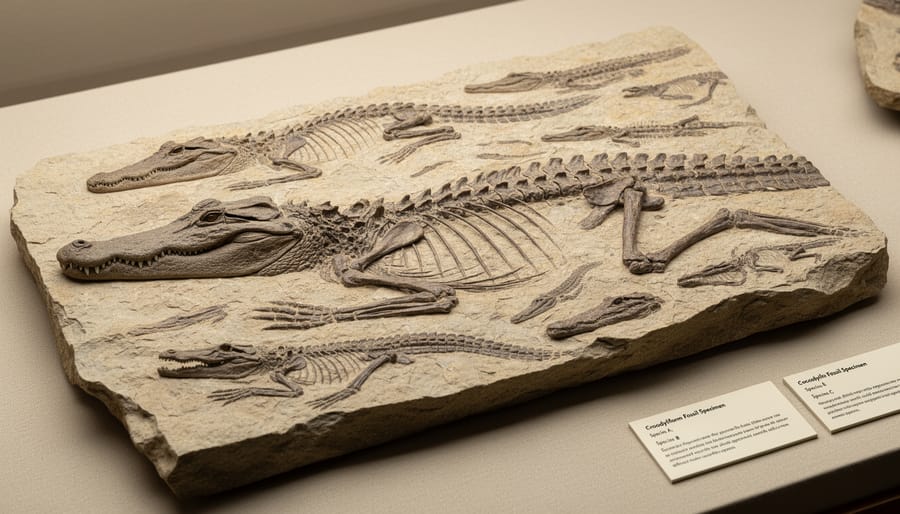
3. The Naming and Formal Description in Palaeontology
The formal description of Galahadosuchus jonesi marks a significant milestone in prehistoric crocodile discovery. The research team’s findings appeared in a paper published in Palaeontology on 13 February 2026, following rigorous peer review by paleontology specialists who evaluated the anatomical evidence supporting this new species designation.
The name itself carries deliberate meaning. “Galahadosuchus” combines a reference to the legendary knight Galahad with “suchus,” a common suffix in crocodylomorph nomenclature derived from the Greek word for crocodile. The species designation “jonesi” honours specific contributions to the discovery, following the standard practice in paleontology of memorialising individuals who advanced the research. This naming convention serves both scientific and commemorative purposes, embedding recognition within the permanent taxonomic record.
The peer-review process for such discoveries typically spans months, as experts scrutinize anatomical descriptions, phylogenetic analyses, and comparisons with related species. For Galahadosuchus jonesi, reviewers examined detailed measurements of skull morphology, tooth structure, and skeletal features that distinguish it from other Triassic crocodylomorphs. Publication in Palaeontology places the species within an established scientific framework, making the data accessible to researchers worldwide and establishing priority for the name under zoological nomenclature rules.
This formal publication transforms a fossil specimen into a recognized species with a permanent place in the evolutionary tree, enabling future researchers to build upon these findings.
Why This Discovery Matters
The discovery of Galahadosuchus jonesi carries implications that extend well beyond adding another name to the fossil record. This finding reshapes our understanding of how early crocodylomorphs diversified during a critical period in reptile evolution and provides rare evidence of Triassic life in a region where such fossils are exceptionally scarce.
The Gloucester specimen offers a window into an ecosystem that existed roughly 200 million years ago, when the landmass that would become the UK sat in a very different position and hosted vastly different life forms. Fossils from this period in this region are uncommon, making Galahadosuchus jonesi a crucial data point for reconstructing ancient British environments. Understanding what lived in these areas helps paleontologists piece together broader patterns of climate context and ecological shifts during the Triassic.
This discovery matters because:
- It reveals previously unknown Triassic biodiversity in what is now the UK
- It clarifies the evolutionary pathways leading to modern crocodilians
- It demonstrates how early crocodylomorphs occupied diverse ecological niches before mass extinction events reshaped life on Earth
- It showcases advances in paleontological techniques, including new analytical methods that allow researchers to extract more information from fragmentary remains
Beyond academic circles, findings like this illustrate how incomplete our picture of deep time remains. Each new species identified fills a gap, but also reveals how much we have yet to uncover. The formal description in Palaeontology ensures this knowledge becomes part of the scientific record, available for future comparative studies that may unlock further insights into how ancient reptiles responded to environmental pressures and evolutionary opportunities during one of Earth’s most transformative eras.
What to Watch: Future Research Directions
The formal description of Galahadosuchus jonesi opens several promising avenues for paleontological investigation. Researchers will likely focus on comparative anatomical studies, placing this species alongside other Triassic crocodylomorphs from Europe and beyond to map evolutionary relationships more precisely. The Gloucester site itself warrants continued excavation, additional specimens could reveal growth patterns, sexual dimorphism, or soft-tissue impressions that the initial fossil did not preserve.
Paleontologists are particularly interested in examining how Galahadosuchus jonesi relates to contemporaneous species from Germany and North America, which may clarify migration patterns and ecological niches during the Triassic. Detailed CT scanning of the specimen should uncover internal skull structures and tooth replacement patterns that shed light on feeding behavior and sensory capabilities.
Future fossil research will also investigate whether this species represents a transitional form in crocodylomorph evolution, bridging gaps between early archosaurs and later, more recognizable crocodilian lineages. Collaboration between UK institutions and international teams may yield new discoveries from similar-aged formations, testing hypotheses about when key crocodilian traits, such as semi-aquatic adaptations or specific jaw mechanics, first emerged. Ongoing analysis of the Gloucester ecosystem could contextualize how Galahadosuchus jonesi interacted with other Triassic fauna, refining our understanding of predator-prey dynamics in ancient British landscapes.
Common Questions About Prehistoric Crocodile Species
The discovery of Galahadosuchus jonesi has sparked renewed interest in ancient crocodilian relatives, prompting common questions from readers who want to understand how these prehistoric animals fit into Earth’s history. Here are answers to the most frequently asked questions about Triassic crocodylomorphs and what makes this discovery noteworthy.
What is a crocodylomorph?
Crocodylomorphs are a group of reptiles that includes modern crocodiles, alligators, and caimans, as well as their extinct relatives dating back to the Triassic period. These ancient forms often looked and behaved quite differently from the semi-aquatic predators we know today.
How old is the Triassic period?
The Triassic period lasted from approximately 252 to 201 million years ago, marking the time after Earth’s most severe mass extinction event. This era saw the rise of dinosaurs, early mammals, and the first crocodylomorphs.
How do scientists name new species from fossils?
Researchers identify new species by comparing skeletal features with known specimens, documenting unique characteristics, and publishing formal descriptions in peer-reviewed journals like Palaeontology. The naming process often honours people or places, as with Galahadosuchus jonesi from Gloucester.
How does Galahadosuchus differ from modern crocodiles?
Galahadosuchus lived more than 200 million years ago and represents an early branch of the crocodylomorph lineage, meaning it shares a common ancestor with modern crocodiles but evolved along a separate path. Its anatomy reflects adaptations to Triassic environments quite different from today’s wetlands.
Understanding these distinctions helps contextualize why each new fossil discovery matters. International research collaboration continues to refine our picture of how crocodylomorphs diversified across millions of years, with specimens like the Gloucester find filling crucial gaps in that evolutionary story.
The February 2026 announcement of Galahadosuchus jonesi demonstrates how each fossil find adds another piece to the puzzle of prehistoric life. This Triassic crocodylomorph from Gloucester enriches our understanding of early reptile diversification and the ecosystems that existed in what is now the UK over 200 million years ago. For academic paleontology, the formal description in Palaeontology provides crucial data for comparative studies and phylogenetic analyses that trace the evolutionary pathways leading to modern crocodilians.
Beyond the laboratory, discoveries like this capture public imagination and highlight the deep history beneath our feet. They remind us that fossil sites across Britain and the world continue to yield surprises, and that patient excavation and rigorous scientific study can reveal creatures previously unknown to science. As researchers examine additional specimens and apply new analytical techniques, our picture of Triassic life will sharpen. The work of paleontologists and institutions ensures that these ancient voices aren’t lost to time but instead inform how we understand life’s long history on Earth.